23 C
Volta Region
Thursday, September 3, 2026
spot_img
Home Blog

2 Million Volta Residents Get Insecticide Nets to Fight Malaria

1

The Volta Regional Health Directorate has received a total number of 1,414,62 long lasting insecticide nets (LLINs) for distribution to 2,240,202 registered people in the 25 districts in the Volta region due this week.

The 7-day campaign which starts from 27-29 March and 3-6 April, 2018 unlike the earlier campaign that saw volunteers hanging the nets in rooms for beneficiaries, will have designated points where beneficiaries will converge for the nets, two persons per net.

The campaign to replace the old nets distributed in 2014 which have outgone their three-year efficacy period is being championed by the Ministry of Health (MoH) in partnership with USAID, PMI, Vector Words and GlobalFund to eradicate malaria in the country.

Dr. Yaw Ofori Yeboah, Deputy Volta Regional Director of Public Health of Ghana Health Service (GHS), making this known at 2018 LLIN Point Mass Distribution Stakeholders Meeting ahead of the National Campaign launch said, the distribution of the net is free and no one should pay for them.

According to him, security measures have been put in place including logo of GHS, bold inscription of “Not for Sale” and contact numbers to call for information to prevent people from taking advantage of the campaign.

Wrong Use of Mosquito Nets

He advised beneficiaries to sleep under the bed nets and not use them for other purposes such as food preservation, fishing, etc. He also called on the public to sparingly wash the nets in order to maintain their efficacy.

Togbe Kweku Ayim IV, Paramount Chief of Ziavi Traditional Area, addressing the participants suggested that much education on the use of the LLIN should be channeled through religious and traditional leaders in the various communities in order to achieve the aim of the campaign.

The workshop which came off at Hotel Stevens, Ho was attended by representatives of Red Cross, Department of Children and Women, NADMO, NCCE, Media, Religious and Traditional leaders.

By Albert Kuzor/VoltaOnlinegh
Volta NPP Wades Into GoldBod ‘Losses’, Demands Accountability & CEO’s Removal

0

The New Patriotic Party (NPP) in the Volta Region has waded into the controversy surrounding alleged $1.7 billion losses associated with the Domestic Gold Purchase Programme, throwing its weight behind the Minority’s call for a parliamentary probe while also demanding the removal of the Chief Executive Officer of the Ghana Gold Board (GoldBod), Sammy Gyamfi.

At a press conference held in Ho today, Tuesday, September 1, 2026, Regional Chairman Makafui Kofi Woanyah said Ghanaians deserved to know what happened to the missing funds and urged Parliament to conduct a comprehensive investigation with all relevant documents made available for scrutiny. He stressed that the Minority Leader, Alexander Afenyo-Markin, and his colleagues were within their rights to question the management of the country’s gold resources, describing such oversight as part of Parliament’s duty to protect the public interest.

Mr Woanyah insisted the matter should not be treated as partisan, noting that the resources involved belonged to the people of Ghana. He challenged the Majority to support the probe if indeed the government had nothing to hide, lamenting that the alleged losses could have been used to complete schools, improve health facilities, and fix roads.

Linking the controversy to the illegal mining crisis, he warned that Ghana faced a “double whammy” of losing its natural wealth while also enduring financial concerns over gold purchased from small-scale miners under the Domestic Gold Purchase Programme. He cautioned that polluted rivers and streams posed grave threats to agriculture and livelihoods, with tributaries feeding the Volta Lake at risk if galamsey was not curbed. He cited reports of deaths in abandoned pits in the Ashanti Region, including children, as evidence of the human toll of illegal mining.

Turning to the conduct of the GoldBod Chief Executive, Mr Woanyah accused Sammy Gyamfi of disrespecting the Minority Leader by allegedly using a state platform to attack him instead of addressing legitimate concerns. He declared that no presidential appointee owned Ghana or had the right to treat citizens as servants simply because they demanded accountability. “Ghanaians have the right to ask questions, and when questions are raised about the management of our resources, the appropriate response is to provide answers, not to attack the person asking the questions,” he said.

He argued that Mr Gyamfi’s actions breached the government’s Code of Conduct for appointees, insisting that such misconduct must attract sanctions. “Breaching that Code of Ethics must have consequences. Otherwise, it is not a code at all. It is decoration,” he stated.

The NPP chairman therefore called on President John Dramani Mahama to either remove Mr Gyamfi from office or publicly reprimand him, warning that failure to act would raise doubts about whether the President was firmly in control of his appointees. He stressed that public office was a trust that demanded humility, responsibility and respect, cautioning that failure to enforce standards could erode public confidence in state institutions.

Mr Woanyah concluded that the NPP in the Volta Region would continue to support the Minority’s demand for accountability in the management of national resources, insisting that decisive action was needed to preserve confidence in governance. “The President must show that there is accountability in his government and that no appointee is above the law. Ghana belongs to all of us, and public office must always be exercised with humility, responsibility and respect,” he said.

AIT Holds 22nd Graduation as PhD Alumni Surpass 100

0

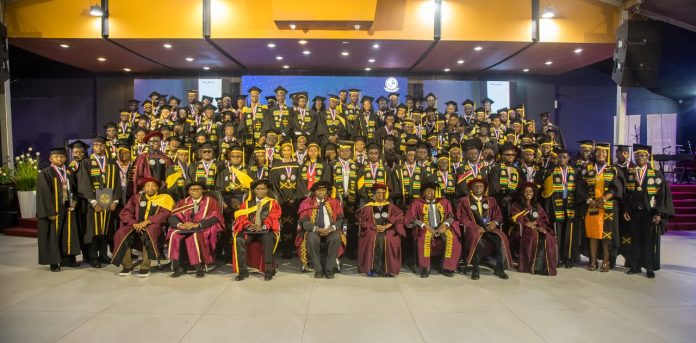
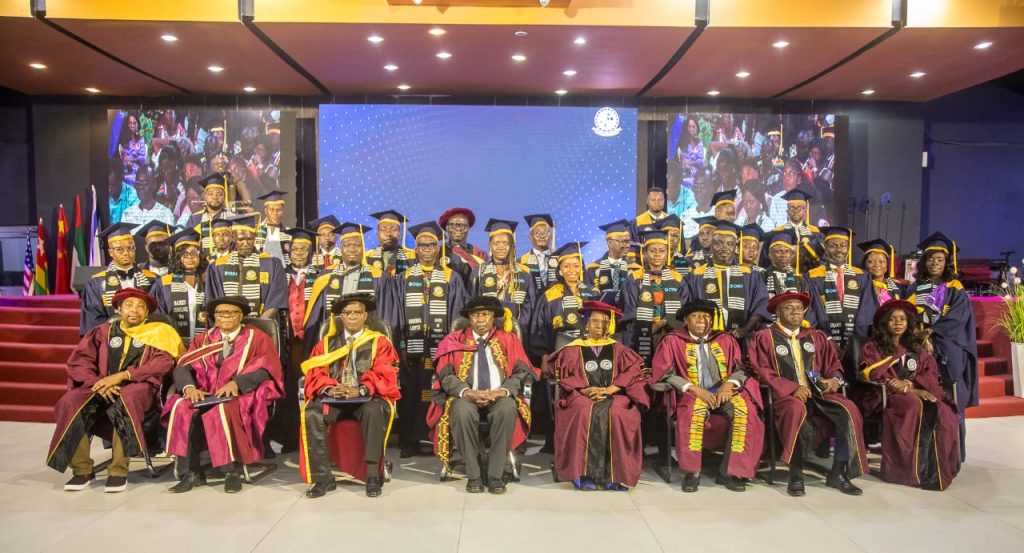
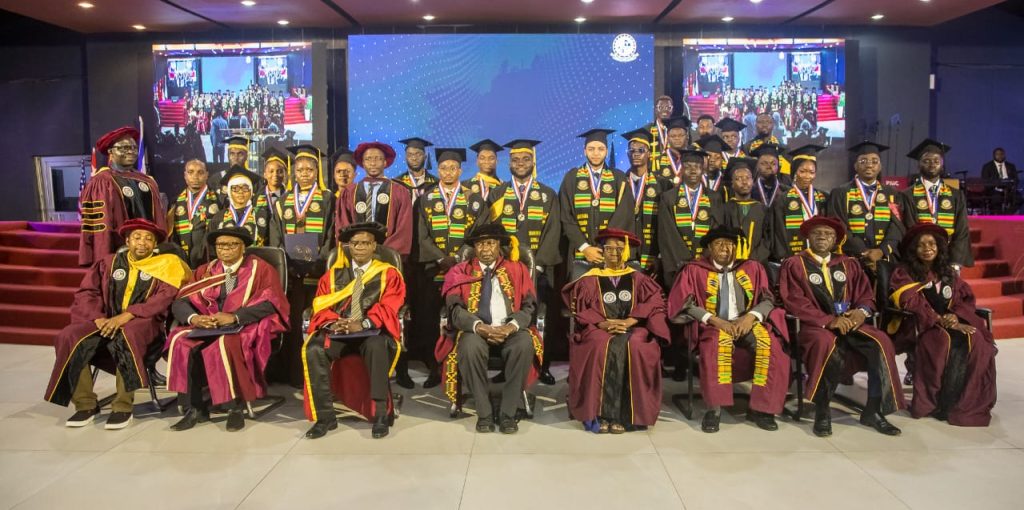
The Accra Institute of Technology (AIT) has held its 22nd Graduation Ceremony, conferring degrees on 572 students across doctoral, master’s and bachelor’s programmes.

The ceremony saw 8 PhD, 69 master’s and 495 bachelor’s graduates receive their degrees. Of the bachelor’s cohort, 405 completed campus-based programmes while 90 graduated through AIT’s Open University system.

PhD Alumni Cross 100 Milestone
A major highlight was the graduation of eight new PhD scholars, pushing AIT’s cumulative doctoral alumni beyond 100. This marked the 14th time the University has produced PhD graduates.

President of AIT, Prof. Clement K. Dzidonu, described the achievement as a significant milestone for the relatively young institution. He noted that more than half of AIT’s PhD alumni have attained professorial rank within three years of graduation, underscoring the University’s growing impact on Ghana’s higher education sector.

Prof. Dzidonu emphasized that faculty members of most public and private universities in Ghana include AIT-trained PhDs, while senior academic and administrative staff across the country have pursued doctoral studies at AIT.

Strengthening Ghana’s Human Capital
AIT’s postgraduate research programmes span Engineering, Information Technology, Education and Business Administration, aligning with Ghana’s science, technology and innovation agenda.

At the undergraduate level, the addition of 495 new bachelor’s graduates and 69 master’s graduates further strengthens the pool of skilled professionals entering Ghana’s workforce. The graduation therefore reflects AIT’s contribution to human capital development, postgraduate research, and academic leadership across the country’s university system.

Commendations and Challenges
Chairman of the AIT Board of Trustees, Emeritus Prof. Ivan Addae-Mensah, commended the University for achieving important milestones despite its youth, describing AIT as fast becoming a world-class private technological university. He congratulated the graduating class, reminding them that graduation is only the beginning, and that their ultimate success depends on how effectively they apply the knowledge and opportunities gained.

Prof. Dzidonu, in his address, urged the Class of 2026 to embrace continuous learning in a rapidly changing world shaped by Artificial Intelligence and emerging technologies. He challenged them to become Sovereign Lifelong Learners—graduates who take ownership of their skills and knowledge development. His message centred on the call to “See the Opportunity, Explore the Possibility and Create the Difference.”

About AIT
AIT is accredited by the Ghana Tertiary Education Commission (GTEC) to run both campus-based and Open University programmes. The University is affiliated with the Kwame Nkrumah University of Science and Technology (KNUST) for campus-based undergraduate programmes in engineering, computer science/IT, and business administration, and with the Open University of Malaysia for Open University undergraduate and postgraduate programmes at the master’s and PhD levels.

UHAS Students Left in Limbo as GAUA Strike Cripples End-of-Sem Exams

0

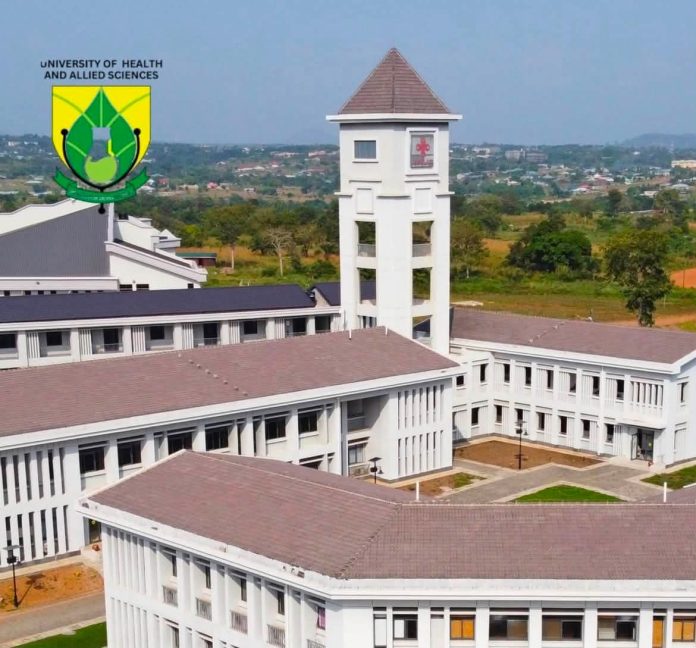
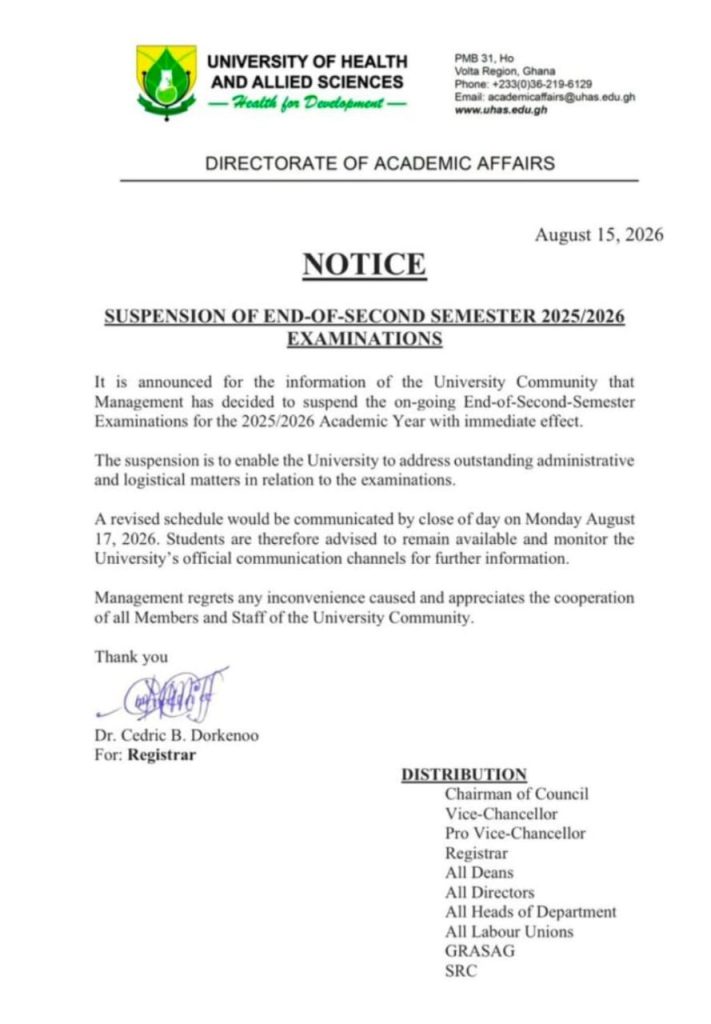
Students of the University of Health and Allied Sciences (UHAS) have been left in limbo following the suspension of the End-of-Second Semester Examinations for the 2025/2026 Academic Year.

The announcement, made in a notice issued by the Directorate of Academic Affairs on Saturday, August 15, 2026, explained that the suspension was to resolve outstanding administrative and logistical matters. The statement, signed by Dr. Cedric B. Dorkenoo for the Registrar, assured students that a revised examination schedule would be communicated by close of day on Monday, August 17, 2026.

Copy of the notice issued by the university

Though the university did not disclose the cause of the administrative and logistical challenges, VoltaOnline understands the situation was triggered by the ongoing strike of the Ghana Association of University Administrators (GAUA). The strike, involving senior administrators and professional staff including assistant registrars and their analogous ranks across the country’s traditional universities, has left critical gaps in examination management, effectively crippling the process at UHAS.

Amid the disruption, VoltaOnline has also gathered that, the Senior Staff Association of UHAS (SSA-UHAS) has issued a communique cautioning its members against assuming the responsibilities of their supervisors during the strike. The circular stressed that senior staff are not part of the GAUA action and directed members to remain at their posts but strictly adhere to their assigned schedules and job descriptions. It further instructed that all SSA members participating in the ongoing examinations be withdrawn immediately until proper procedures are followed by university management.

The Association warned that any member acting outside their mandate does so at their own risk, citing labour law provisions, and urged members to remain calm, unionized, and law-abiding while reporting any intimidation or undue pressure to the SSA Executive Council.

Meanwhile, students remain anxious about the delay and its impact on their academic calendar, with many expressing frustration over the uncertainty surrounding when the examinations will eventually be conducted.

Makafui Woanyah Retains NPP Volta Chairmanship in Closely Fought Regional Elections

0

Mr. Makafui Kofi Woanyah has retained the New Patriotic Party (NPP) Volta Regional Chairmanship after defeating his long-standing challenger, Joseph Homenya, in the party’s regional executive elections.

He polled 169 votes to secure his third term against Mr. Homenya’s 148 to win by a margin of 21 votes in the closely contested race.

The victory gives Makafui Woanyah another triumph over contender, who has challenged him for the regional chairmanship on two previous occasions. The latest contest therefore marked their third head-to-head battle for the position.

The election was keenly contested, with party members divided between retaining the existing leadership and bringing in a new team to reposition the party in the Volta Region.

Supporters of the incumbent argued that his experience and contribution to the party’s organisational development and electoral fortunes justified his retention. Those advocating a change in leadership, however, called for a fresh approach to unite the party, rebuild confidence among members and broaden its support base in the region.

In the other executive contests, Kenneth Kodzo Ayim was elected First Vice Chairman with 159 votes. He defeated Steve Delanyo Klu, who polled 144 votes, while Joseph Kwaku Wilberforce obtained 14 votes.

Parlous Quarshie won the Second Vice Chairman position with 150 votes, followed by Divine Richard Bosson with 94 votes and David Azim with 74 votes.

The Secretary’s position was one of the closest contests, with Shabanton Kwesi Dutsrogbe narrowly defeating Samuel Attahchie by a single vote. Dutsrogbe polled 156 votes against Attahchie’s 155.

Titus Attamiah was elected Deputy Secretary with 128 votes, beating Anthony Akpah, who obtained 121 votes, and Bright Agboworda, who polled 79.

For the Woman Organizer position, Lebene Cate Gbeti emerged victorious with 162 votes. Agyagbo Rejoice and Patricia Etornam polled 82 and 73 votes respectively.

Klutse Christo Wisdom won the Organizer position with 103 votes. Wotordzor Godson obtained 90 votes, Emmanuel Quashie 89 and Samuel Haligah 36.

Perry Kwashie was elected Communication Officer after securing 167 votes. He defeated Zain-ul-Abideem Ballah Sulleyman and Enoch Amegbleto, who polled 87 and 68 votes respectively.

Emmanuel Senyo Amekplenu secured a decisive victory in the Youth Organizer contest with 228 votes. Philip Bokorgah obtained 70 votes, while Destiny Prince Kudagje polled 19.

Oxford Kosi Agboli was elected Treasurer with 193 votes, defeating Gakpo Wisdom, who secured 125 votes.

In the Nasara Coordinator contest, Abdulai Suala emerged victorious with 188 votes against Adebayor Mudashiru’s 158 votes.

The newly elected regional executive is expected to focus on strengthening the party’s grassroots structures, promoting internal cohesion and rebuilding the NPP’s support base in the Volta Region as it prepares for future electoral contests.

2026 Asogli Te Za Launched in Ho with Call for Unity & Dev’t

0

The 2026 Asogli Te Za, popularly known as the Asogli Yam Festival, has been officially launched in Ho with a vibrant display of culture, music, traditional performances, and fireworks.

The launch, held on Wednesday, August 12, attracted a large gathering of residents and visitors and set the stage for weeks of activities leading to the festival’s grand climax.

The 2026 celebration is being held under the theme, “United in Purpose, Investing in People and Infrastructure for Sustainable National Development.”

Launching the festival, the Ho Municipal Chief Executive, Stephen Adom, commended the people of Asogli for maintaining peace, unity, and social cohesion over the years.

He encouraged the people to build on these values by channeling their collective efforts toward accelerated development, particularly in areas that can improve the livelihoods of residents.

Mr. Adom also appealed to the youth to uphold respect for traditional authorities and contribute positively toward protecting and promoting the image and reputation of the Asogli State.

The celebration will reach its peak with a grand durbar at the Jubilee Park in Ho on October 3, expected to draw participants from across Ghana and the international community.

Ahead of the durbar, a number of activities have been scheduled, including a Youth Empowerment and Entrepreneurship Day, Auto Show, Asogli Marathon, Health Walk and Screening, Anti-Corruption Forum, Choral Music Day, and the Volta Economic Forum.

Other highlights include a carnival, Hailing of the New Yam, Borborbor Fair, a summit bringing together Ewe chiefs from Ghana, Togo and Benin, and a lawn tennis competition, among other cultural and social activities.

The Agbogbomefia of Asogli, Togbe Afede XIV, is expected to sit in state at the Asogli Palace on October 2, followed by a State Dinner, Dance and Awards ceremony in Ho.

The Asogli Te Za festival is traditionally observed as an occasion of thanksgiving to God, the gods, and ancestors for a successful harvest. It also provides an opportunity for the people to offer prayers for good health, prosperity, peace, and continued progress while strengthening unity through forgiveness and reconciliation.

Beyond its cultural significance, the festival provides an avenue for the Asogli State to reflect on achievements and challenges across various sectors, particularly agriculture, and explore ways of mobilizing human and material resources for employment and wealth creation.

The annual celebration also serves as a reaffirmation of the allegiance of chiefs and subjects within the Asogli State to the Agbogbomefia, while promoting the preservation of the area’s rich cultural heritage and traditions.

With its combination of cultural festivities, development-focused programmes, and stakeholder engagements, the 2026 Asogli Te Za is expected to provide a platform for celebrating the past while encouraging collective action toward a more prosperous future.

Ghana Is Going Digital—But Are Ghanaians Building the Technology?

0

Ghana has embraced digitalisation with remarkable enthusiasm. Government services are moving online, banks are becoming increasingly digital, hospitals are adopting electronic systems, universities are deploying learning platforms, businesses are embracing fintech, and citizens are increasingly interacting with the state through digital channels.

But beneath this impressive transformation lies a question we are not asking loudly enough:

Who is actually building the technology that Ghana is spending billions of cedis to acquire?

This is not an argument against foreign technology. Ghana needs international expertise, global platforms, advanced infrastructure and partnerships. The real question is whether our digital transformation is simultaneously building Ghanaian technological capability, Ghanaian companies, Ghanaian intellectual property and Ghanaian jobs.

If the answer is no, then we risk becoming a highly digitised country without becoming a technologically productive one.

ICT growth is not the same as digital ownership

Ghana’s Information and Communication sector is demonstrating extraordinary growth. The sector recorded 20.2 per cent growth in 2025, making it one of the fastest-growing areas of the economy, while Ghana’s overall economy expanded by 6.0 per cent.

These numbers are encouraging.

But GDP growth in the ICT sector does not automatically tell us how much of that value is being created by Ghanaian software developers, technology companies and locally owned intellectual property.

This is where Ghana has a serious measurement problem.

We can estimate the size and growth of the broader ICT sector, but we do not routinely publish a national figure showing the annual economic value generated specifically by Ghanaian software developers and locally developed digital products.

Consequently, we know that Ghana is becoming more digital, but we have a much weaker understanding of how much of that digital economy Ghana owns.

That distinction matters.

A country can spend heavily on digital systems, cloud services, software licences, cybersecurity products, enterprise applications and technology consultancy while much of the economic value ultimately flows outside the country.

Digitalisation can therefore produce two very different outcomes: digital consumption or digital production.

Ghana must deliberately pursue the second.

We have talent. The question is whether we are creating an ecosystem for it.

There is no shortage of Ghanaian technological talent.

Across universities, technical universities, technology hubs, fintech companies, startups and independent developer communities, young Ghanaians are building applications, payment systems, health platforms, education technologies, agricultural solutions and enterprise software.

The problem is that talent alone does not create technological sovereignty.

Developers need markets.

Startups need customers.

Technology companies need access to capital.

Researchers need opportunities to commercialise their innovations.

And government—the country’s largest single buyer of many digital services—needs procurement policies that can convert public expenditure into domestic technological capacity.

This is where government procurement becomes strategic economic policy.

When a government institution spends millions on a digital project, the question should not only be whether the system works.

We should also ask:

How many Ghanaian developers were employed? How much knowledge was transferred? Who owns the intellectual property? Can Ghanaian firms maintain and improve the system? What percentage of the contract value remains in Ghana?

These questions should become standard.

Government digitalisation must become an industrial policy

Ghana’s digitalisation programme should not be treated simply as an ICT programme.

It should be treated as industrial policy for the digital age.

Every major government technology investment should have a measurable local-capacity component.

For example, where an international company wins a major government technology contract, the contract could require meaningful participation by qualified Ghanaian firms and professionals.

This could include:

  • local software development;
  • technology-transfer programmes;
  • training and certification of Ghanaian engineers;
  • local technical documentation;
  • Ghana-based maintenance and support;
  • internships and apprenticeships;
  • partnerships with Ghanaian universities and technical universities;
  • and progressive transfer of technical responsibilities to local companies.

The objective should not be to exclude foreign companies.

The objective should be to ensure that foreign investment leaves Ghana more technologically capable than it found it.

Ghana needs a Local Digital Content Policy

Ghana should now consider developing a comprehensive Local Digital Content and Software Development Framework.

Such a framework should establish measurable targets for local participation in public-sector digital procurement.

Rather than simply measuring whether a Ghanaian company won a contract, government should measure the actual local value created.

A contract could, for example, be assessed according to:

local developers employed + local software development + local intellectual property + local training + local maintenance + local research and innovation + local expenditure.

This would create a more meaningful definition of local content.

We also need to know what we are producing

Ghana cannot manage what it does not measure.

The Ghana Statistical Service, Ministry of Communication, Digital Technology and Innovations, National Information Technology Agency and other relevant institutions should develop a National Digital Production Account.

This could measure:

  1. Number of software developers and digital professionals;
  2. Annual revenue of Ghanaian software companies;
  3. Value of locally developed software;
  4. Government ICT expenditure retained domestically;
  5. Value of digital services exported;
  6. Software and technology imports;
  7. Foreign software licence expenditure;
  8. Number of locally owned digital platforms;
  9. Government systems developed or maintained locally; and
  10. Intellectual property generated by Ghanaian technology companies and researchers.

Such information would finally allow Ghana to answer a critical question:

Are we becoming a digital economy—or merely a digital market?

Universities must become part of the production chain

The answer cannot come from government alone.

Ghana’s universities and technical universities must become stronger participants in the digital production ecosystem.

Our institutions should move beyond teaching programming as an academic subject.

Students should be challenged to build systems that solve Ghanaian problems.

Health information systems, agricultural platforms, educational technologies, logistics systems, cybersecurity solutions, artificial intelligence applications and public-service platforms should become practical areas of innovation.

Government institutions should provide real-world problems.

Universities should provide research and talent.

Industry should provide markets and commercialisation.

This would create a government–industry–university innovation triangle capable of turning Ghanaian knowledge into Ghanaian products.

Artificial intelligence makes the issue even more urgent

The rise of artificial intelligence makes this conversation more important.

If Ghana simply becomes a consumer of foreign AI models, cloud platforms and software services, the country could experience another wave of technological dependency.

But if Ghana invests in local AI applications, African datasets, local-language technologies, cybersecurity, health AI, agricultural intelligence and public-sector automation, AI could become a major source of domestic economic value.

The objective should therefore not be to build everything ourselves.

That would be neither practical nor necessary.

The objective should be to identify strategically important technologies that Ghana must have the capacity to understand, customise, secure, maintain and, where possible, own.

A new national target

Ghana should set a national ambition:

By 2030, every major government digital investment should demonstrably increase Ghana’s domestic digital productive capacity.

This could become a measurable national indicator alongside GDP growth, employment and investment.

The debate should therefore move beyond How many government services have we digitised?

We should ask:

How many Ghanaian technology companies have grown because of digitalisation?

How many Ghanaian developers are employed?

How much software do we export?

How much intellectual property do we own?

How much of government technology expenditure remains in Ghana?

These are the questions that will determine whether Ghana’s digital transformation becomes economically transformative.

The choice before Ghana

Ghana has already made the decision to digitalise.

The next decision is more fundamental.

Will we merely use technology—or will we build an economy that produces it?

Our digital future should not be measured only by the number of platforms launched, applications deployed or services placed online.

It should also be measured by the Ghanaian minds employed, Ghanaian companies created, Ghanaian intellectual property developed and Ghanaian digital products exported.

Digitalisation should therefore become more than a programme of government.

It should become a strategy for building Ghana’s technological productive capacity.

The goal should be clear:

Not a Ghana that is merely digitised, but a Ghana that creates, owns, secures and exports digital technology.

That is the digital Ghana worth building.

Ho Teaching Hospital Board Engages GJA; Courts Stakeholders’ Support for Expansion

0

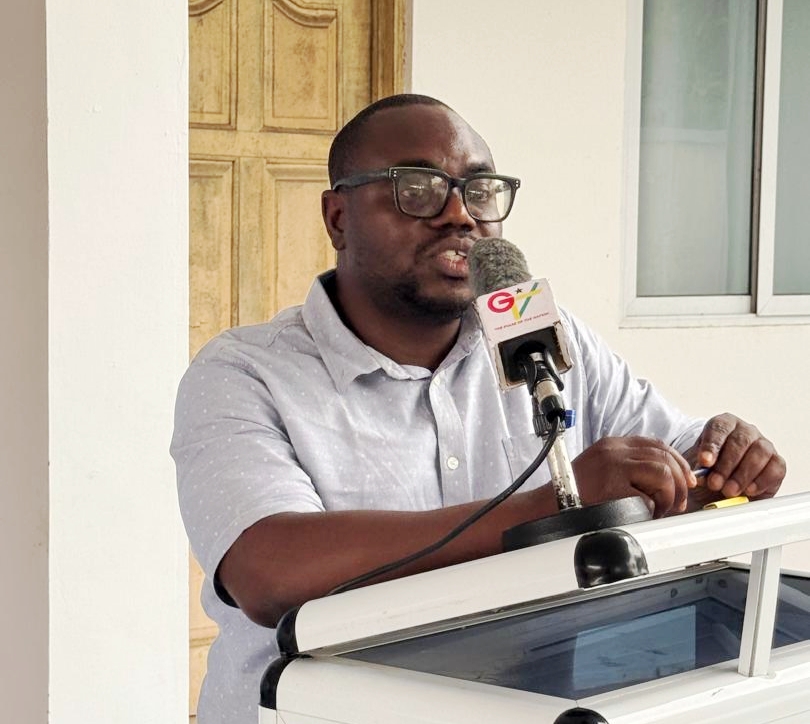
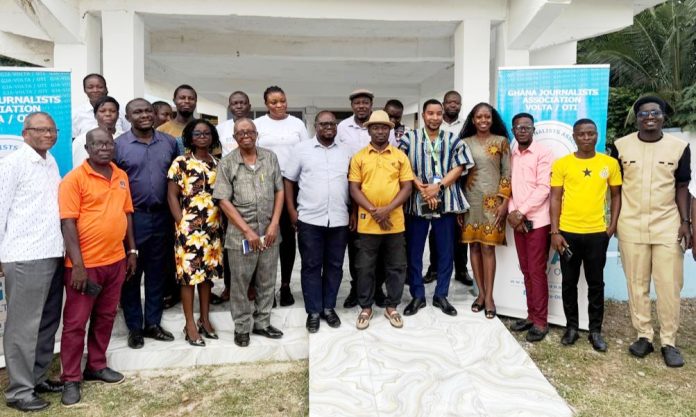
The Governing Board of Ho Teaching Hospital (HTH) has engaged the Ghana Journalists Association (GJA) Volta Executives and selected media houses in a landmark stakeholder meeting, aimed at rallying support for the expansion of the facility and strengthening public confidence in its services.

Board Chairman, Dr. Delanyo Dovlo, underscored the crucial role of the media in shaping public trust in healthcare delivery. He noted that the media’s reportage influences healthy behaviours and bridges health institutions with the communities they serve. “We see the media not as critics to be feared, but as indispensable partners in national development and in our shared mission of improving healthcare outcomes,” he affirmed.

Dr. Dovlo highlighted strides made by the hospital, including strengthened specialist services, improved infection control, and the introduction of digital health systems. He proudly announced the establishment of a Music Therapy Studio, the first of its kind in West Africa, positioning HTH as a destination for wellness and medical tourism.

Ho Teaching Hospital began as a 180-bed regional facility before its upgrade to teaching hospital status, with capacity rising to about 300. This transition enabled the hospital to deliver tertiary healthcare and serve as a training ground for medical professionals in partnership with the University of Health and Allied Sciences (UHAS). Despite these gains, it remains the least resourced among Ghana’s teaching hospitals in terms of infrastructure, though it continues to leverage its dedicated human resource base to meet its mandate.

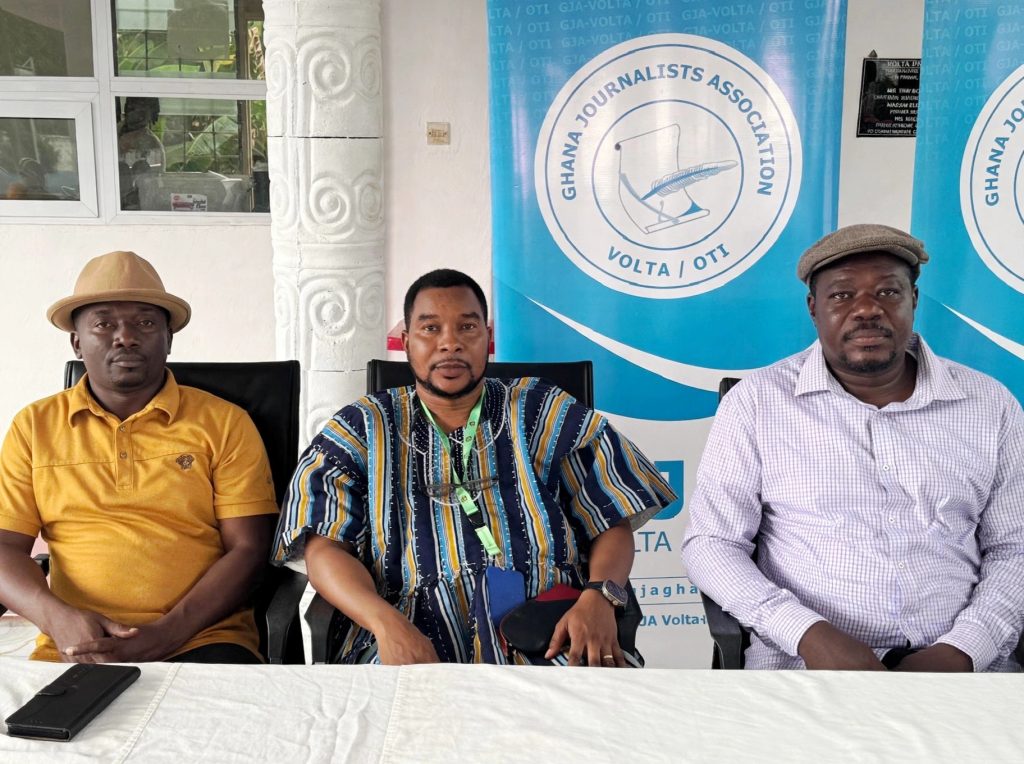
Dr. Dovlo HTH Board Chairman with Dr. Belley, GJA-Volta Chairman

Dr. Dovlo therefore stressed the need for urgent expansion of the facility, and called on all stakeholders to join the advocacy for the long-awaited 500-bed expansion project by the government to materialise. He also appealed to President Mahama for expedited action on the Korea Exim Bank Loan Facility to ensure construction begins without delay.

Chief Executive Officer, Dr. Hintermann Mbroh, acknowledged challenges with service delivery but assured that measures are being taken to improve patient experience. He welcomed plans to establish a cardiology centre and pledged the hospital’s support for the government’s Free Primary Healthcare programme. He also commended MTN Ghana for expanding the Accident and Emergency department, increasing its bed capacity from 22 to over 50.

Other members of the Board, including the Vice-Chancellor of UHAS, Prof. Lydia Aziato, urged the media to exercise responsibility in their reportage, stressing constructive collaboration between the hospital and the media to build public confidence.

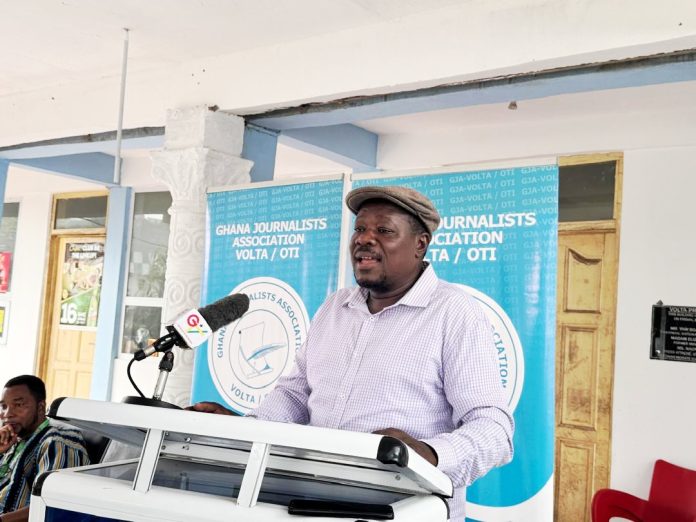
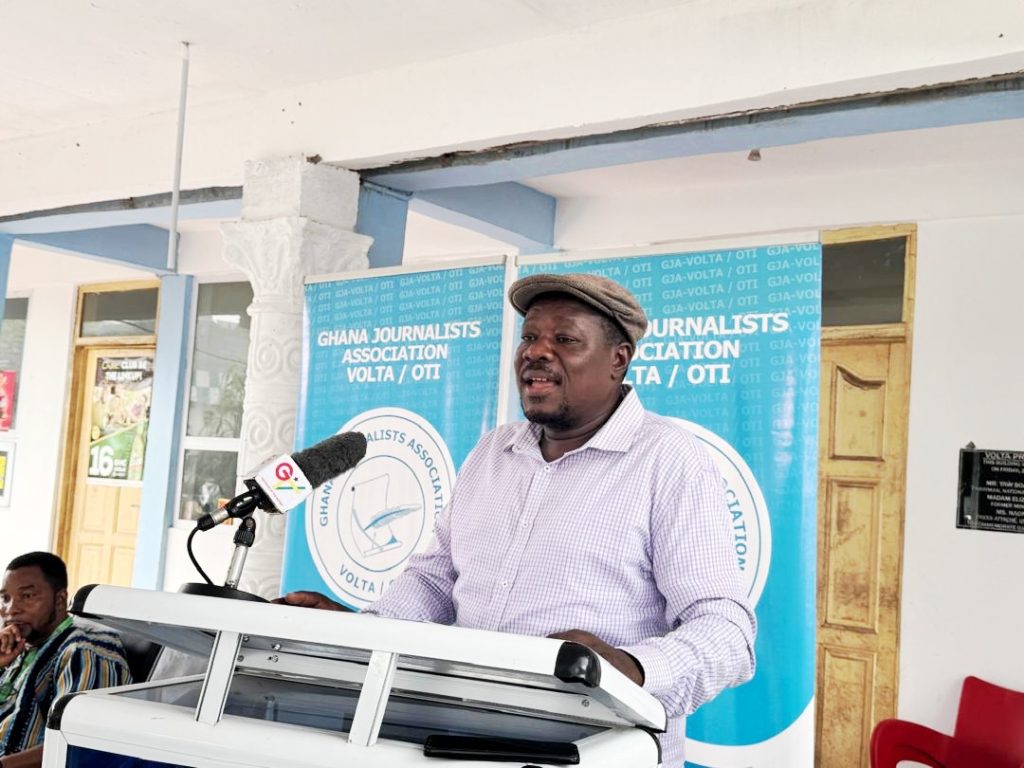
Chairman of GJA-Volta, Dr. Harrison Belley, commended the Board for initiating the engagement, describing it as the first of its kind. He said the platform would foster dialogue and help the media better understand the operations of the hospital, thereby strengthening collaboration. He expressed the hope that regular stakeholder interactions would minimise misinformation and enhance public confidence in the facility.

The GJA Secretary, Mr. Lambert Atsivor, also commended the hospital management for revamping its communication outfit, which he said would improve stakeholder interactions and build public trust.

Other GJA Executives present included King-Freeman Nutsukpoe, Treasurer, and Elorm Aryee, Administrator.

Volta NPP Elects New Executives on Saturday

0

The New Patriotic Party (NPP) in the Volta Region will hold its regional elections on Saturday, 15th August 2026, at Mawuli School, Ho, to elect new executives who will lead the party for the next four years.

The Volta Regional Election Committee has confirmed that all aspirants have been duly vetted and approved, setting the stage for a highly competitive contest.

The Regional Chairman race is expected to be one of the most closely watched, as incumbent Makafui Kofi Woanyah seeks a third term. He faces his former Regional Secretary, Joseph Homenya, in a contest that pits continuity against insider experience.

In the 2nd Vice Chairperson contest, Divine Richard Komla Bosson, a former Municipal Chief Executive (MCE) for Ho, is among the aspirants. His entry adds weight to the race, given his governance background and influence in the region.

The Youth Organiser position has also generated excitement. Emmanuel Senyo Amekplenu, a vibrant party communicator, is seeking to annex the role, promising to energize youth mobilisation and strengthen grassroots engagement.

For the first time, the Regional Communication Officer slot has been made elective. Former director Enoch Kwabla Amegbletor is returning to reclaim the position, challenging the incumbent officer Perry Kwashie Nuwordu and another communicator, Zain-ul-Abideen Ballah Sulleyman. This contest is seen as crucial, as it will determine how the party’s message is projected in the Volta Region ahead of national campaigns.

Other positions, including 1st Vice Chairperson, Secretary, Treasurer, Deputy Secretary, Organiser, Women Organiser, and Nasara Organiser, will also be decided, with multiple candidates contesting across the board.

Delegates from across the region are expected to participate in the polls, which officials have assured will be conducted in a transparent and orderly manner.

The outcome of Saturday’s elections will not only determine the regional leadership structure but also set the tone for the NPP’s organizational strength in the Volta Region as the party prepares for national political contests.

Full List of Candidates

Regional Chairman: Makafui Kofi Woanyah, Joseph Homenya
1st Vice Chairperson: Kenneth Kodjo Ayim, Steve Delanyo Qwaqu Klu, Joseph Kwaku Wilberforce
2nd Vice Chairperson: David Azim, Divine Richard Komla Bosson, Parlous Quarshie
Regional Secretary: Samuel Attachie-Anku, Shabanton Moses Kwesi Dutsrogbe
Regional Treasurer: Gakpo Wisdom Jid Kwaku, Oxford Korsi Agboli
Deputy Secretary: Bright Agboworda, Anthony Akpah, Titus Attamiah
Regional Organiser: Emmanuel Kwamena Quarshie, Christo Wisdom Klutse, Wotordzor Godson, Samuel Wisdom Doe Haligah
Youth Organiser: Philip Bokorgah, Emmanuel Senyo Amekplenu, Destiny Prince Tetteh Kudadjie
Women Organiser: Lebene Cate Gbeti, Agyagbo Rejoice Afi, Patricia Etornam Hlorbu
Nasara Organiser: Abdulai Suala, Adebayo Mudashiru
Communication Officer: Enoch Kwabla Amegbletor, Perry Kwashie Nuwordu, Zain-ul-Abideen Ballah Sulleyman

31-Year-Old Woman Jailed for Baby Abduction at Kpando

0

The Kpando Circuit Court has sentenced Stella Amedzorme, a 31-year-old trader, to three years’ imprisonment after she pleaded guilty to abducting an eight-month-old baby at the Kpando Market in the Volta Region.

According to a police statement, the baby’s mother, Gloria Xagbe, narrated that on 17th July 2026, she left her child in the care of Amedzorme, a fellow trader, while she went to buy packaging bags. Upon her return, she discovered that Amedzorme had absconded with the baby. Alarmed, she lodged a complaint with the police.

Swift investigations by the Kpando Police Command led to the arrest of Amedzorme in a suburb of Kwamekrom in the Oti Region on 18th July 2026, and the baby was rescued unharmed. The case was subsequently presented before the Kpando Circuit Court on 20th July. On 3rd August 2026, the suspect was convicted on her own plea and sentenced to three years’ imprisonment.

In a statement signed by Inspector Felix Kwao, Public Relations Officer of the Volta North Regional Police Command, the Police confirmed that investigations are ongoing to apprehend the convict’s fiancé, who is believed to have been complicit in the crime.

It also assured the public of their commitment to protecting lives and property, while urging parents and guardians to remain vigilant in crowded public spaces to prevent similar incidents.

Asogli State Announces Ban on Funerals Ahead of 2026 Yam Festival

0

The Asogli State Council in the Ho Municipality has announced a customary ban on funerals across the entire Asogli State as preparations intensify for the 2026 Asogli Te Zã (Yam Festival).

In a statement signed by Council Secretary Stephen Tetteh, the directive will take effect from Monday, August 17, 2026, and remain in force until Sunday, October 4, 2026.

The Council explained that the ban, sanctioned by the Agbogbomefia, Togbe Afede XIV, together with the Chiefs and Elders of Asogli, is a traditional observance designed to preserve the sanctity of the festival. It appealed to the public for full cooperation, stressing that strict adherence is essential for a peaceful and successful celebration.

The Asogli Te Zã, celebrated annually, is one of the most revered cultural festivals in the Volta Region. It marks the harvest of new yams and is observed with thanksgiving, renewal, and communal unity. The period is characterized by rituals, durbars, and cultural displays that highlight the rich heritage of the Asogli people.

The Council reaffirmed its commitment to tradition and harmony, urging citizens to respect the directive in the spirit of unity and cultural pride.