26.7 C
Volta Region
Thursday, September 24, 2026
spot_img
Home Blog Page 2

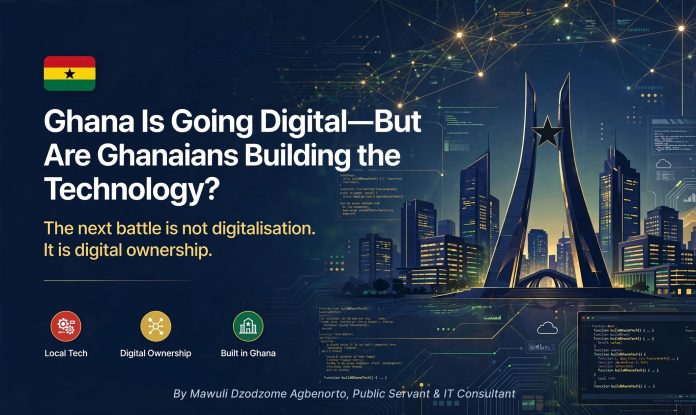
Ghana Is Going Digital—But Are Ghanaians Building the Technology?

0

Ghana has embraced digitalisation with remarkable enthusiasm. Government services are moving online, banks are becoming increasingly digital, hospitals are adopting electronic systems, universities are deploying learning platforms, businesses are embracing fintech, and citizens are increasingly interacting with the state through digital channels.

But beneath this impressive transformation lies a question we are not asking loudly enough:

Who is actually building the technology that Ghana is spending billions of cedis to acquire?

This is not an argument against foreign technology. Ghana needs international expertise, global platforms, advanced infrastructure and partnerships. The real question is whether our digital transformation is simultaneously building Ghanaian technological capability, Ghanaian companies, Ghanaian intellectual property and Ghanaian jobs.

If the answer is no, then we risk becoming a highly digitised country without becoming a technologically productive one.

ICT growth is not the same as digital ownership

Ghana’s Information and Communication sector is demonstrating extraordinary growth. The sector recorded 20.2 per cent growth in 2025, making it one of the fastest-growing areas of the economy, while Ghana’s overall economy expanded by 6.0 per cent.

These numbers are encouraging.

But GDP growth in the ICT sector does not automatically tell us how much of that value is being created by Ghanaian software developers, technology companies and locally owned intellectual property.

This is where Ghana has a serious measurement problem.

We can estimate the size and growth of the broader ICT sector, but we do not routinely publish a national figure showing the annual economic value generated specifically by Ghanaian software developers and locally developed digital products.

Consequently, we know that Ghana is becoming more digital, but we have a much weaker understanding of how much of that digital economy Ghana owns.

That distinction matters.

A country can spend heavily on digital systems, cloud services, software licences, cybersecurity products, enterprise applications and technology consultancy while much of the economic value ultimately flows outside the country.

Digitalisation can therefore produce two very different outcomes: digital consumption or digital production.

Ghana must deliberately pursue the second.

We have talent. The question is whether we are creating an ecosystem for it.

There is no shortage of Ghanaian technological talent.

Across universities, technical universities, technology hubs, fintech companies, startups and independent developer communities, young Ghanaians are building applications, payment systems, health platforms, education technologies, agricultural solutions and enterprise software.

The problem is that talent alone does not create technological sovereignty.

Developers need markets.

Startups need customers.

Technology companies need access to capital.

Researchers need opportunities to commercialise their innovations.

And government—the country’s largest single buyer of many digital services—needs procurement policies that can convert public expenditure into domestic technological capacity.

This is where government procurement becomes strategic economic policy.

When a government institution spends millions on a digital project, the question should not only be whether the system works.

We should also ask:

How many Ghanaian developers were employed? How much knowledge was transferred? Who owns the intellectual property? Can Ghanaian firms maintain and improve the system? What percentage of the contract value remains in Ghana?

These questions should become standard.

Government digitalisation must become an industrial policy

Ghana’s digitalisation programme should not be treated simply as an ICT programme.

It should be treated as industrial policy for the digital age.

Every major government technology investment should have a measurable local-capacity component.

For example, where an international company wins a major government technology contract, the contract could require meaningful participation by qualified Ghanaian firms and professionals.

This could include:

  • local software development;
  • technology-transfer programmes;
  • training and certification of Ghanaian engineers;
  • local technical documentation;
  • Ghana-based maintenance and support;
  • internships and apprenticeships;
  • partnerships with Ghanaian universities and technical universities;
  • and progressive transfer of technical responsibilities to local companies.

The objective should not be to exclude foreign companies.

The objective should be to ensure that foreign investment leaves Ghana more technologically capable than it found it.

Ghana needs a Local Digital Content Policy

Ghana should now consider developing a comprehensive Local Digital Content and Software Development Framework.

Such a framework should establish measurable targets for local participation in public-sector digital procurement.

Rather than simply measuring whether a Ghanaian company won a contract, government should measure the actual local value created.

A contract could, for example, be assessed according to:

local developers employed + local software development + local intellectual property + local training + local maintenance + local research and innovation + local expenditure.

This would create a more meaningful definition of local content.

We also need to know what we are producing

Ghana cannot manage what it does not measure.

The Ghana Statistical Service, Ministry of Communication, Digital Technology and Innovations, National Information Technology Agency and other relevant institutions should develop a National Digital Production Account.

This could measure:

  1. Number of software developers and digital professionals;
  2. Annual revenue of Ghanaian software companies;
  3. Value of locally developed software;
  4. Government ICT expenditure retained domestically;
  5. Value of digital services exported;
  6. Software and technology imports;
  7. Foreign software licence expenditure;
  8. Number of locally owned digital platforms;
  9. Government systems developed or maintained locally; and
  10. Intellectual property generated by Ghanaian technology companies and researchers.

Such information would finally allow Ghana to answer a critical question:

Are we becoming a digital economy—or merely a digital market?

Universities must become part of the production chain

The answer cannot come from government alone.

Ghana’s universities and technical universities must become stronger participants in the digital production ecosystem.

Our institutions should move beyond teaching programming as an academic subject.

Students should be challenged to build systems that solve Ghanaian problems.

Health information systems, agricultural platforms, educational technologies, logistics systems, cybersecurity solutions, artificial intelligence applications and public-service platforms should become practical areas of innovation.

Government institutions should provide real-world problems.

Universities should provide research and talent.

Industry should provide markets and commercialisation.

This would create a government–industry–university innovation triangle capable of turning Ghanaian knowledge into Ghanaian products.

Artificial intelligence makes the issue even more urgent

The rise of artificial intelligence makes this conversation more important.

If Ghana simply becomes a consumer of foreign AI models, cloud platforms and software services, the country could experience another wave of technological dependency.

But if Ghana invests in local AI applications, African datasets, local-language technologies, cybersecurity, health AI, agricultural intelligence and public-sector automation, AI could become a major source of domestic economic value.

The objective should therefore not be to build everything ourselves.

That would be neither practical nor necessary.

The objective should be to identify strategically important technologies that Ghana must have the capacity to understand, customise, secure, maintain and, where possible, own.

A new national target

Ghana should set a national ambition:

By 2030, every major government digital investment should demonstrably increase Ghana’s domestic digital productive capacity.

This could become a measurable national indicator alongside GDP growth, employment and investment.

The debate should therefore move beyond How many government services have we digitised?

We should ask:

How many Ghanaian technology companies have grown because of digitalisation?

How many Ghanaian developers are employed?

How much software do we export?

How much intellectual property do we own?

How much of government technology expenditure remains in Ghana?

These are the questions that will determine whether Ghana’s digital transformation becomes economically transformative.

The choice before Ghana

Ghana has already made the decision to digitalise.

The next decision is more fundamental.

Will we merely use technology—or will we build an economy that produces it?

Our digital future should not be measured only by the number of platforms launched, applications deployed or services placed online.

It should also be measured by the Ghanaian minds employed, Ghanaian companies created, Ghanaian intellectual property developed and Ghanaian digital products exported.

Digitalisation should therefore become more than a programme of government.

It should become a strategy for building Ghana’s technological productive capacity.

The goal should be clear:

Not a Ghana that is merely digitised, but a Ghana that creates, owns, secures and exports digital technology.

That is the digital Ghana worth building.

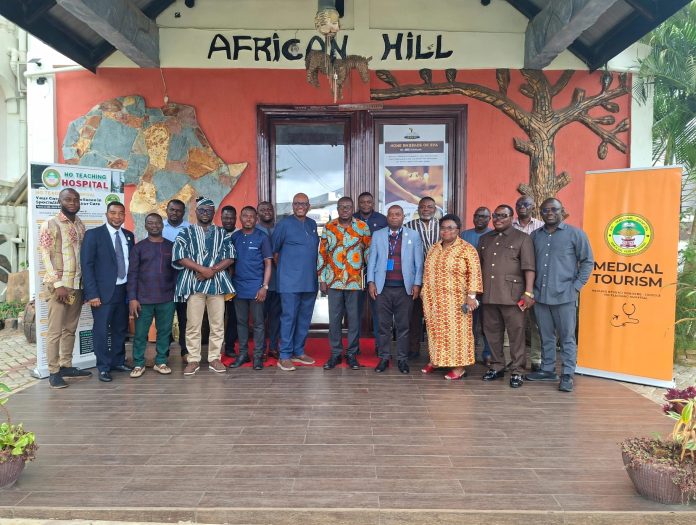
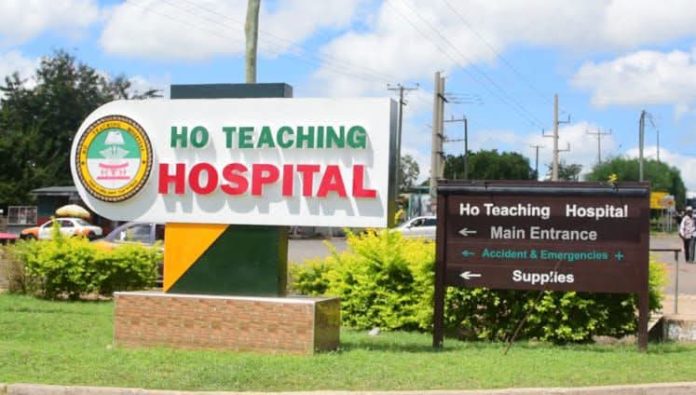
Ho Teaching Hospital Board Engages GJA; Courts Stakeholders’ Support for Expansion

0

The Governing Board of Ho Teaching Hospital (HTH) has engaged the Ghana Journalists Association (GJA) Volta Executives and selected media houses in a landmark stakeholder meeting, aimed at rallying support for the expansion of the facility and strengthening public confidence in its services.

Board Chairman, Dr. Delanyo Dovlo, underscored the crucial role of the media in shaping public trust in healthcare delivery. He noted that the media’s reportage influences healthy behaviours and bridges health institutions with the communities they serve. “We see the media not as critics to be feared, but as indispensable partners in national development and in our shared mission of improving healthcare outcomes,” he affirmed.

Dr. Dovlo highlighted strides made by the hospital, including strengthened specialist services, improved infection control, and the introduction of digital health systems. He proudly announced the establishment of a Music Therapy Studio, the first of its kind in West Africa, positioning HTH as a destination for wellness and medical tourism.

Ho Teaching Hospital began as a 180-bed regional facility before its upgrade to teaching hospital status, with capacity rising to about 300. This transition enabled the hospital to deliver tertiary healthcare and serve as a training ground for medical professionals in partnership with the University of Health and Allied Sciences (UHAS). Despite these gains, it remains the least resourced among Ghana’s teaching hospitals in terms of infrastructure, though it continues to leverage its dedicated human resource base to meet its mandate.

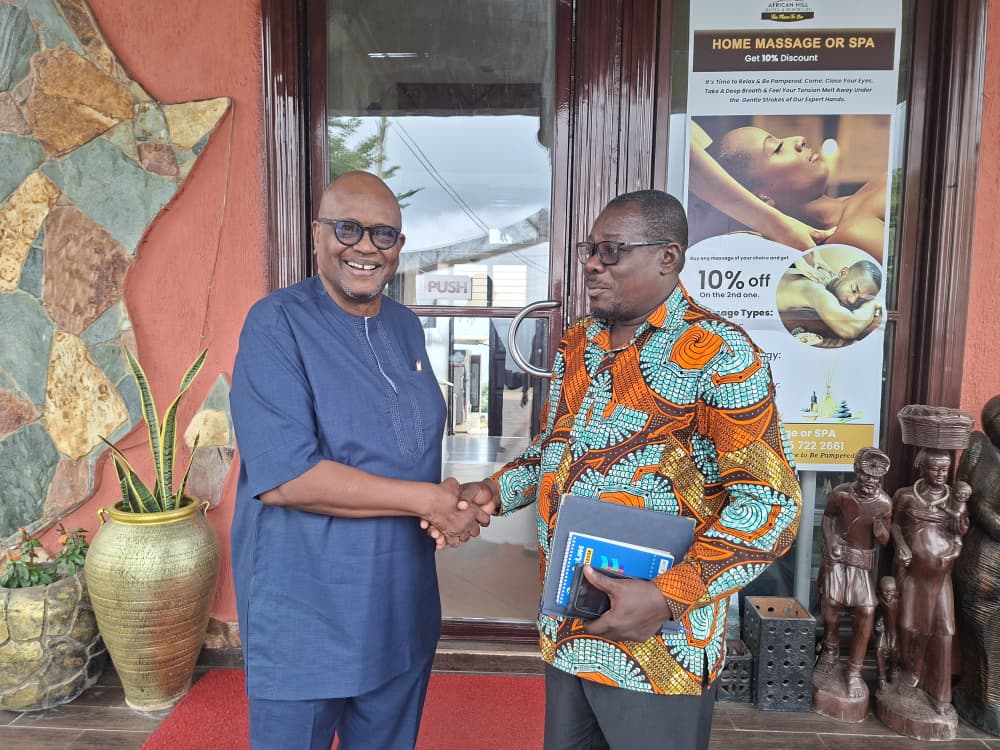
Dr. Dovlo HTH Board Chairman with Dr. Belley, GJA-Volta Chairman

Dr. Dovlo therefore stressed the need for urgent expansion of the facility, and called on all stakeholders to join the advocacy for the long-awaited 500-bed expansion project by the government to materialise. He also appealed to President Mahama for expedited action on the Korea Exim Bank Loan Facility to ensure construction begins without delay.

Chief Executive Officer, Dr. Hintermann Mbroh, acknowledged challenges with service delivery but assured that measures are being taken to improve patient experience. He welcomed plans to establish a cardiology centre and pledged the hospital’s support for the government’s Free Primary Healthcare programme. He also commended MTN Ghana for expanding the Accident and Emergency department, increasing its bed capacity from 22 to over 50.

Other members of the Board, including the Vice-Chancellor of UHAS, Prof. Lydia Aziato, urged the media to exercise responsibility in their reportage, stressing constructive collaboration between the hospital and the media to build public confidence.

Chairman of GJA-Volta, Dr. Harrison Belley, commended the Board for initiating the engagement, describing it as the first of its kind. He said the platform would foster dialogue and help the media better understand the operations of the hospital, thereby strengthening collaboration. He expressed the hope that regular stakeholder interactions would minimise misinformation and enhance public confidence in the facility.

The GJA Secretary, Mr. Lambert Atsivor, also commended the hospital management for revamping its communication outfit, which he said would improve stakeholder interactions and build public trust.

Other GJA Executives present included King-Freeman Nutsukpoe, Treasurer, and Elorm Aryee, Administrator.

Volta NPP Elects New Executives on Saturday

0

The New Patriotic Party (NPP) in the Volta Region will hold its regional elections on Saturday, 15th August 2026, at Mawuli School, Ho, to elect new executives who will lead the party for the next four years.

The Volta Regional Election Committee has confirmed that all aspirants have been duly vetted and approved, setting the stage for a highly competitive contest.

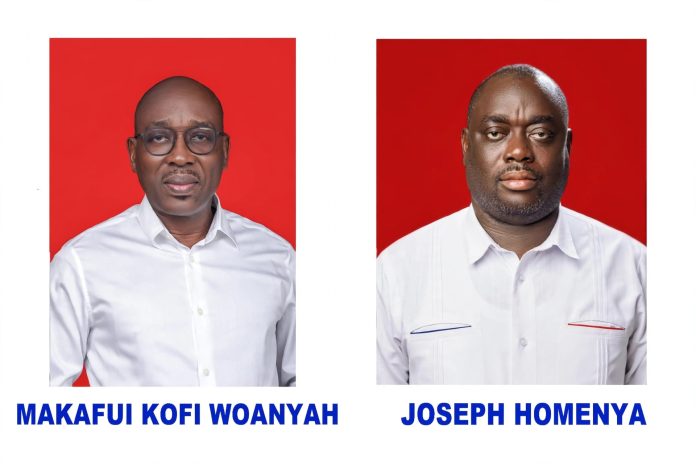
The Regional Chairman race is expected to be one of the most closely watched, as incumbent Makafui Kofi Woanyah seeks a third term. He faces his former Regional Secretary, Joseph Homenya, in a contest that pits continuity against insider experience.

In the 2nd Vice Chairperson contest, Divine Richard Komla Bosson, a former Municipal Chief Executive (MCE) for Ho, is among the aspirants. His entry adds weight to the race, given his governance background and influence in the region.

The Youth Organiser position has also generated excitement. Emmanuel Senyo Amekplenu, a vibrant party communicator, is seeking to annex the role, promising to energize youth mobilisation and strengthen grassroots engagement.

For the first time, the Regional Communication Officer slot has been made elective. Former director Enoch Kwabla Amegbletor is returning to reclaim the position, challenging the incumbent officer Perry Kwashie Nuwordu and another communicator, Zain-ul-Abideen Ballah Sulleyman. This contest is seen as crucial, as it will determine how the party’s message is projected in the Volta Region ahead of national campaigns.

Other positions, including 1st Vice Chairperson, Secretary, Treasurer, Deputy Secretary, Organiser, Women Organiser, and Nasara Organiser, will also be decided, with multiple candidates contesting across the board.

Delegates from across the region are expected to participate in the polls, which officials have assured will be conducted in a transparent and orderly manner.

The outcome of Saturday’s elections will not only determine the regional leadership structure but also set the tone for the NPP’s organizational strength in the Volta Region as the party prepares for national political contests.

Full List of Candidates

Regional Chairman: Makafui Kofi Woanyah, Joseph Homenya
1st Vice Chairperson: Kenneth Kodjo Ayim, Steve Delanyo Qwaqu Klu, Joseph Kwaku Wilberforce
2nd Vice Chairperson: David Azim, Divine Richard Komla Bosson, Parlous Quarshie
Regional Secretary: Samuel Attachie-Anku, Shabanton Moses Kwesi Dutsrogbe
Regional Treasurer: Gakpo Wisdom Jid Kwaku, Oxford Korsi Agboli
Deputy Secretary: Bright Agboworda, Anthony Akpah, Titus Attamiah
Regional Organiser: Emmanuel Kwamena Quarshie, Christo Wisdom Klutse, Wotordzor Godson, Samuel Wisdom Doe Haligah
Youth Organiser: Philip Bokorgah, Emmanuel Senyo Amekplenu, Destiny Prince Tetteh Kudadjie
Women Organiser: Lebene Cate Gbeti, Agyagbo Rejoice Afi, Patricia Etornam Hlorbu
Nasara Organiser: Abdulai Suala, Adebayo Mudashiru
Communication Officer: Enoch Kwabla Amegbletor, Perry Kwashie Nuwordu, Zain-ul-Abideen Ballah Sulleyman

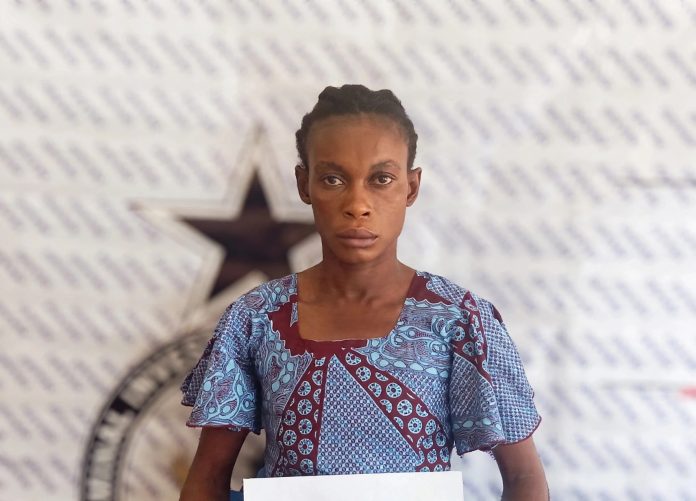
31-Year-Old Woman Jailed for Baby Abduction at Kpando

0

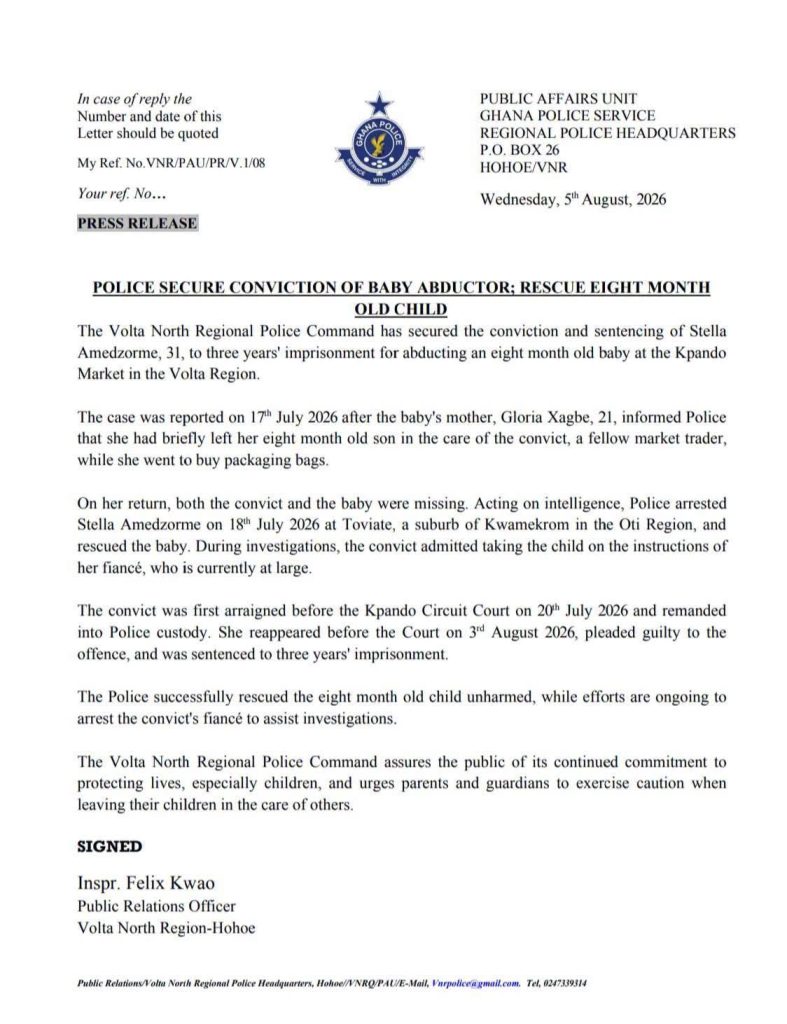
The Kpando Circuit Court has sentenced Stella Amedzorme, a 31-year-old trader, to three years’ imprisonment after she pleaded guilty to abducting an eight-month-old baby at the Kpando Market in the Volta Region.

According to a police statement, the baby’s mother, Gloria Xagbe, narrated that on 17th July 2026, she left her child in the care of Amedzorme, a fellow trader, while she went to buy packaging bags. Upon her return, she discovered that Amedzorme had absconded with the baby. Alarmed, she lodged a complaint with the police.

Swift investigations by the Kpando Police Command led to the arrest of Amedzorme in a suburb of Kwamekrom in the Oti Region on 18th July 2026, and the baby was rescued unharmed. The case was subsequently presented before the Kpando Circuit Court on 20th July. On 3rd August 2026, the suspect was convicted on her own plea and sentenced to three years’ imprisonment.

In a statement signed by Inspector Felix Kwao, Public Relations Officer of the Volta North Regional Police Command, the Police confirmed that investigations are ongoing to apprehend the convict’s fiancé, who is believed to have been complicit in the crime.

It also assured the public of their commitment to protecting lives and property, while urging parents and guardians to remain vigilant in crowded public spaces to prevent similar incidents.

Asogli State Announces Ban on Funerals Ahead of 2026 Yam Festival

0

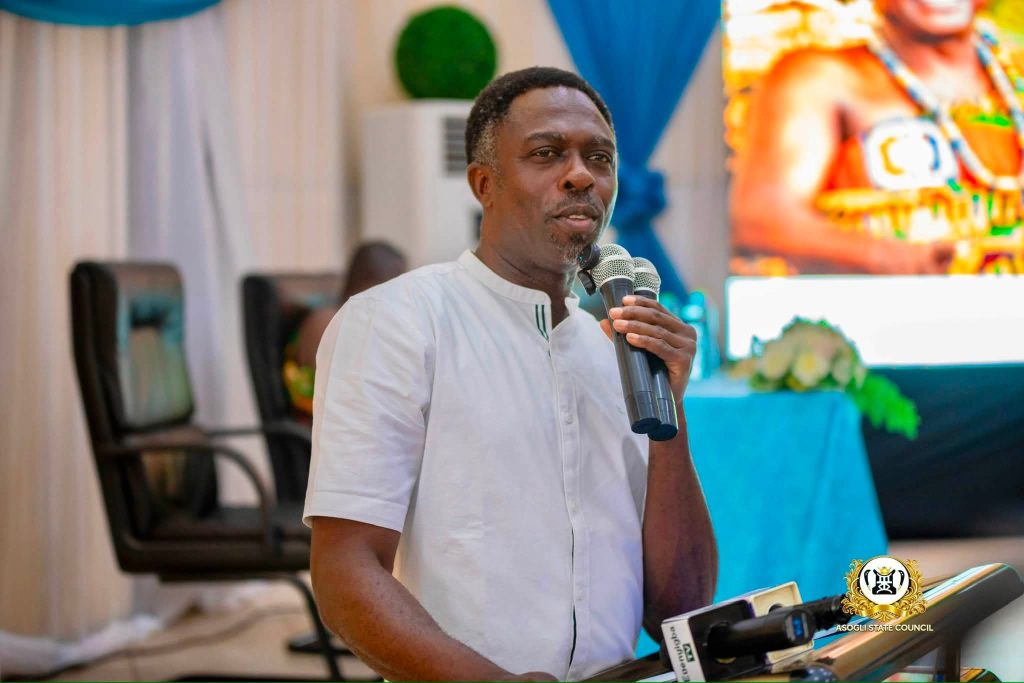
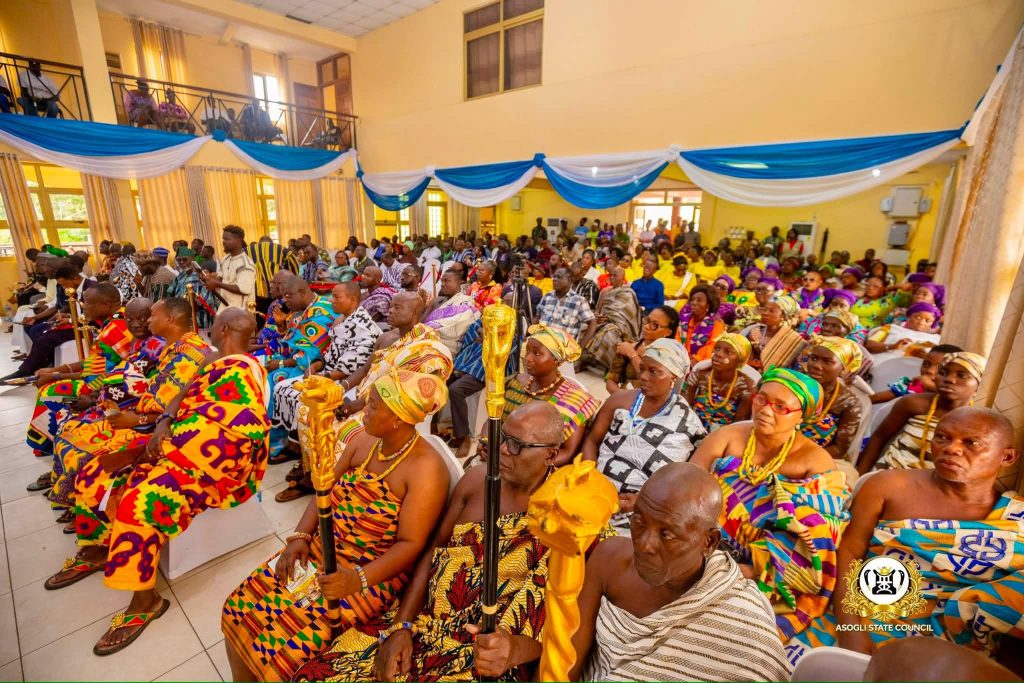
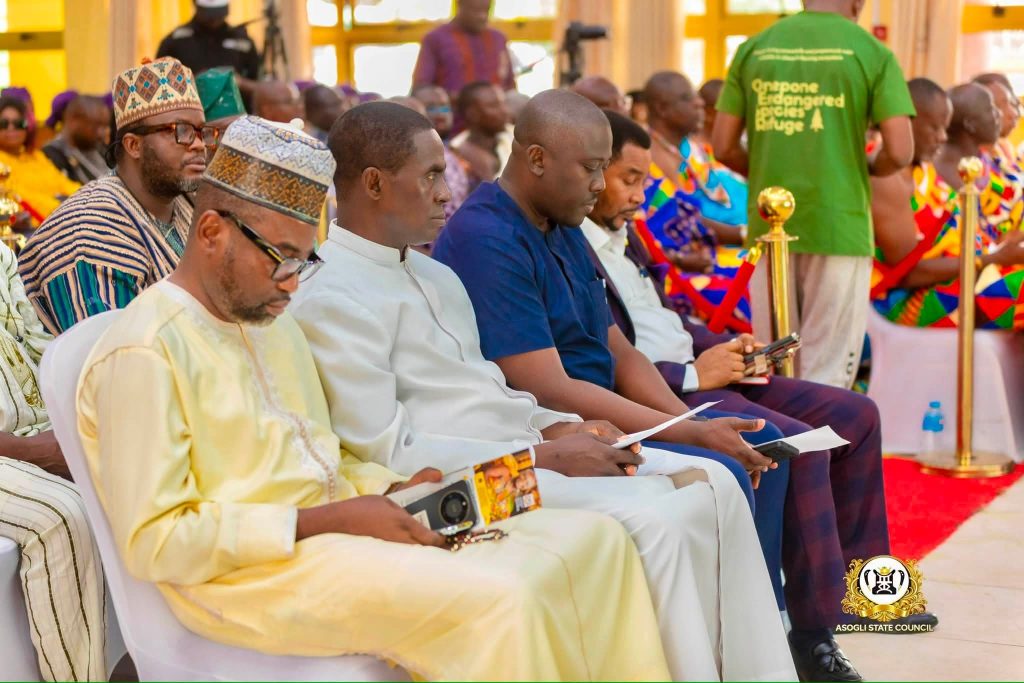
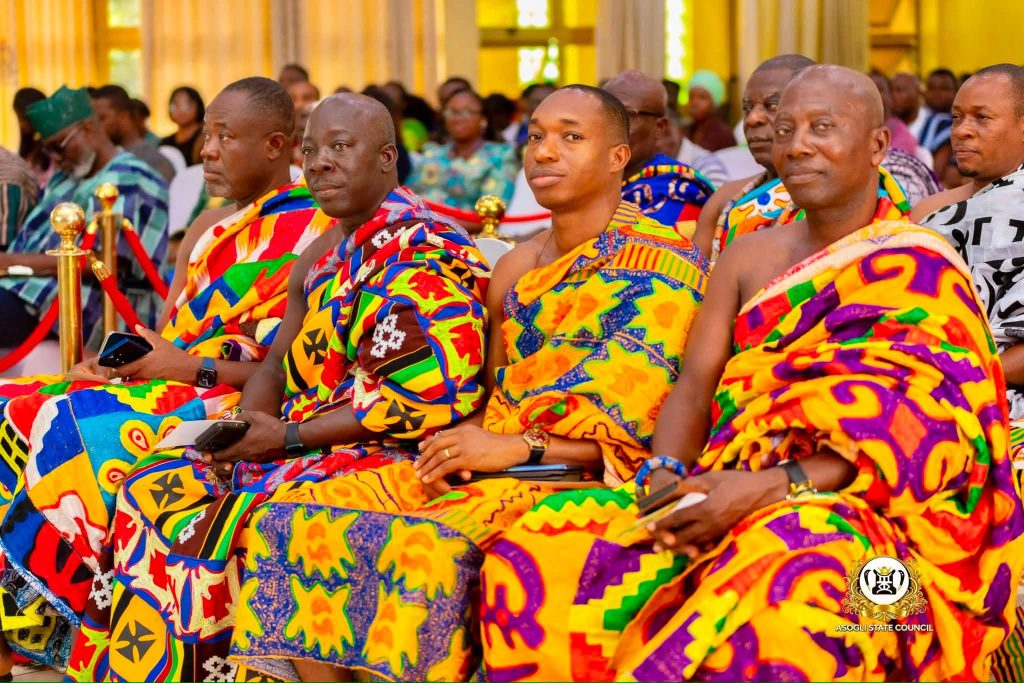
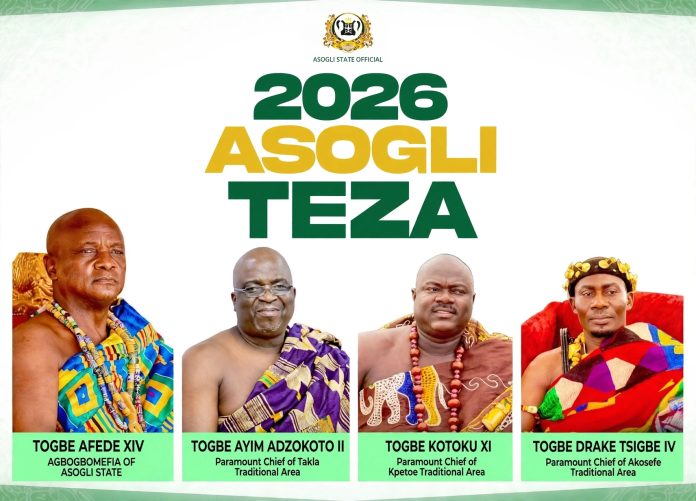
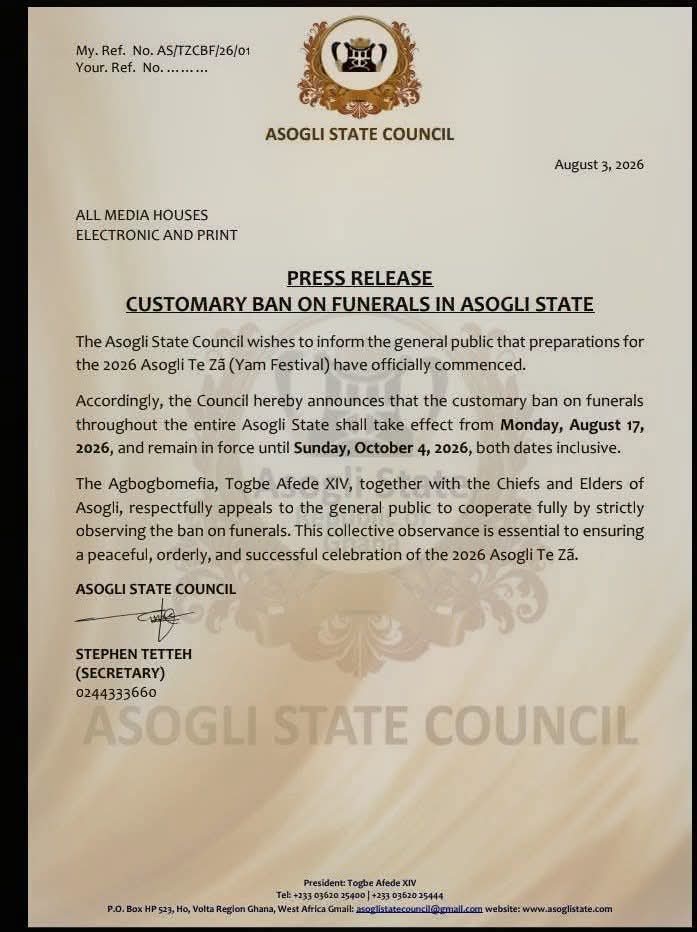
The Asogli State Council in the Ho Municipality has announced a customary ban on funerals across the entire Asogli State as preparations intensify for the 2026 Asogli Te Zã (Yam Festival).

In a statement signed by Council Secretary Stephen Tetteh, the directive will take effect from Monday, August 17, 2026, and remain in force until Sunday, October 4, 2026.

The Council explained that the ban, sanctioned by the Agbogbomefia, Togbe Afede XIV, together with the Chiefs and Elders of Asogli, is a traditional observance designed to preserve the sanctity of the festival. It appealed to the public for full cooperation, stressing that strict adherence is essential for a peaceful and successful celebration.

The Asogli Te Zã, celebrated annually, is one of the most revered cultural festivals in the Volta Region. It marks the harvest of new yams and is observed with thanksgiving, renewal, and communal unity. The period is characterized by rituals, durbars, and cultural displays that highlight the rich heritage of the Asogli people.

The Council reaffirmed its commitment to tradition and harmony, urging citizens to respect the directive in the spirit of unity and cultural pride.

Prisons Service Receives Historic Medical Supplies under ‘Mahama Cares’

0

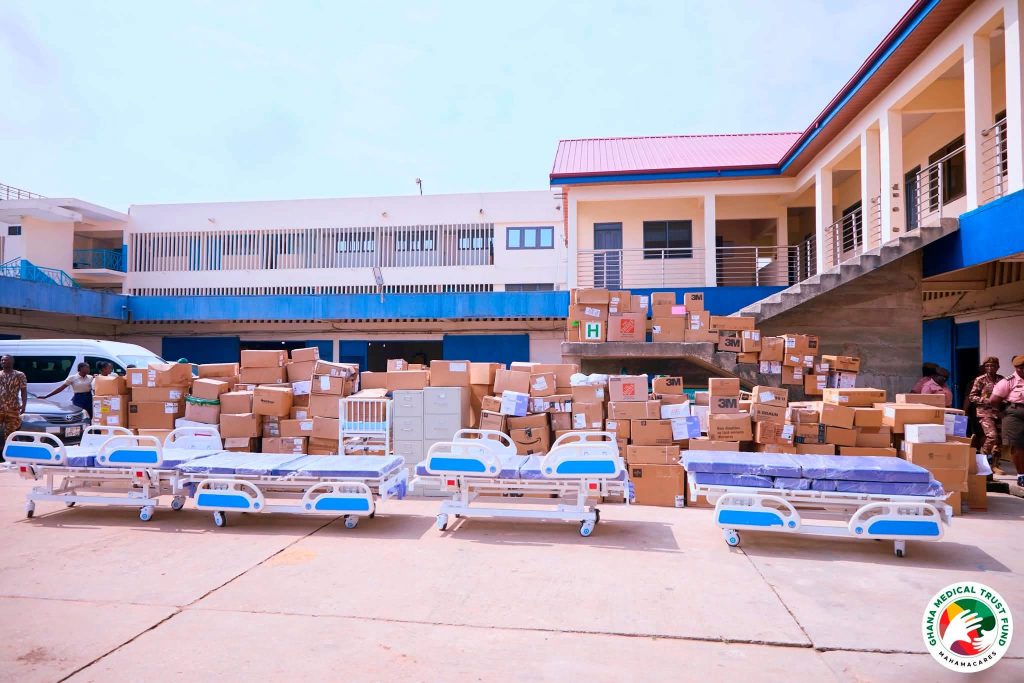
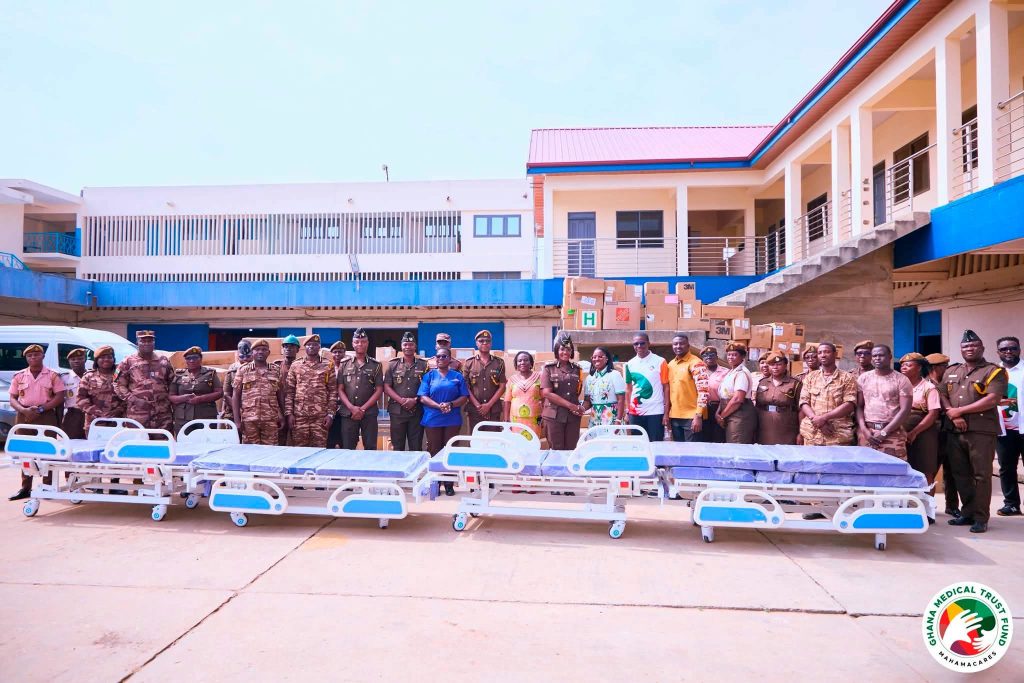
The Ghana Prisons Service has received a landmark intervention under the Ghana Medical Trust Fund (Mahama Cares), with the presentation of a full container load of life-saving medical equipment, consumables, and essential healthcare supplies to transform healthcare delivery within correctional facilities nationwide.

The donation, described as one of the largest healthcare support packages ever received by the Service, underscores the Trust Fund’s commitment to ensuring that quality healthcare reaches every Ghanaian, regardless of circumstance or location.

Administrator of the Ghana Medical Trust Fund (Mahama Cares), Adjoa Obuobia Darko-Opoku, emphasised that access to healthcare should never be determined by status. She explained that the Fund’s responsibility extends beyond hospitals to every institution where healthcare is needed, including prisons.

She noted that strengthening prison healthcare ultimately protects the wider public, since prison officers, healthcare workers, and visitors interact daily with the community, while many inmates eventually reintegrate into society. Prison health, she stressed, is therefore an essential component of Ghana’s overall public health system.

Director-General of the Ghana Prisons Service, Patience Baffoe-Bonnie (Esq.), expressed profound appreciation for what she described as a historic intervention. She said the donation demonstrated that the Prisons Service had finally been remembered and not treated as an afterthought, sending a powerful message that the lives of inmates and officers matter just as much as those of every other Ghanaian.

Mrs. Baffoe-Bonnie assured that the equipment and consumables would be put to effective use across the prison system, significantly improving healthcare delivery and saving lives.

She commended the Administrator of the Ghana Medical Trust Fund (Mahama Cares) for her visionary leadership in ensuring that the Fund’s life-saving interventions extend to every corner of Ghana’s healthcare system, including correctional facilities.

Peace Council Commends Peaceful Dagbon Funeral Rites, Urges Unity During Regency

0

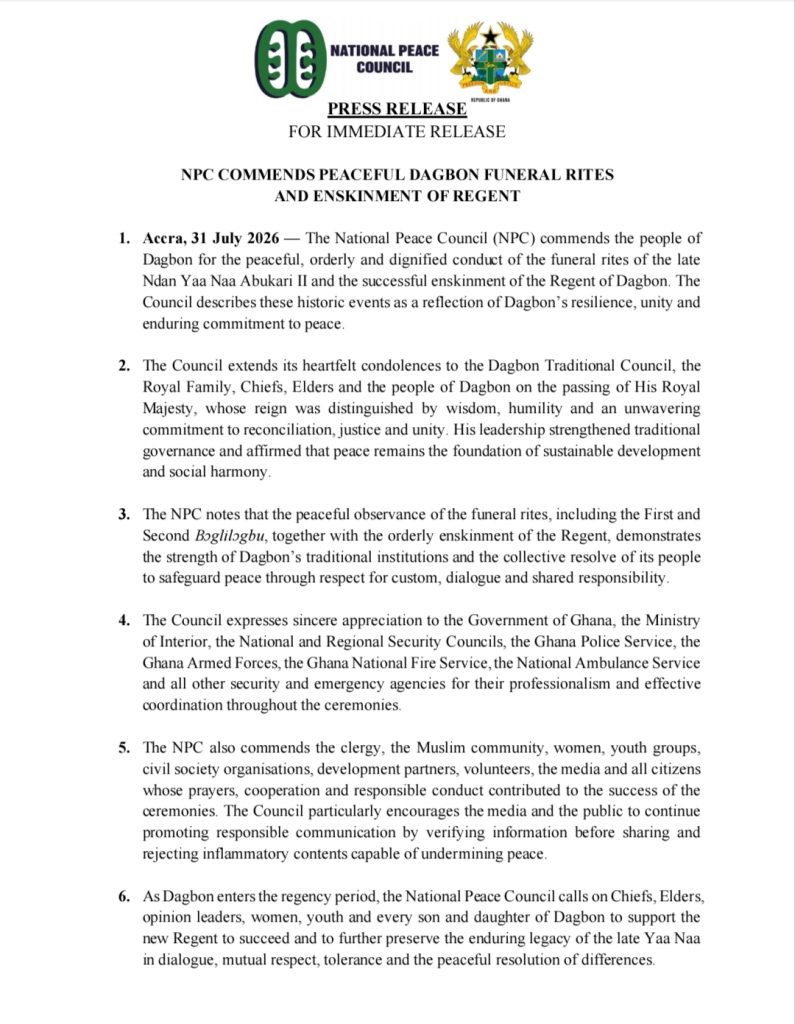
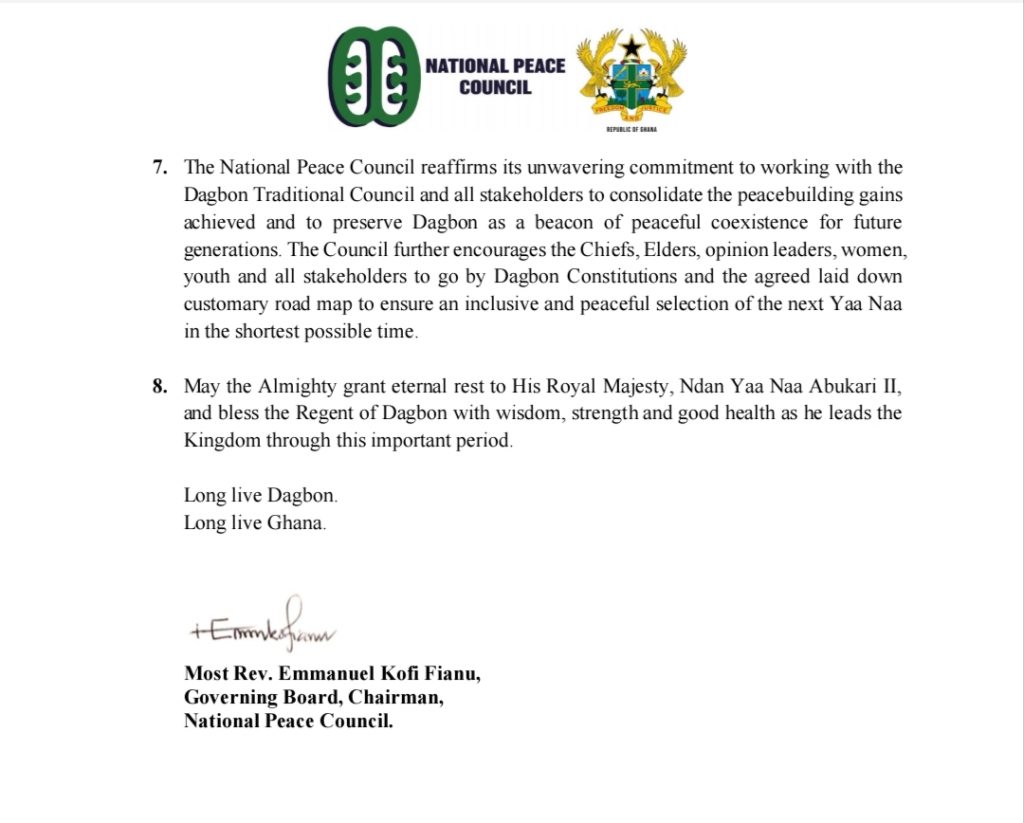
The National Peace Council (NPC) has lauded the people of Dagbon for the peaceful and dignified conduct of the funeral rites of the late Ndan Yaa Naa Abukari II and the successful enskinment of the Regent of Dagbon.

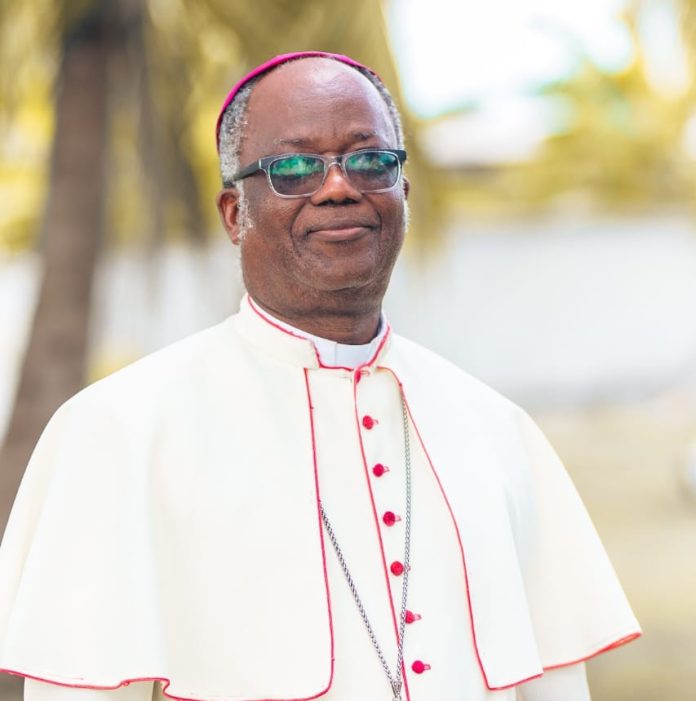
The Council, in a statement signed by its Chairman, Most Rev. Emmanuel Kofi Fianu,SVD extended condolences to the Dagbon Traditional Council and the Kingdom, describing the late Yaa Naa’s reign as one marked by wisdom, humility, and reconciliation.

A few weeks ago, the Overlord of Dagbon, His Royal Majesty Ndan Yaa Naa Abukari II, passed away after a distinguished reign that emphasized unity and peace. He was laid to rest in Yendi following solemn traditional rites, including the First and Second Bogliləgbu, which drew wide participation from chiefs, elders, and citizens across the Kingdom.

The outdooring of the Regent on Friday, July 31, was attended by high-profile personalities including former President John Dramani Mahama, government functionaries, Members of Parliament, and other well-wishers, underscoring national solidarity with Dagbon during this transitional period.

The NPC praised the orderly observance of the rites and the smooth enskinment of the Regent, noting that the ceremonies reflected the strength of Dagbon’s traditional institutions and the collective resolve of its people to safeguard peace. It also commended government agencies, security services, clergy, civil society, and citizens for their cooperation and professionalism during the events.

As Dagbon enters the regency period, the Council urged chiefs, elders, opinion leaders, and youth to rally behind the Regent, preserve the late Yaa Naa’s legacy, and adhere to the Dagbon Constitution and customary roadmap for the peaceful selection of the next Yaa Naa.

Reaffirming its commitment to Dagbon’s peacebuilding efforts, the Council prayed for the repose of the late King’s soul and divine guidance for the Regent as he leads the Kingdom through this important transitional period.

Ho Teaching Hospital Cautions Public Against Recruitment Fraud

0

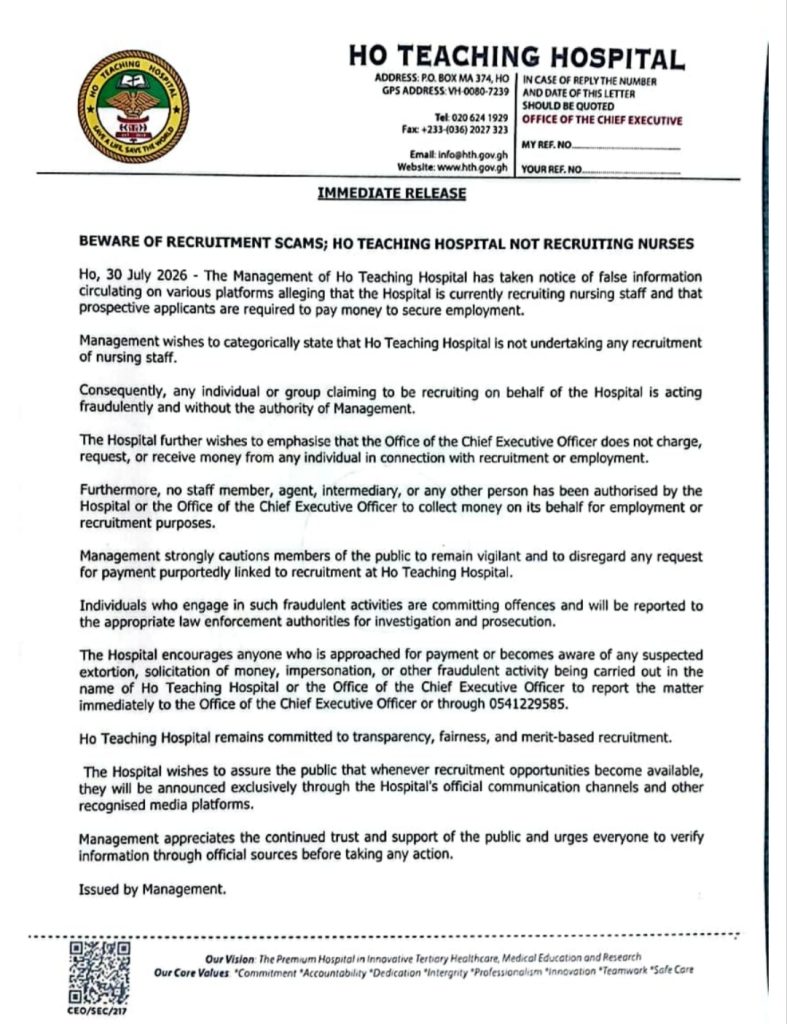
Ho Teaching Hospital has cautioned the public to be wary of fraudulent recruitment schemes falsely linked to the institution.

In a press release issued by management, on Thursday, July 30, 2026, the hospital stated emphatically that it is not recruiting nurses or any other staff at present. The statement comes after reports that certain individuals and groups are circulating false information and demanding money from unsuspecting job seekers in exchange for employment opportunities.

Management stressed that the Office of the Chief Executive Officer does not charge or receive money for recruitment, and no staff member or intermediary has been authorized to collect money on behalf of the hospital. It described such actions as fraudulent and urged the public to remain vigilant.

The release further advised that anyone approached with such demands should report the matter immediately to law enforcement agencies or the hospital’s administration. It reaffirmed the hospital’s commitment to transparency, fairness, and merit-based recruitment, encouraging the public to verify all employment-related information through official channels.

The statement concluded with a reminder of the hospital’s vision and core values, underscoring its dedication to integrity in service delivery.

NHIA Disburses GHS219.8 Million to Healthcare Providers

0

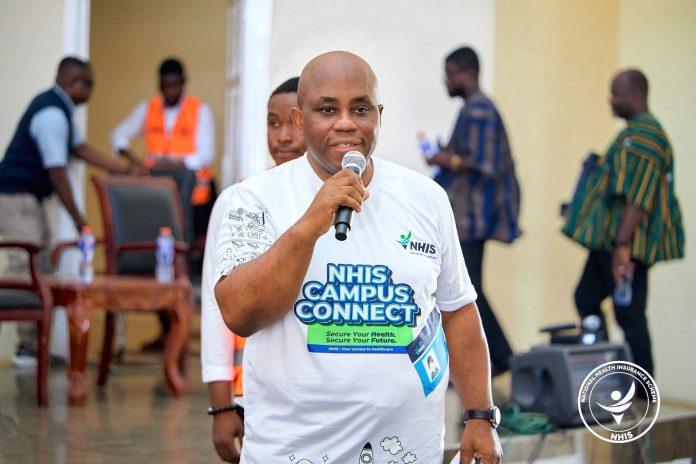
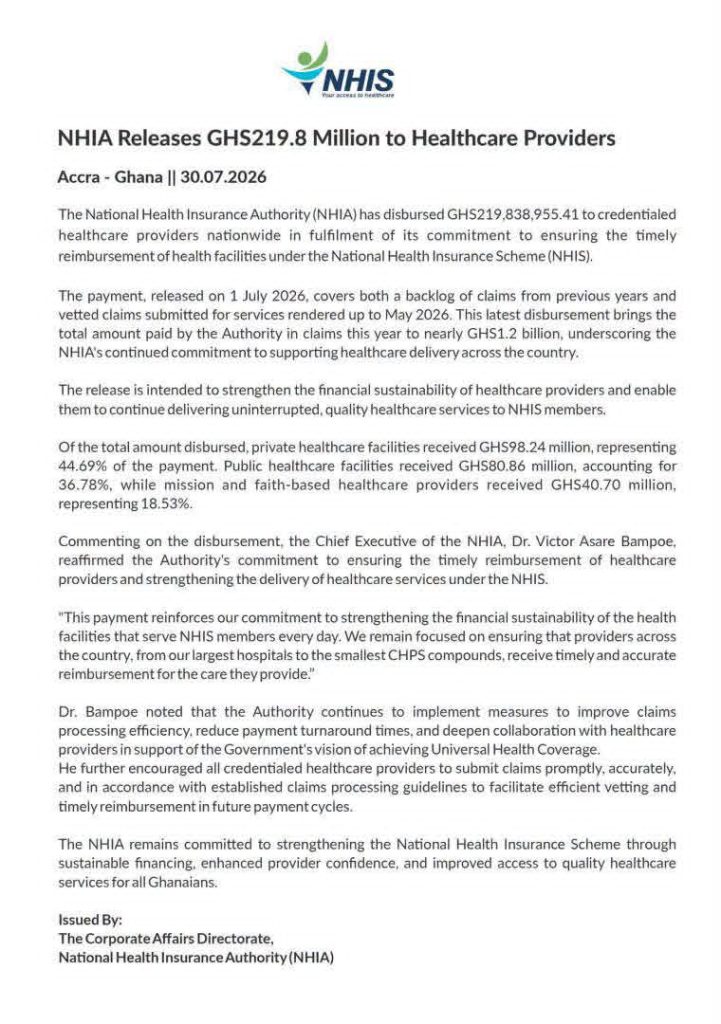
The National Health Insurance Authority (NHIA) has announced the disbursement of GHS219,838,955.41 to healthcare providers nationwide under the National Health Insurance Scheme (NHIS).

According to a media release by the Corporate Affairs Directorate, the payment, made on July 30, 2026, covers both backlog and vetted claims up to May 2026, bringing total claims settled this year to nearly GHS1.2 billion.

The release indicated that private healthcare facilities received GHS98.24 million (44.69%), public facilities were allocated GHS80.86 million (36.78%), while mission and faith-based providers received GHS40.70 million (18.53%). The NHIA explained that the disbursement is intended to strengthen the financial sustainability of providers and ensure uninterrupted delivery of quality healthcare services.

NHIA Chief Executive, Dr. Victor Asare Bampoe, reaffirmed the Authority’s commitment to timely reimbursement and improved healthcare delivery, noting ongoing efforts to enhance claims processing efficiency and support Ghana’s universal health coverage agenda.

The Authority emphasized that it remains dedicated to sustainable financing, building provider confidence, and expanding access to quality healthcare for all Ghanaians.

GRIDCo’s System Disturbance Plunges Large Parts of Ghana into Darkness

0

Large parts of the country, including the entire Volta and Oti regions, were plunged into total blackout on Wednesday, July 29, 2026, following a major disturbance on the National Interconnected Transmission System.

GRIDCo confirmed that the incident occurred at approximately 3:11 a.m., when several generating plants tripped simultaneously, cutting off electricity supply nationwide.

A statement issued by the state power transmitter said, ‘Engineers and operators immediately activated restoration procedures and are working with power sector stakeholders to bring supply back safely. A technical investigation has also been launched to determine the root cause.’

Earlier, the Public Relations Officer of ECG-Volta, Eunice Tweneboah-Koduah, issued a social media circular acknowledging the outage: “Dear All, please we have lost supply from GRIDCo. We are on standby to restore supply. We are sorry for the inconvenience caused out of this outage. Thank you.”

The blackout disrupted households, businesses, and institutions across the affected regions. Many residents have since taken to social media to express frustration about the situation, citing the impact on daily routines and productivity.

This latest incident comes just months after a major fire outbreak at GRIDCo’s switchyard at Akosombo caused a similar outage, leaving some areas without power for more than 24 hours. The recurrence has heightened public concern over the resilience of Ghana’s power infrastructure.

GRIDCo has apologized for the inconvenience and assured the public of its commitment to restoring power quickly and safely, while promising updates as the restoration progresses.