26.3 C
Volta Region
Wednesday, July 29, 2026
spot_img
Home Blog Page 87

Sogakope, Contributor to Ghana’s Poor Sanitation Image

0
Drain filled with refuse

By: Tabitha Kugbonu | Voltaonlinegh |

Ghana ranks lowest in sanitation levels among all lower middle-income countries, although richer than a lot.

That’s according to the United Nations International Children’s Emergency Fund (UNICEF) Chief of Water Sanitation and Hygiene (WASH), David Duncan.

He said the nation was one of the lowest in terms of access to sanitation worldwide and that it was rather ironic she sunk lower than countries recovering from wars.

Addressing municipal and district chief executives and other stakeholders at a meeting in Ho on the UNICEF WASH Program, Mr Duncan said funding was not the problem, “but commitment and prioritisation”.

He also revealed that thousands of children died from diarrhea and that the nation lost millions of dollars annually to poor sanitation and open defecation.

World Health Organization (WHO) a global watchdog on health defines sanitation as the provision of facilities and services for the safe disposal of human urine and faeces.

The word sanitation also refers to the maintenance of hygienic conditions, through services such as garbage collection and wastewater disposal.

In most parts of Ghana today, poor sanitation is increasingly becoming a huge problem and an embarrassment to Mother Ghana.

Sogakope, the district capital of South Tongu District is one of the main contributors to the nation’s poor sanitation status.

Sogakope is at a business transaction point for the district because it is a commercial centre located on the Ecowas road. Most women in the Sogakope Township sell bread, adodi, Tsofi, abolo (local foods) among others as their major businesses.

However, the administrative capital is faced with poor sanitation issues because of the attitude of residents in the town.

Sogakope market, a place where we buy our foodstuffs from has turned into a latrine and refuse dump for people living in Sogakope. So after market days, you do not know the difference between a dumping site and a market.

Most people in the town have refused to take a household dustbin citing their inability to pay the GH¢20 monthly dues for their refuse to be collected by the sanitation officers in town.

Again, most houses in the town are without toilets forcing tenants who cannot patronise the public toilets for various reasons, use gutters and surrounding bushes including Agorkpo R/C School Park as their toilet while throwing rubbishes around at undesignated places.

The result is that one gets to meet unpleasant smells at some important places in town especially from the gutters.

That is not all. Some people have also channeled their septic tanks into the drain and all these waste materials end up finding their ways into the River Volta and we still fetch water in the river for domestic use.

What is more, food vendors site their business points close to same places being used for refuse dumps without caring about anything and woe unto any ordinary person to complain.  “My friend, mind your own business. Don’t you know that’s the work of Zoomlion? After all why is government paying them,” will be the reaction.

You might be wondering if indiscriminately littering is only done by uneducated persons but surprisingly, well dressed fully grown educated persons are not left out in littering of the environment. And they do this without any shame leaving one wondering what kind of mental state we are in as citizens of this nation.

Sources revealed that there is no garbage container for the people of Sogakope South Electoral Area where the market is located while the increased population has rendered two garbage containers at the Sogakope North and Central insufficient for the residents living around there to dump their refuse into.

It will not be surprising if the infamous Cholera outbreak that claimed lives of Ghanaians in 2014 would be a history repeating itself in Sogakope if we do not change our attitudes.

In case we have forgotten, the government is you and I which belongs to all of us so whatever we do whether good or bad, it would by all means bounce back to us that is why we need to be extra careful about our attitudes.

We must remind ourselves that if we want God to bless our nation as indicated in our national anthem part of it which says, “God bless our homeland Ghana and make our nation great and strong”, then all of us must be committed to ensuring that Ghana is clean as “cleanliness is next to Godliness”.

South Tongu District Coordinator, Zoomlion Ghana Limited, Benjamin Kasali Adeleke said his outfit was doing everything possible to maintain proper sanitation in the town but “it is as if no matter the amount of education that has been done early on or now, no one cares as far as sanitation is concerned in the town.”

Mr. Adeleke said Volta and Oti regions had been grouped into 5 zones to fight sanitation related issues with Sogakope chosen as the pivotal centre to serve Central Tongu, North Tongu, Akatsi South, Keta Municipal and Anloga District in Zone 4.

“As it stands now, can we use Sogakope as the pivot to fight sanitation in the rest four districts and the Municipality if our own home is dirty? I don’t think you can sweep someone’s house if yours is not kept clean,” he lamented.

He said plans were underway for the distribution of 1 million dustbins to every household by the district assembly to ensure that sanitation was maintained in the district especially its capital.

The District Health Environmental Health Officer, South Tongu, Philip Gawuga said, sanitation “is a way of life whereby it starts from the citizens themselves.”

So people are talking about sanitation workers not discharging their duties effectively and the same people are telling the officers to educate them.

This, Mr. Gawuga said he “looks at them and ask, if you say you don’t know anything about sanitation, then why is it that when the environmental health officers are going round doing their inspection especially for food vendors then they quickly try to cover up?”

He added that they had been using the Sanitation Law to deal with the offenders but the citizens would not bulge because “everyone knows what sanitation is just that they fail to do the right thing and in the end they blame sanitation agencies for not doing their work.”

The Prime Minister of India quoted Mahatma Gandhi who said in 1923 that, “sanitation is more important than independence”, meaning that adequate sanitation together with good hygiene and safe water are fundamental to good health and socio-economic development

So the only way the government and the citizens can have a clean environment is through systems approach.

The experience of the user of sanitation facilities must be considered and connected to collection of wastewater, solid waste and excreta to their transportation, treatment and result in recycling and reuse.

Government must collaborate with non-government organisations in charge of sanitation to provide widespread sanitation infrastructure such as public toilets, sewage systems, septic tanks etc.

Of importance, we the citizens must also make conscious efforts to contribute to sanitation in the country bearing in mind that everybody is responsible for the rise and fall of the country because that is the only way we can realise our dream of being like the other countries we admire.

Source: www.voltaonlinegh.com

Hospital in Nkwanta Receives Medical Support to Reduce Neonatal Deaths

0

By:  Benjamin Owusu | Voltaonlinegh |

St. Joseph’s Hospital, Nkwanta in the Nkwanta South District of the Oti Region has received medical equipment including two incubators, wheel chairs valued over £10,000.00 equivalent to GH¢60,000.00 from Ghanaian Roman Catholic Church members of  St. Michael and Martin Parish in the United Kingdom to help reduce neonatal deaths in the hospital.

The donation was in response to a story carried by Benjamin Owusu in which administrator of the hospital, Rev. Sister Georgina Quayson appealed for incubators for the neo-natal department.

St. Joseph’s Hospital has been without incubator since its establishment forcing management to use self-made carpenter boxes as incubator to enable them save pre-term babies.

Speaking to Voltaonlinegh after the presentation of the items to the hospital, the leader of the group, John Karikari said this was part of contributions to give back to the society and also help the government and the Ghana Health Service to reduce neonatal deaths among babies born pre-term in the country.

Mr. Karikari expressed hope that the donation would help improve neo-natal cases at the hospital and pleaded with the hospital to take good care of the incubators to serve its intended purpose.

Rev. Sister Georgina Quayson receiving the donation on behalf of management and staff, expressed her profound appreciation to the group and the media and hoped that it would be highly beneficial to the hospital.

Rev. Sister Quayson regretted that neo-natal deaths had contributed the most to child mortality at the hospital and hoped that the incubators would save lives of many pre-term babies in the municipality.

The administrator appealed to other philanthropic individuals and organisations for more support to enable the hospital complete the stalled neo-natal facility to improve healthcare delivery in the area.

Staff at the maternity department commended the donors and the reporter for the support saying that “has been an urgent need for quite a long time” and also appealed for ventilation machine to achieve desired result.

Source: www.voltaonlinegh.com

Queen Mother Charges Chiefs to Be Interested in Education of the Youth

0

By: Rita Kafui Nedjoh | Voltaonlinegh |

Queen mother of Tanyigbe Dzafe, Mama Hokor I has called on traditional leaders to take keen interest in the education of the youth in their immediate communities for development.

Mama Hokor noted that communities could only develop through education because well educated citizens would make informed decision which would inure to the benefit of the communities, thus, the need for traditional leaders to be involved in shaping and reshaping of the educational system.

She indicated that for children of school going age in rural areas to appreciate education and be exposed to the importance of education, traditional leaders must initiate measures including extra-curricular activities, scholarship and awards scheme and mentorship programme.

She challenged traditional leaders to change from the system where they lorded over the people in the past to a system where they would serve the people by being involved in the education of their younger generation.

Mama Hokor I made the call at this year’s “2019 Hokor Endowment Fund Scholarship Examination Programme” at Tanyigbe in the Ho Central Constituency of the Volta Region which saw 70 pupils transiting from primary six to Junior High School one (JHS 1) participate.

The Scholarship Scheme

The 70 participants from four primary schools in four communities of Tanyigbe (Tanyigbe Anyigbe, Etoe, Atidze and Dzafe) who took part in the contest were examined in Mathematics, English and General Knowledge and would have their papers marked by external examiners to determine the winners.

A ceremony will be held in October to announce and celebrate the winners. The first 10 winners will receive various packages with the first, second and third position winners expected to receive a yearly grant of GH¢200.00 for three years.

The “Hokor Endowment Fund” was established during the enstoolment of Togbe Kodzo Hokor 1I and Dr. Mama Abra Hokor I as traditional rulers of Tanyigbe Dzafe aimed at equipping every child with knowledge and skills directed at a desired future and to promote education as key to the general development of Tanyigbe.

The Hokor Endowment Fund also runs other programmes including Scholarship, Mentorship, Counselling, Rehabilitation and Exchange Programme in Tanyigbe.

Emphasis on Education

The Special Guest of Honour, Madam Grace Akuaku advised the pupils to be respectful and focus on their education in order to become the great personalities they would aspire to be in future.

Madam Akuaku, a native of Tanyigbe donated and pledged her support for the foundation and some five pupils from her village, Sosoeme in Tanyigbe Etoe should they make it to the firs-ten positions after the examination.

The Paramount Chief of Tanyigbe Traditional Area, Togbe Kodi Adiko VI commended the foundation for their support for the youth in education and assured of his support and collaboration of the Tanyigbe Traditional Council to make the awards more attractive.

Togbe Adiko advised the pupils to develop interest for education and to refrain from all social vices in order to help develop Tanyigbe.

He disclosed his intention to support pupils who would perform well in their Basic Education Certificate Examination for the next three years and hinted of other scholarship schemes to support brilliant but needy students with their education.

Source: www.voltaonlinegh.com

Chiefs Urged to Support Women Get into District Assemblies

0
A section of participants at the forum

By: Ewoenam Kpodo | Voltaonlinegh |

Gender Desk Officer, South Tongu District Assembly in the Volta Region, Hellen Dzide has appealed to chiefs and opinion leaders to support aspiring assembly women in their respective electoral areas to win the elections.

Madam Dzide said the aspiring assembly women needed the right support and encouragement in the upcoming elections to win in order to champion the cause of women/girls.

The gender desk officer said women were already disadvantaged as many assemblies barely had women assembly members, an indication that the interests of women (who are in majority in terms of population) had been neglected making mockery of good governance.

In her presentation on the advantages of women empowerment and gender equality on the individual, the family and society, she said the absence or less number of women in the local assemblies, amounted to inequality as issues relating to men would take prominence over that of women.

She spoke on Wednesday, September 11 at a day’s forum on male engagement for gender equality and development organised by Department of Gender, Volta Region with funding support from the United Nations Population Fund (UNFPA) at Bakpa, Central Tongu to deliberate on issues of unequal opportunities for men and women and proffer solutions to them.

The forum chaired by chief of Dadobe/Wute, Togbe Akliku Ahorney II concluded that boys and girls should be given equal opportunities to develop their potentials with particular attention paid to girls so that their total development (considered critical to society’s development) would not suffer due to teenage pregnancy and its attendant consequences.

District Imam, Mohammed Issah suggested that gender stereotypes be tackled from the base and called on the Ministry of Education to ensure publishers of textbooks for pupils make conscious efforts to avoid portraying girls/women as just domestic workers with men occupying important positions because such depictions only perpetuate perceptions that “women are lesser.”

Mr. Issah agreed with an earlier submission  from a participant that schools must make the right changes to allow girls to compete senior/school prefect’s position (currently the sole reserve for boys)  to motivate them to aspire for leadership positions in future.

According to him, these little things indirectly contributed to women’s reluctance to assume leadership roles to make meaningful contributions to society because they grew up thinking that men were best suited for such positions.

The forum which had chiefs, assembly members, religious groups, headmen and boys groups as participants was on the theme, “Well Trained Girls and Boys Make a Developed Society”.

Source: www.voltaonlinegh.com

Volta Police Realises GH¢15, 840 from Offending Motorists

0

By: Ewoenam Kpodo | Voltaonlinegh |

The Volta Regional Motor Transport and Traffic Department ((MTTD) of the Ghana Police Service has realised an amount of GH¢15,840.00 from fines from offending motorists within the Ho Municipality.

The Police MTTD arrested two taxi cabs, four motorbikes and 20 motorcycles for various road infractions when it intensified its operation in the municipality.

According to a release issued on Tuesday, September 11, 2019 and signed by the Public Affairs Officer, Corporal Prince Dogbatse, all 26 offending motorists were processed and arraigned before the District Magistrate Court 1  for offences including “use of tricycle without licence, use of tricycles without insurance, use of motorcycle without protective helmet, use of motor vehicle without warning device.”

The release said “23 offenders who pleaded guilty to their respective offences were sentenced to fines ranging between GH¢300.00 and GH¢900.00.”

“Three offenders were also banned from riding for one year while three other cases have been adjourned to 12 and 16 September for hearing,” it further said.

The Regional Police Command advised motorists to acquire the requisite training and rider licence, tricycle riders in particular, before riding on the road saying, “it is our resolve to protect life and property of our road users.”

Source: www.voltaonlinegh.com

Let’s Start Surcharging Men to Reduce Teenage Pregnancy-Facilitator

0
A section of participants at the forum

By: Ewoenam Kpodo | Voltaonlinegh |

An official from Ghana Health Service, Central Tongu District in the Volta Region, Dzifa Asempa has suggested surcharging people to help reduce teenage pregnancy and keep girls in school.

Madam Asempa lamented the staggering statistics of teenage pregnancy in the region and its attendant implications such as Vesico-vagina Fistula and death for the girls and burden and loss of human resource to society saying, steps must be taken to reduce the trend and reposition Volta Region as leader in producing well educated and prominent citizens.

She said child bearing must be for adults only and men/boys who would get girls pregnant must be made to pay unreasonable charges to deter others.

According to her, she learnt that a similar policy was implemented in a community in the Adaklu District where teenage pregnancy was on the rise and it yielded good results.

“Let’s follow the Adaklu example and force men who will impregnate teenagers to pay huge fines. I will appeal to the chiefs and headmen to take this up. This should not be the normal tradition of people bringing in few drinks and others to own pregnancies they are responsible for but more to serve as deterrent to such men and reduce the rate of girls becoming pregnant.”

She spoke about intervention programmes in the district which involved the assembly, the district offices of health and education, queens and chiefs organising workshops on the phenomenon among others in 2017 which helped matters but stalled due to financial constraints saying, it was important other ways were devised to help arrest the situation.

Apart from surcharging, Madam Asempa called on people to welcome family planning for sexually active teenagers to forestall the possibility of them becoming pregnant multiple times and preventing them from fully developing their potentials.

She gave the suggestion during a presentation on the status of teenage pregnancy/child marriage in the district and its consequences on the individual, the family and the society at a day’s forum on male engagement for gender equality and development held at Sun City Gardens, Bakpa, Central Tongu.

Wednesday’s forum themed “Well Trained Girls and Boys Make a Developed Society” organised by Department of Gender, Volta Region with funding support from the United Nations Population Fund (UNFPA), had participants discuss issues relating to the vulnerability of women in  the male-dominated world and how to empower them.

The men, who admitted there was the need for change of mindset, agreed that the empowerment process must begin right from the home during the socialization process by giving both boys and girls equal opportunities to do away with gender stereotypes.

Volta Regional Director, Department of Gender, Lena Alai underscored the need for the forum and said men/boys had a major role to play in reducing teenage pregnancy.

Madam Alai said “teenage girls have taken child bearing from adults” citing the Multiple Indicator Cluster Survey Report of 2017/18 which revealed that Volta Region recorded the highest adolescent birth rate in the country with Central Tongu coming fourth in the region.

The forum chaired by chief of Mafi-Dadobe/Wute, Togbe Akliku Ahorney II and attended by chiefs, assembly members, religious groups, headmen, and boys groups also saw UNFPA Focal Person at the Volta Regional Coordinating Council, Victoria Odurowa Fato in attendance for monitoring purpose.

 Source: www.voltaonlinegh.com

Securing Rural Education

0
Collapsed wall of Dzebetato D/A Basic School

By: Tabitha Kugbonu | Voltaonlinegh |

Education does not only improve our personal life but also bring amazing positive change in society and the nation as a whole. It is the best tool for facing any situation throughout life.

The right to education makes it compulsory for all children to get the basic education.

According to the International Standard Classification of Education (ISCED), basic education comprises primary education and lower secondary education.

Universal basic education is regarded a priority for developing countries and is the focus of the Education for All movement led by UNESCO.

The United Nations Sustainable Development Goal No. 4 states that “Education is to ensure inclusive and equitable quality education and promote lifelong learning opportunities for all”.

However, some schools in the rural areas still lag behind as far as quality education is concerned due to a number of factors including lack of classroom infrastructure and inadequate provision of teaching and learning materials.

Dzebetato D/A Primary School (established in 1965) with an enrolment of 206 from Kindergarten (KG) 1 to Primary 6 is one of the few schools sited in the rural areas in the South Tongu District of the Volta Region, and is plagued with infrastructural challenges forcing pupils to learn in dilapidated classrooms.

The situation gets worse during raining seasons. Reptiles find their ways into the classrooms while teaching and learning go on chasing the pupils away from their studies.

Sources reveal that the KG pupils as well as the Junior High School (JHS) do not have classroom blocks. For the community not to look unconcerned, they built a three-unit classroom block made with mud for the JHS pupils to use which unfortunately, collapsed in the third term of the 2018/2019 academic year.

The community again started a two-unit classroom block (currently 50 per cent completed) for pupils of  KG 1-2 which the South Tongu District Assembly had supported with GH¢ 1,500.00

In an interview with Head teacher of the school, Solomon Adziman, he said the Dzebetato Community “is doing well to help the school to progress.”

Mr. Adziman said although they were faced with infrastructural challenges in the school, performance during Basic Education Certificate Examination (BECE) which the students started writing in 2017, had so far been good saying, the school “is one of the best  in the Agave Circuit.”

He said apart from the infrastructural challenges (which is a disincentive to school enrolment), the school was also not benefiting from the Ghana School Feeding Programme (GSFP) which started in 2005.

Out of 212 public basic schools in the district, only 56 are benefiting from the programme being implemented for the purpose of eradicating extreme poverty and hunger and achieving universal primary education by providing public primary schools with one hot meal, prepared from locally grown foodstuffs every school-going day.

Mr. Adziman stated that, he and the Assembly member for Dzebetato Electoral Area, Jessi Kpodo and former Assembly member, Patrick Doe had written several proposals to the assembly requesting for the school to benefit from the programme but yielded no results.

He said this was having negative impacts because the pupils would always leave for their homes to have lunch and take a long time to return to the school for lessons to resume.

He therefore appealed to the authorities of the assembly to help address these challenges because basic education “is the foundation for all other levels of education” and the lives of future leaders at the basic level should not be toiled with.

In March, 2019, when the Volta River Authority (VRA) handed over a 30 Standalone Biofil Toilet Facility to the people of Dzebetato community to fight against Bilharzia and sanitation related issues, District Chief Executive for the area,  Emmanuel Louis Agama in a speech, promised the school to find a lasting solution to their plight.

However, it has been several months and another academic year has started but nothing has been done about the situation.

According to American Muslim Minister Malcolm X, and human rights activist, “education is the passport to the future for tomorrow belongs to those who prepare for it today.”

If only government will be serious with education in the rural areas through implementing attractive policies, provision of infrastructure facilities, resources, teaching and learning materials and with the right incentives for teachers there, the story will be different where pupils and teachers alike will feel comfortable in school for effective teaching and learning.

This will reduce school dropout rate, ensure quality education and improved performance and eventually better the living conditions of society.

In the end, government benefits as citizens are better placed to understand government’s policies and support their implementation for the overall good of the nation.

Source: www.voltaonlinegh.com

Deputy Minister Welcomes New Pupils for 2019/20 Academic Year

0
Mr. Johnson Avuletey, Deputy Regional Minister

By: KALD | Voltaonlinegh |

The Deputy Volta Regional Minister, Rev. Johnson Avuletey on Tuesday embarked on a tour of some selected basic schools in the Ho Municipality to welcome new pupils into the country’s school system.

Accompanied by the Regional Director of Education, Madam Enyonam Amafugah, Ho Municipal Chief Executive Hon. Nelson Akorli, Ag. Ho Municipal Education Director, Mr.  Joseph Tei Amesimeku and Ho Municipal Health Director, Dr. Senanu Dzokoto, the Deputy Minister participated in the annual, ‘My First Day at School’ celebration to welcome children now making a debut in the mainstream education system for the 2019/20 academic year.

Schools visited included, Agbokope A.M.E.  Zion Basic School, Air Field Basic School, Free Town MA Basic School, Ho Kpodzi  E.P Basic School and Kabore School Complex, where Mr. Avuletey and his entourage interacted with both pupils and teachers.

While welcoming the new ones into the schools system on behalf of the Regional Minister, Dr. Archibald Letsa, he entreated the teachers to provide a conducive environment for the children to remain in school.

He urged them to be good role models to the pupils and nurture them in a morally upright manner.

The Deputy Minister as part of the tour, distributed exercise books and other souvenirs to the newly promoted Kindergarten one pupils.

He also donated 50 bags of cement to Agbokope A.M.E. Basic for the construction of a new classroom block.

Source: www.voltaonlinegh.com

Damanko Farmers Demand Better Roads

0

By: Benjamin Owusu | Voltaonlinegh |

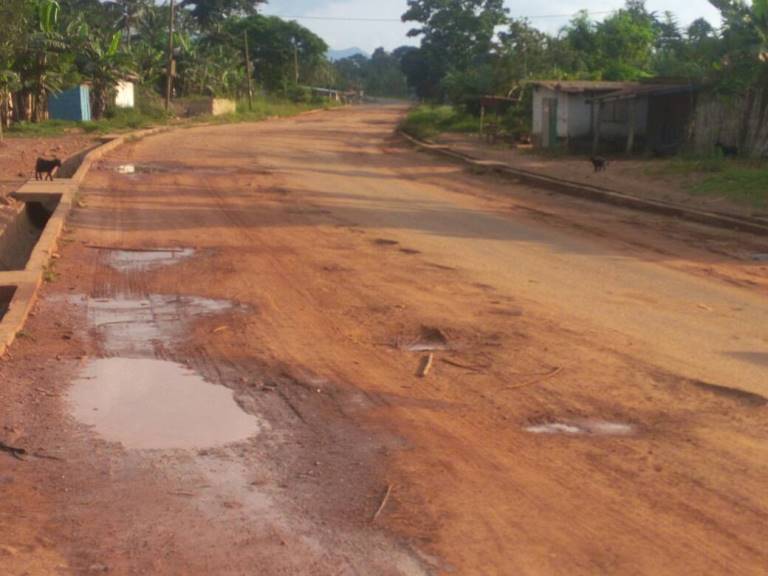
Yam famers and buyers at Damanko in the Nkwanta North District of the Oti Region are appealing to the government to help them get their fair share of the national cake by providing them with better roads to enable them transport their produce to market centres.

According to the farmers, it has become extremely difficult to transport their farm produce to market centres for sale as drivers kept refusing to ply the road during the raining season.

Speaking in an interview, Chairman of the Yam Sellers Association, Kofi Nikuma noted that Damanko Market was so integral to trading activities which could attract traders from far away but had been left out as farmers and individuals continually lose their produce after harvesting as a result of the appalling nature of the Nkwanta-Damanko stretch of the stalled Eastern Corridor Road.

Mr. Nikuma further stated that due to this, market women and traders who “visit the area, buy the produce at cheaper prices making farmers poorer.”

He therefore called on government to complete the abandoned Eastern Corridor Road project, especially the Damanko to Nkwanta stretch to open the area up to alleviate the suffering of farmers.

Some traders lamented among other things, the high transport fares drivers charge them and the long hours they had to endure on their journeys due to the bad road.

They appealed to the government to come to their aid to get the road fixed while calling on the district assembly to construct market sheds with stalls to boost their business.

Meanwhile, some drivers who ply the road in reaction to the claims by the traders, defended the transport fares saying, they needed to find a way to keep their vehicles on the road because after every journey, they needed to visit the mechanics for maintenance for the “road is bad.”

Source: www.voltaonlinegh.com

Hostilities of the Hospitalities in Sogakope

0
Poor state of the Hospitality Lane in Sogakope

By: Ewoenam Kpodo | Voltaonlinegh |

The Ghana Tourism Authority (GTA) under the auspices of the Ministry of Tourism, Culture and Creative Arts has declared September a Month of Tourism,  initiating a national theme, “See Ghana, Eat Ghana, Wear Ghana and Feel Ghana” to promote domestic tourism and encourage the culture of domestic travels among Ghanaians.

The Deputy Chief Executive, GTA, Eckow Sampson recently at a media briefing assured of government’s commitment to developing the tourism sector.

Mr. Sampson assuring Ghanaians of government’s plans to develop the sector which has great potentials to transform Ghana’s economy yet struggles to keep afloat the numerous challenges it is fraught with, is not enough.

This is because stakeholders in the tourism sector have encouraged successive governments to make efforts to upgrade and revamp many tourist destinations across the country but little or nothing has been done with the most energy expended on telling the citizenry plans of governments to develop the sector which have always remained on paper.

What Tourism Is

The Association of International Scientific Experts in Tourism (AISET) defines tourism as the sum total of the phenomenon and relationships arising from the travel and stay of non-residents in so far as this does not lead to permanent residency and is not concerned with any earning activity.

It can also be defined as a collection of activities, services and industries that delivers a travel experience, including transportation, accommodations, eating and drinking establishments, retail shops, entertainment businesses, activity facilities and other hospitality services provided for individuals or groups traveling away from home.

Tourism can be categorised broadly into domestic and international and further classified into Health Tourism-journeying to spend time to get well after an illness by combining medical exercise with holiday and rest, Sports Tourism- leisure activity associated with the watching of sports, Cultural Tourism, Social Tourism, Cult and Religious Tourism, etc.

There is direct satisfaction to individual tourists who experience enhancement of the overall and physical quality of their person, thus, contributing to their productivity.

Employment and wealth generation – This is by far the biggest gain of tourism to any host community, resulting in a boom in mostly unskilled form of employment such as selling food, retailing and other services.

Improved standard of living of the host community – As tourists spend money for services such as food and souvenirs which are locally provided, these monies then get back into the local economy and then used to better the living conditions of the locals.

Tourism Potentials in Ghana

Ghana, a country steeped in rich culture, abounds with tourist attractions ranging from historic coastal forts, to idyllic beaches, remote nature reserves full of exotic wildlife and bustling modern cities.

Mention can be made of notable tourist destinations such as Cape Coast Castle, Kakum National Park, Mole National Park, Larabanga Mosque, Boti Falls, etc.

The Volta Region, full of history, culture, scenery, wildlife and one of the friendliest people in Ghana boasts of popular tourist sites including the tallest mountain in Ghana, Afadjato.

There are also the Tafi Atome Monkey Sanctuary, Wli Falls, Fort Prinzenstein, Kalakpa Nature Reserve, Ghana’s cleanest beaches, Keta, home to the beautiful Aborigines Beach Resort among others.

There is no way one will talk of tourism and not mention the hospitality industry, a major player in the tourism sector. This is where Sogakope, the District capital of South Tongu in the Volta Region which is increasingly becoming synonymous to hospitality, comes in.

The Hospitality Industry in Sogakope

Sogakope is located on the international highway from Togo through Ghana to Ivory Coast.

Mostly known for its river tourism, thus, christened the “River City”, Sogakope is home to the Lower Volta Bridge (also Sogakope Bridge) which connects the capital to the neighbouring community, Sokpoe.

The Lower Volta Bridge is also the site for the famous Tortsogbeza, an annual festival celebrated by the people of Sokpoe town during Easter which involves diving off the bridge.

The river aside being endowed in the production of fish such as tilapia and fresh water clam locally called “adodi”, it also offers opportunity for a variety of water sports, wind surfing, water transport with Ghana Highway owned passenger boat plying Akuse-Ada-Foah stopping en route at Sogakope, Tefle, Agordomi, Sokpoe, Vume and Agave all in the district.

Sogakope is also known as the “Bread City” occasioned by the mass bread production in the town making most commuters plying the Accra-Aflao and Accra-Keta roads to usually stop over to buy bread and snacks.

It is arguably, the hospitality hub boasting of over ten finest hotels and resorts including the award-winning Holy Trinity SPA & Health Farm, luxurious Villa Cisneros, Shekinah Glory Hotel and Sogakope Beach Resort.

For the impact, majority of the employees at these places are locals. Also, tourists and visitors to the “Bread City” also patronise the bread and adodi among others, thus, injecting money into the local economy.

Hostilities of the Industry

In June last year, the then Minister of Tourism, Culture and Creative Arts, Catherine Afeku embarked on a tour to some tourists sites in the Volta Region including Wli Waterfalls and observed that the poor conditions there  were similar to other tourist sites across the country.

Of the poor conditions at the sites across the country, bad roads remain the biggest militating factor against the development of the sector. And instead of government officials taking steps to address the issues, they give promises which can best be described as empty.

Back in the “River City”, the story is same. Of the challenges confronting the hospitality industry, the issue of bad road stands tall. This is why.

The Sogakope-Gbenuakope road also known as the “Hospitality Lane” is concentrated with the industries. There are the Awoyo Resort, Villa Cisneros and Somewhere in Sogakope.

The rest are Holy Trinity SPA & Health Farm, Waterfront Paradise Resort and Sogakope Beach Resort.

The about 10-Km un-tarred road stretches from the junction after the Sogakope toll booth close to the South Tongu District Assembly linking the Dabala-Keta road through Gbenuakope.

This is the problem with the road. Any time there is a heavy downpour or during rainy seasons, that stretch of the road becomes an extension of the Volta River. It gets so flooded that commuters (unskilled swimmers) will need canoes to ply the road. “River City” indeed.

Imagine being a first time tourist seeking accommodation or visiting any of these beautiful places situated along the Volta River and the only way to get there is to either swim in the flooded and muddy water or wait for God knows how long for canoes to ferry you around.

The Seeming Unconcern

The industry players had one thing on their lips, “things are not right.” To them, after paying salaries of workers, utility (electricity and water) tariffs, unthinkable penalty rates, taxes (Environmental Protection Agency and Ghana Revenue Authority), “there’s virtually nothing left for you” to undertake other things including corporate social responsibility projects.

They said though the operating costs were worrisome, the bad nature of the road leading to their businesses was the real burden.

They lamented the inaccessibility to the places during rainy seasons and dust in the rooms during the dry season saying, these were negatively affecting their business.

According to the manager, Villa Cisneros, Francis Agbetawokpor, “we’re suffering” having to take care of the 30-year old 20-acre facility with electricity bills about GH¢19,000, GH¢22,000 per month among other statutory payments without the enabling environment like a good road for business to thrive.

Blaming it on failed leadership, Mr. Agbetawokpor wondered, “how does a contractor make a road from the main junction, Soccom area where the High Court is down in front of this area, go through SOGASCO and leave this road that goes to Gbenuakope and links Dabala?”

Reactions

District Chief Executive for South Tongu, Emmanuel Louis Agama acknowledged the problem with the road but mentioned that the assembly could not fix the road because a capital intensive project such as road construction was beyond its capacity.

Mr. Agama disclosed that the assembly had 2 months ago, appealed to the central government to grant a request for construction of a 20-Km township road and expressed hope that the request would be granted to enable work to start on the road.

The Volta Regional office of Feeder Roads responsible for maintaining such roads disclosed the outfit had commenced processes to that Sogakope-Gbenuakope Road tarred.

Operation Manager 3, Ing. Charles Nketsiah disclosed that officials had visited the road to gather needed information and that maintenance proposal had been sent to Accra for approval to set in motion processes for real construction work to start.

The Way Forward

Knowing the gains that can be derived from tourism – employing locals leading to improvement in living conditions resulting in the preservation of the natural environment and culture to attract more visitors for additional income which eventually benefits government for improved infrastructure and consequently development, government ought to take measures to revamp the sector.

As it is, good roads which remain top on the list of challenges hindering the realisation of full potential of the sector must be government’s priority.

Villa Cisneros Manager suggested that the authorities should construct the road through any mean and let government open a bank account and negotiate with the hotels along the areas to make monthly deposits of an agreed amount into the account for a number of years till government recoups the investment made in the construction.

In fact, government owes it a duty to ensure businesses thrive for only then will society and government itself benefit.

All the assurances and commitments are known to the citizenry but what is needed now is for governments to stop the lip service, get to work and make tourism attractive to reap all its benefits to help attain the Sustainable Development Goal 1 of “No Poverty” and who knows, the current government’s “Ghana Beyond Aid” may not remain just a mantra for long.

Source: www.voltaonlinegh.com