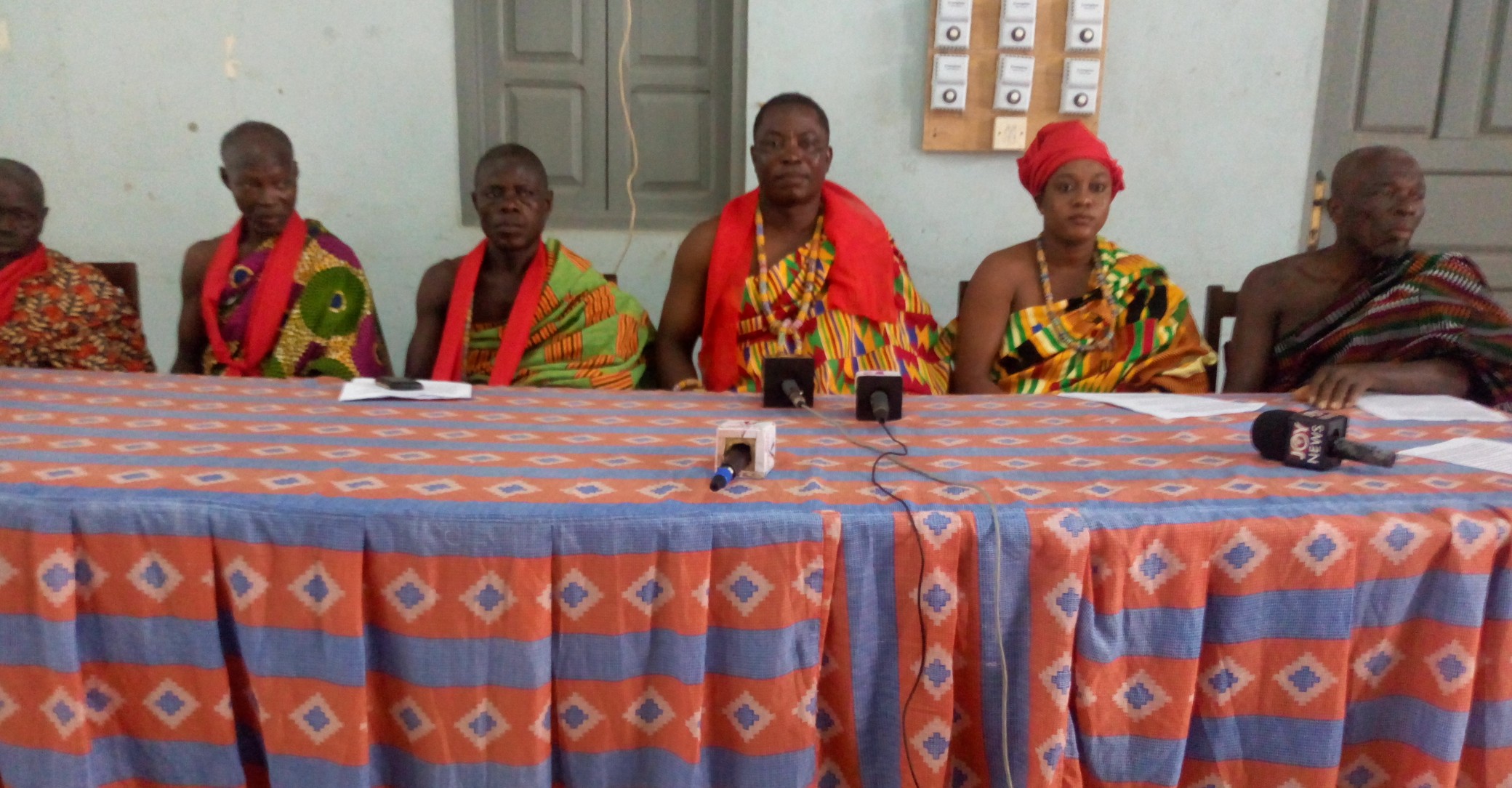
Dutorfia of Kpenoe, Togbe Ankudey III has called on relevant stakeholders to intervene in chieftaincy issues in the Kpenoe Traditional Area, one of the set-ups of Asogli State in the Ho Municipality of the Volta Region to forestall any unforeseen situation.
Togbe Ankudey said there had been some illegalities being perpetuated over a decade that kept threatening the peace of the traditional area and needed to be addressed by the appropriate institutions for prevailing peace.
He was among other things referring to the installation of Togbe Kotoku XI as the Paramount Chief of the area in 2001 which he claimed fell short of the performance of some customary rites of the people.
The Dutorfia who was addressing a press conference in Ho on Tuesday, June 18 said though there had been an earlier attempt to reverse the illegality and the then Judicial Committee of the Asogli Traditional Council in February 2006, ordered that Togbe Kotoku “should be re-installed since the rites performed during his installation did not follow due customs and traditions of Kpenoe,” Togbe Kotoku failed to comply with the ruling.
Togbe Ankudey also alleged that Togbe Kotoku had resorted to ways of intimidating them saying, he at a point, ordered the Police to arrest him (Togbey Ankudey), Fiator Tsigbe and “some other elders of Kpenoe.”
“We are calling on all the following institutions which we have already petitioned like the Peace Council, the Attorney General, the Asogli Traditional Council, the Volta Regional House of Chiefs, 66 Artillery Regiment, Volta Regional Minister, Municipal Chief Executive, Regional Police Command including you the Media to as a matter of urgency, intervene in this matter,” he appealed.
To Togbe Ankudey, “the looming danger ahead of us may bring chaos and riot to the Kpenoe community” and so the need for urgent intervention.
A United Nations Population Fund, (UNFPA) official, Country Office Accra, Dr. Robert Mensah has debunked the assertion that Comprehensive Sexuality Education (CSE) being promoted by the United Nations sexual and reproductive health agency, was resulting in increased sexual activities among young ones.
Dr. Mensah said CSE, a rights-based and gender-focused approach to sexuality education was not encouraging promiscuity but rather helping to equip young people with information regarding their health, well-being and dignity for a sexually healthy adulthood adding, with or without CSE, young ones would involve themselves in sexual acts.
According to him, CSE insisted on abstinence from sex among young ones while introducing responsible and safe choices so that those sexually active ones who would decide to indulge in the act, to protect themselves from unwanted pregnancies and sexually transmitted diseases.
The UNFPA Official who was speaking at a stakeholders meeting of the Volta Regional Coordinating Council (VRCC)/UNFPA Seventh Country Programme (CP7) in Ho, underscored the importance of CSE in the UN agency’s programmes in achieving the mission of delivering a world where “every pregnancy is wanted, every birth is safe, and every young person’s potential is fulfilled.”
The meeting on Monday which had in attendance the Volta Regional Minister, Dr. Archibald Letsa and his Deputy, Rev. Johnson Avulete, Chief Director, Felix Chaahaah, municipal and district chief executives (MDCEs), heads of departments, non-governmental organisations (NGOs) and the security, saw various presentations.
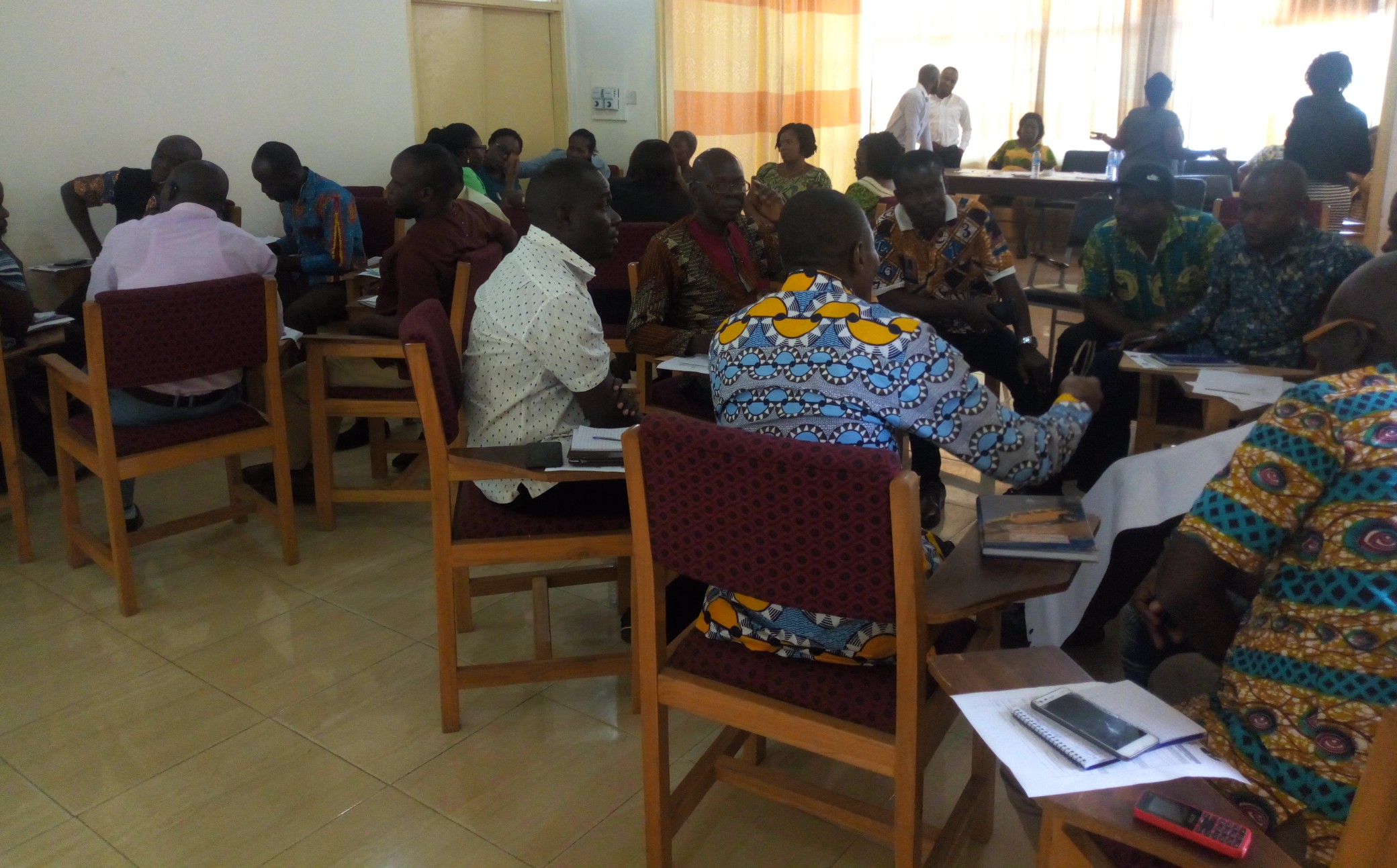
A participant making a contribution during the meeting
Focal Person, UNFPA at VRCC, Victoria Odurowa Fato who gave an elaborate overview of activities of the agency in the Volta/Oti regions mentioned Domestic Violence and Victims Support unit of the Ghana Police Service, National Youth Authority, Department of Gender and Ghana Health Service as sub implementing partners with VRCC playing supervisory role.
Ms. Fato noted that the CP6 recorded successes including equipping family planning providers with the requisite skills to address concerns of clients, reaching out to appreciable number of young people with UNFPA programmes, sensitizing stakeholders on child marriage and getting them to support the campaign against it.
She called for collaboration among all stakeholders to ensure effective implementation of CP7 (2018-2021) “for the benefit of the people of Volta and Oti regions.
A presentation on Reproductive Health situation in Volta/Oti regions by Charles Duodu from the Volta Regional Health Directorate indicated remarkable improvement in 1st trimester registration and antenatal care, skilled delivery, postnatal care (PNC), 1st 48 hours PNC coverage, neonatal mortality rate, infant mortality rate, under 5 mortality rate, maternal mortality rate and an improved involvement of men by end of 2018.
Regional Advisor, GIZ, John Adraki who spoke on Gender mainstreaming, outlined some activities the organisation carried out which inspired reviews at the various beneficiary assemblies in the region and called for similar training to be conducted for assembly members.
There was also a presentation by UNICEF which focused on its activities which brought about significant transformation in sanitation situations in basic schools across the region.
Chairman, Coalition of NGOs in Health, Kofi Nyalimba touched on efforts of member organisations in improving quality of health for all including those in hard to reach areas.
Mr. Nyaniba lamented the lack of funds which had stifled the coalition from carrying out continuous adolescent reproductive health programmes and planned to intensify their fund raising efforts for effective implementation of programmes.
District Chief Executive for Afadzato South, Wisdom Semanu Seneadza asked programme implementers to involve MDCEs, the political heads at the periphery tasked with the responsibility of ensuring total development of people in their areas, for success.
Mr. Seneadza said it was important for the MMDCEs to feel a sort of ownership of the programmes to actively participate for the desired impact.
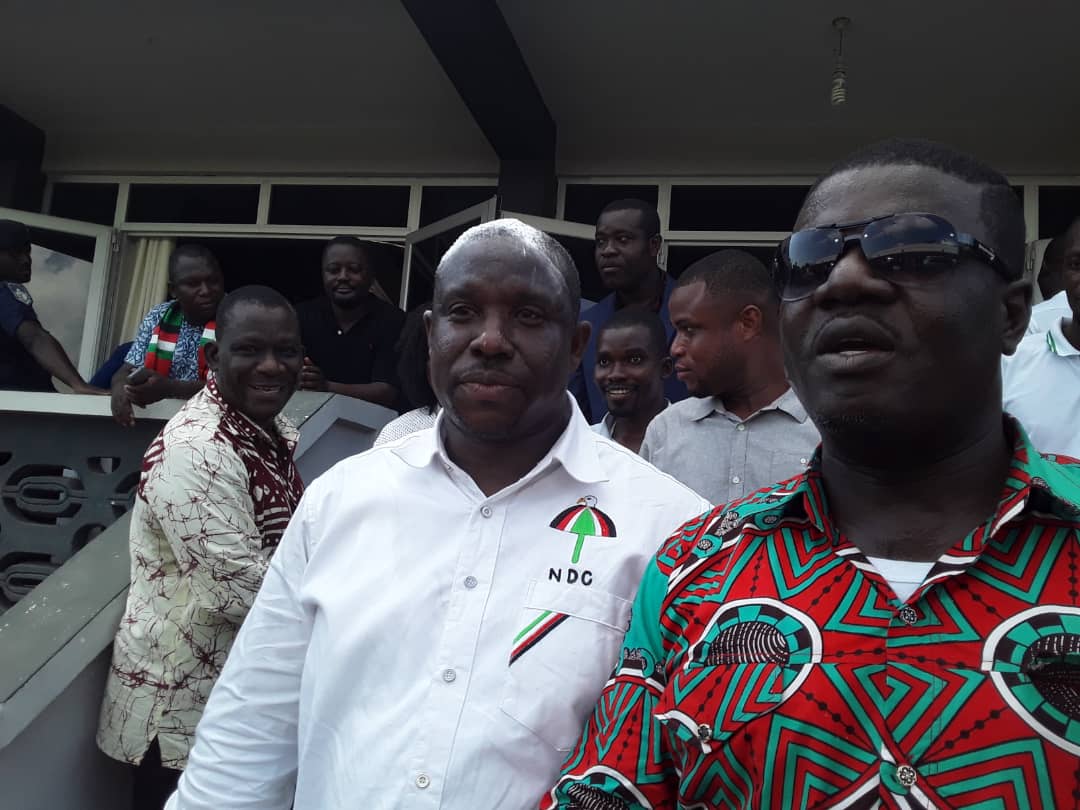
George Loh (in white) with South Dayi MP, Rockson Dafeamekpor
By: Kofi Gamor | Voltaonlinegh |
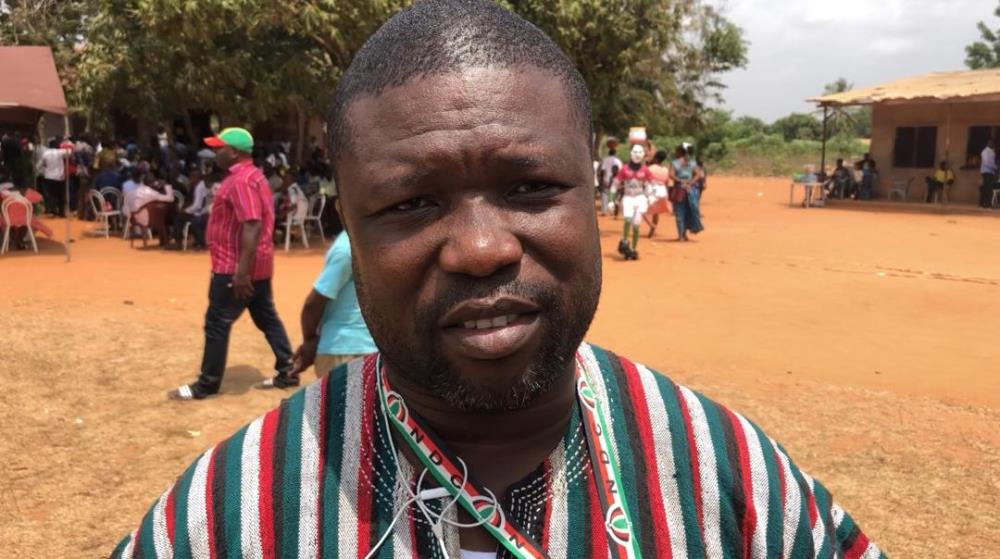
The newly elected Volta Regional Vice Chairman of the opposition National Democratic Congress (NDC), George Loh, has called on the party in the region not to ignore the worth of losers in the just-ended regional executive elections of the party.
Hon. Loh said the task ahead which involved working hard towards the party’s victory in the 2020 general elections could only be effectively executed by the involvement of both victors and losers of Sunday’s elections and suggested that the losers in all positions be assigned roles to complement the works of the executives.
He made this known during an interaction with the media shortly after being declared winner of the keenly contested Regional Vice Chairman position.
The one-term Member of Parliament for North Dayi beat off competitions from four other contenders including a grassroots person, George Dake and a former District Chief Executive, Kofi Lawson who were tipped to win the position.
Party faithful and delegates on Sunday, June 16 gathered at the VAG Hall, Ho to elect new leaders for positions that had become vacant as a result of the re-organisation exercise following the creation of six new regions across the country.
Former Deputy Volta Regional Minister, Henry Ametefe polled 310 votes to become the Regional Chairman while the second placed in the Vice Chairmanship race, George Dake became the 2nd Vice Chairman.
The Deputy Women’s Organiser position went to Akusika Akpene Ansah with Angelo Norkplim Agbodzie becoming the Deputy Youth Organiser.
The Regional Chairman, Henry Ametefe, speaking on behalf of the newly elected executives, called for members of NDC in the Region to put the elections behind them and forge ahead in unity in order to achieve victory for the party in 2020.
Mr. Ametefe, popularly known as Brigadier, dedicated his victory to the party’s youth wing and advised the youth currently in executive positions to learn from their elders to enrich their experience in order to put the party in a better shape in future.
A National Executive member of the party, Kofi Attoh who swore in the newly elected executives tasked them to work hard to return the NDC and the former President, John Mahama to the Jubilee House in January 2021.
Engage now Africa (ENA), a non-governmental organization which aims to heal, rescue and uplift individuals from poverty in some African countries in collaboration with Ghana Association of Persons Living with Albinism (GAPA) has celebrated International Albinism Awareness Day with a call on government to protect the lives of persons living with albinism and also create a conducive environment for them.
The event which was under the theme: “Still Standing Strong” took place at the British Council in Accra on June 13, 2019.
Speaking at the event, Chief Executive Officer of ENA, Lynnette Gay said ENA was making efforts to improve upon the lives of persons living with albinism.
Francis Yaw Ansah, Education Director, ENA spoke on a study by the organisation in 2015 which revealed that persons living with albinism were the most marginalised in society.
Mr. Ansah said the study informed ENA’s decision to embark on a project involving persons living with albinism which aimed at providing them with sunscreen lotions, sun glasses, hats and empowering them economically to make them feel a part of society.
He added that ENA organised sensitisation programmes in various communities in Ghana for people to realise that albinism was not evil but a condition and people with that condition needed to be treated same way as other human beings.
President of GAPA, Abdul Wahed Ishaq recounted that on November 18, 2014, the United Nations General Assembly passed a resolution to celebrate and recognise the achievement, contribution, abilities and struggles of person living with albinism on June 13 every year.
Mr. Ishaq lamented the discrimination and humiliation his members kept facing in society and pledged the Association’s resolve to fight for the rights of its members.
Member of Parliament for Krachi Nchumuru, John Majisi who chaired the event, indicated that Ghana needed to protect the lives of the vulnerable including persons living with albinism by giving them equal rights in society.
Hon. Majisi called on government to be passionate about persons living with albinism saying, in Namibia, citizens believed albinism to be a blessing and so government had made provisions for them.
Executive Director of GAPA, Newton K. Katseku on behalf of the Association, presented a petition making a case for persons living with albinism, to the Commission for Human Rights and Administrative Justice (CHRAJ)
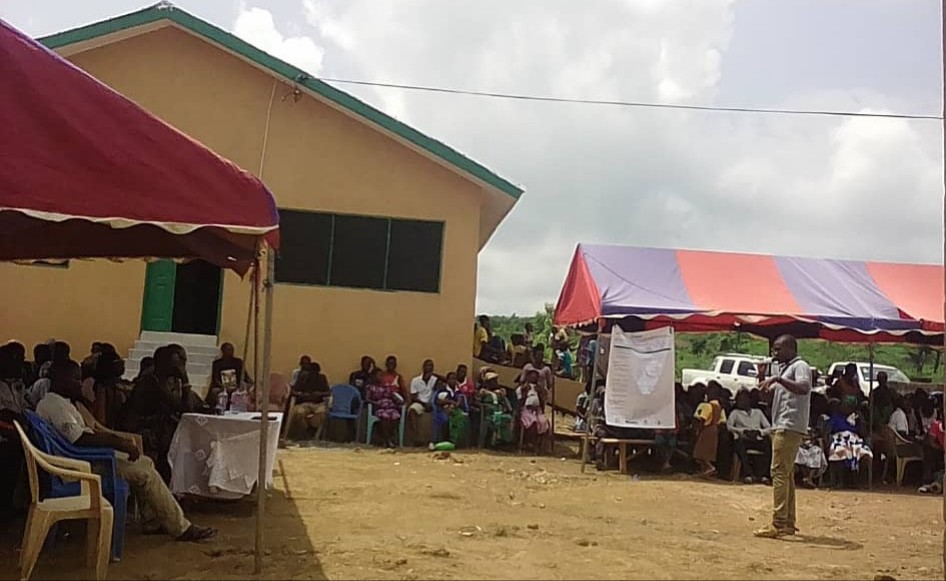
The Ghana’s Strengthening Accountability Mechanism (GSAM), a project expected to strengthen accountability at both district and community levels across the country has organised an interface meeting between citizens of Okanease in the Krachi East Municipality and the municipal assembly.
The meeting was to discuss citizens’ concerns regarding the construction of CHPS compound with 3-unit Nurses’ Quarters in the community. The Gh¢467,941.50 project being funded by the District Development Fund (DDF) is expected to be completed soon and handed over by the contractor, Raphael Kudjo Kpogli for use.
The United States Agency for International Development (USAID) sponsored GSAM being implemented in 100 districts across Ghana seeks to sensitize citizens to exercise oversight responsibilities in capital development projects to improve local government accountability and performance.
It is being implemented by OXFAM, CARE, ISODEC with over 25 civil society organisations including Global Action for Women Empowerment (GLOWA) and the Ghana Audit Service.
The Executive Director for GLOWA, Nana Bakateyi II and the Zonal Monitoring and Evaluation Officer, Samuel Boateng were among dignitaries at the interface meeting and inspected the project.
The community members who spoke to the reporter said the project even at its current stage could address their needs.
According to them, the CHIPS compound would help arrest loss of lives occasioned by people having to travel long distances to access health care and called on the contractor to speed up with the project to make health care delivery accessible to them.
Meanwhile, the people of Okanease and its surrounding communities including Dormabin, Adumadum and Asukawkaw complained bitterly of poor road network in their area.
A resident, George Gameli speaking on behalf of the people, said countless efforts had been made over the past years to fix the road but to no avail and asked that politicians deliver on their numerous promises regarding the road.
Mr. Gameli indicated that the bad state of the road had contributed to two major problems, increased lorry fares and reluctance of drivers to ply the road, thus affecting the socio-economic activities of people there.
According to him, their Member of Parliament who doubles as Deputy Minister of Water Resources and Sanitation, Michael Yaw Gyato had some time ago, cut sod for construction of the road but there had since been no sign regarding when work would start.
In reaction, Municipal Coordinating Director, Dzorgbenyui Banini promised to work with the municipal engineers to reshape the road and correct minor defects on the CHIPS compound within three months.
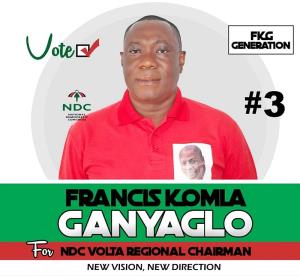
Former Deputy Volta Regional Minister, Francis Komla Ganyaglo has expressed his optimism at winning the chairmanship race for the National Democratic Congress (NDC) in the Volta Region.
Speaking to a section of the media in Ho, Mr. Ganyaglo reiterated that his tour across all constituencies of the Volta Region revealed to him that he was the favourite of the rank and file of the party for the position of Regional Chairman.
“If the feedback during my tour is anything to go by, I am sure there will be no other winner but Francis Komla Ganyaglo.”
The former Deputy Regional Minister is facing off with another former Deputy Regional Minister and the incumbent Vice Chairman, Henry Ametefe, and a Constituency Chairman, Frank Afriyie come Sunday, June 16, 2019.
According to him, the election would be an easy endorsement of his person vis-a-vis the requirements for the leadership in the “World Bank” region of the NDC in opposition.
He said his experience as a Deputy Minister, Municipal chief Executive for Kpando and Regional Secretary from 2001 to 2009 had prepared him for the position.
Mr. Ganyaglo said he sought to reposition the NDC in the region to reignite grassroots support for the NDC and to decentralise all party activities to the grassroots for the overall goal of making the region regain its “World Bank” status in terms of the electoral fortunes of the party.
Party faithful and delegates will on Sunday, June 16 gather at the VAG Hall, Ho to elect new leaders for positions that have become vacant as a result of the reorganisation exercise following the creation of six new regions across the country.
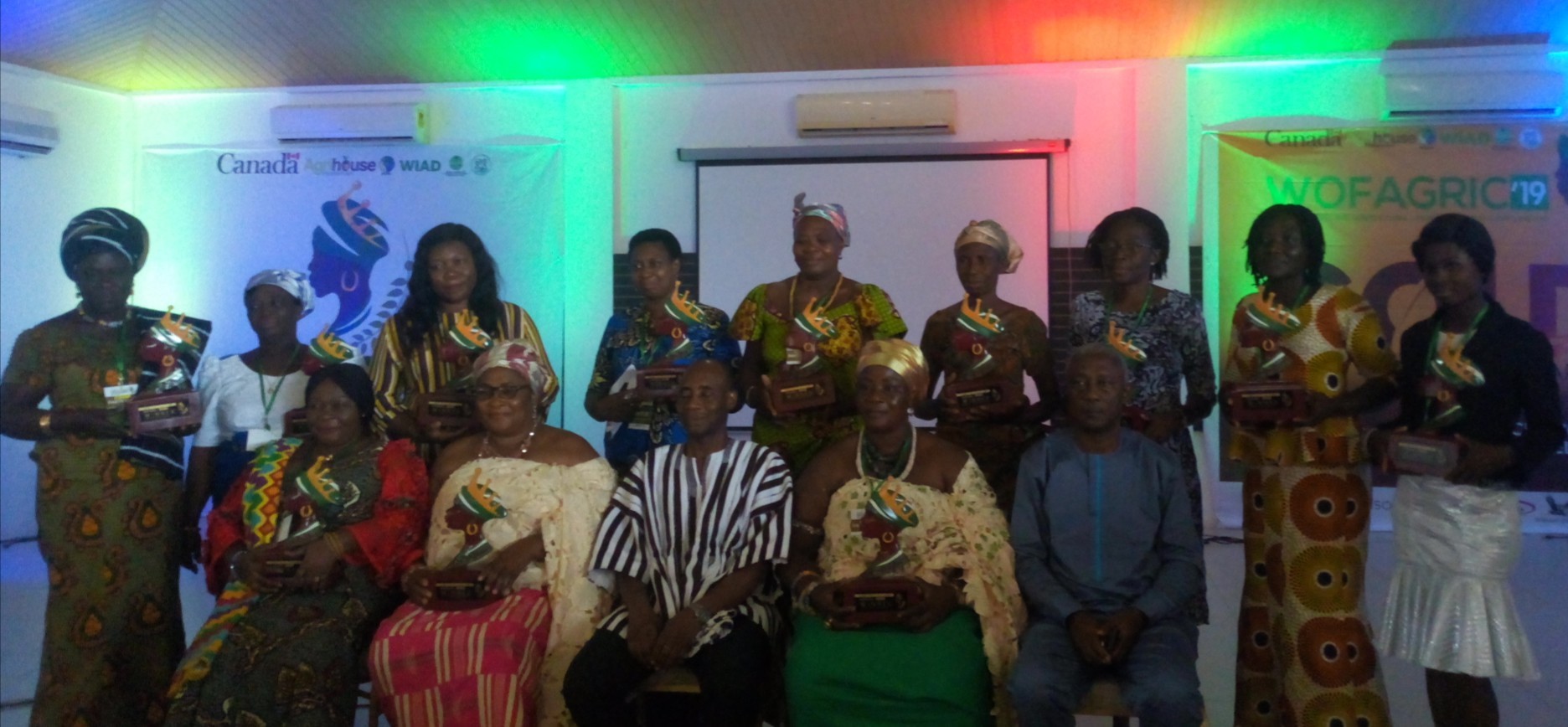
Winners at WOFAGRIC'19 and the Gold in the Soil Awards
By: Ewoenam Kpodo | Voltaonlinegh |
Farmer and seed grower, Connie Nyador has emerged winner of the overall award in the maiden edition of Women in Food and Agriculture Leadership Forum and Expo (WOFAGRIC 2019) and the Gold in the Soil Awards.
Madam Nyador’s, award, Gold in the Soil Award, the ultimate award was in appreciation of her outstanding achievements in producing along the entire agricultural value chain and a recognition of the impact of her establishment to her community.
The award to the Director of Fosuah Food Chain who has large plantation of food crops including cassava and yam and also a yam seed growing technologies in the Tongu area was received on her behalf by her sister, Mama Alorvi II of Dorfor-Agorveme.
Dep Min., Food and Agric. presenting the award for Mad. Nyador (projected in the background) to Mama Alorvi
The WOFAGRIC 2019 and the Gold in the Soil Awards came off from 12th-13th June 2019 in Ho, Volta Region, themed, “Women! Key Partners in Shaping Agribusiness”.
The 2-day forum and awards organised under the leadership of Agrihouse Foundation with other implementing partners like Ministry of Food and Agriculture, Women in Food and Agriculture Development, National Farmers and Fishermen Award Winners Association, Ghana (NFFAWAG) and the Volta Regional Coordinating Council (VRCC) with support from Canada and four committed industry firms, Agricultural Development Bank (ADB), Yara Ghana, Interplast and Sidalco.
The 2-day event paid tribute to the efforts and contribution by women, young female ‘agripreneurs’, physically challenged women, agricultural corporate leaders, innovators, and traditional leaders for their roles towards ensuring food security in the country.
Executive Director of Agrihouse Foundation, Alberta Nana Akyaa Akosa in a speech said women comprised a greater percentage of the workforce in the agricultural sector and “we cannot afford to treat women in agric with hands of levity.”
Madam Akosa among others, called for affirmative action to ensure the success of rural women involved in about 80 percent of agricultural production in Ghana because to her, women had been left out when it came to conversations regarding the sector.
“Despite their central importance to agriculture which sees women produce a great chunk of our food, women are sadly excluded from conversations that determine agricultural policies while unfair laws and practices deprive them of their land, their rights and their livelihoods.”
Chairman of NFFAWAG, Davies Narh Korboe mentioned the important contribution of women to agriculture saying, it explained why women had in recent years featured prominently in the National Farmers Day Celebrations and hoped to see “a woman winning the ultimate in subsequent years.”
Mr. Korboe said the choice of Volta Region for the maiden edition of the Awards “goes to testify that a lot of women award winners in farming and fishing come from the region and the region’s contribution to the country’s agriculture is generally commendable.”
Chief Executive Director of Sidalco Group of Companies, Rev. Dr. Gifty Lamptey congratulated organisers of the event for the initiative saying, there was the need to recognise and support women to succeed in the agriculture space.
Rev. Dr. Lamptey said the African Continent kept spending billions of US dollars to feed itself and citizens “must rise quickly to unlock the full potential of our agribusiness” to arrest the importations but noted that “this cannot be done if women who constitute over 50 per cent of our population are sidelined.”
She said Africa had enough uncultivated land which should be utilised for the continent to develop with pride, encouraging women and girls to look beyond the stereotypes and get into agriculture while calling on the youth to farm saying, “there’s gold in the soil.”
Volta Regional Minister, Dr. Archibald Letsa said it was not by accident that the region ranked the number 1 producer of rice in the country hosted the maiden forum and awards.
He commended the organisers for the awards to recognise hardworking women and pledged VRCC’s support and commitment to the laudable course.
Full list of winners of WOFAGRIC 2019 and the Gold in the Soil Awards
Passion for the Farm Award –Gladys Adzo Doe, Dr. Archibald Letsa,
Woman in Extension Services Award – No winner
She-innovates Award – Eunice Nuku
Super Woman Award – Beatrice Nagbonu (Person with disability)
Star in Agric Award – Mary Dornoo
Diamond in the Rough Award – Theresa Ama Agbovi
Feed to Food Award – Eva Atitsogbui
Royal Agro Award – Mama Ayipe Ama III, Queenmother, Abutia-Kloe
Lady of the Region Export Award – Rosalind Delali Ashigbui
Change Champion Award – Edith Richland Akorsah and Benedicta Tamekloe
Climate-Smart Women Project Award – No winner
Princess Carla Award – Janet Adade
Development Partner Award – Canadian High Commission
Five accused persons who are members of the ruling New Patriotic Party (NPP) in the Krachi West District of the Oti Region facing charges at a high court in Ho, Volta Region for forcibly locking out District Chief Executive (DCE) for the area, Douglas Osei Nti from office have insisted they did no wrong.
The five, Sarfo Sunkwa aged 40, Mathias Banyalenso, 48, Tijani Shaibu, 36, Muntala Yakubu, 36 and Amos Nseikor Lante, 36 were charged on 3 counts of unlawful entry, causing unlawful damage and rioting with weapons following their ejection of the DCE from his office on May 28.
The accused persons were on remand for two weeks before being granted bail on Tuesday, June 11 when they reappeared in court following refusal to grant them bail on their first day in court.
They were asked to reappear on June 25.
Addressing a crowd that had gathered on Wednesday to welcome them, the group said the ongoing prosecution would not deter them from fighting the cause of the NPP.
According to them, they did not regret their action because there was no ill intention but rather a desire to draw government’s attention to the underperformance of the DCE, saying, “we acted in the interest of government and NPP.”
They pledged their support to work with the party executives to ensure NPP retains power in the upcoming general elections but called on leaders of the party to investigate their claims for necessary actions to be taken to make the party more attractive in Krachi West.
The accused persons also called on the youth to remain calm since the case was before court.
Some NPP supporters who spoke in an interview urged party executives to intervene for peace to prevail so as to allow for preparations towards 2020 elections.
The National Democratic Congress (NDC) in the Volta and Oti regions is set to go to the polls this weekend to fill vacant positions in the two regions following a reorganization exercise, necessitated by the creation of new regions.
The elections scheduled to run concurrently on Sunday, June 16, 2019, would take place at the VAG Hall in Ho and the Dambai College of Education in both Volta and Oti regions respectively.
In all, about 885 delegates, comprising 620 in Volta and 265 in Oti are expected to cast their ballot in the in the two regions.
Four positions, including Regional Chairman, Vice Chairman, Deputy Youth and deputy Women Organizers are up for grabs in the Volta region, while in exception of the Chairman slot; 15 other regional positions are open for contest in the Oti region.
A total of 13 candidates are contesting the four vacant Volta regional positions, three of whom are battling for the chairmanship slot, which became vacant as a result of the movement of incumbent, John Kwadwo Gyapong to the Oti region.
The chairman contenders include, two former deputy Regional Ministers, Mr. Henry Ametefee and Mr. Francis Ganyaglo as well as a party activist, Frank Afriyie.
Also, a former DCE for Ketu North, Mr. Kofi Lawson and one-term MP for North Dayi, Mr. George Loh are among the five contenders for the Vice chairman position in the Volta region, while the deputy Youth and Deputy Women Organizers’ slots have three and two contenders respectively.
The Regional Secretary of NDC, Mr. James Gunu, briefing Voltaonlinegh.com on preparations, said all arrangements are in place for the conduct of the elections in the two regions, under the supervision of the Electoral Commission.
“We have engaged the Electoral Commission to conduct the polls and the Regional Police Command will take charge of security at the venues as well,” he stated.
Mr. Gunu indicated that, the voting on Sunday will be done in two parts, starting with that of Women and Youth elections and followed by the election of other officers; adding that, there will be no formal ceremony preceding the voting.
According to him, “We expect to start the process by 9am on Sunday, but there will not be any ceremony for speeches before commencing the polls. Delegates arriving from the constituencies will just move straight to the polling centre to cast their ballots. Then at the close of polls, counting and declaration of results, we have a swearing ceremony for the new executives.”
Meanwhile, the carving of Oti region out of Volta has left the latter with 18 constituencies and the former, having eight constituencies.
The Volta Regional Director, Department of Gender, Lena Alai has charged heads of departments who constitute District Planning Coordinating Units (DPCUs) at the various assemblies in the region to mainstream gender into every activity they would plan in their districts.
Madam Alai said it was important for these core management members of the assemblies to be mindful that there was another part of society “that seemed not to be equitably involved in terms of “access to opportunities and national policies.”
She wanted that in planning activities for the districts, DPCUs should take for example, government’s Planting for Food and Jobs (PFJ) and consider “how many women are participating” because women were already disadvantaged in the area of land acquisition to see “how well will women be brought onto the scene.”
The Regional Director was speaking to Voltaonlinegh on the sidelines of a 2-day workshop in Ho on gender mainstreaming organised by the Department of Gender and the Volta Regional Coordinating Council (VRCC) with funding from the United Nations Population Fund (UNFPA).
The workshop from 12th -13TH June, the first of its kind to be organised for DPCUs from Afadzato South and Akatsi North Districts was to introduce participants to gender mainstreaming to help them identify gender issues and how to deal with them to ensure equal access to opportunities by both men and women in their assemblies.
A similar workshop was earlier sponsored by GIZ for DPCUs in five of its (GIZ) project districts in the region.
According to the Gender Activist, “district assemblies are the smallest unit of the development structure where every action takes place” and said those in management at the district assemblies owed it a duty to the people they serve to “apply gender lens in actions they plan.”
She said people needed to understand the concept of gender and know that it involved both men and women’s issues for effective gender mainstreaming, a strategy being used to ensure gender equality in society.
Focal Person, UNFPA at VRCC, Victoria Odurowa Fato called on development organisations to make gender mainstreaming “an integral part of their mandate so that women and men benefit equally from development.”
Ms. Fato charged participants to practise what they had acquired at the training to meaningfully impact the campaign for gender mainstreaming in their various assemblies.
She mentioned that everyone needed to join government and international bodies in taking steps to stop all forms of gender inequality.
Some participants in an interview were grateful for the training saying, it opened their eyes to issues they never knew could border on gender inequality.
Lovelace Kudoto from Department of Agriculture, Afadzato South said the workshop would help inform his planning decisions to address gender inequality including focusing on provision of extension services to women in his district.