The District Chief Executive (DCE) for Central Tongu in the Volta Region, Thomas Moore Zonyrah has encouraged some 28 persons with disability (PWDs) who received various forms of support from the Assembly to make the best out of the very little assistance given them.
Mr. Zonyrah advised, “just as the biblical talents, I will advise you put these items to good use and also give assistance to others. You’re benefiting today and it will be others tomorrow until we cater for all of you.”
He made this passionate appeal during the presentation of assorted items upon request by the PWDs through the Social Welfare Department.
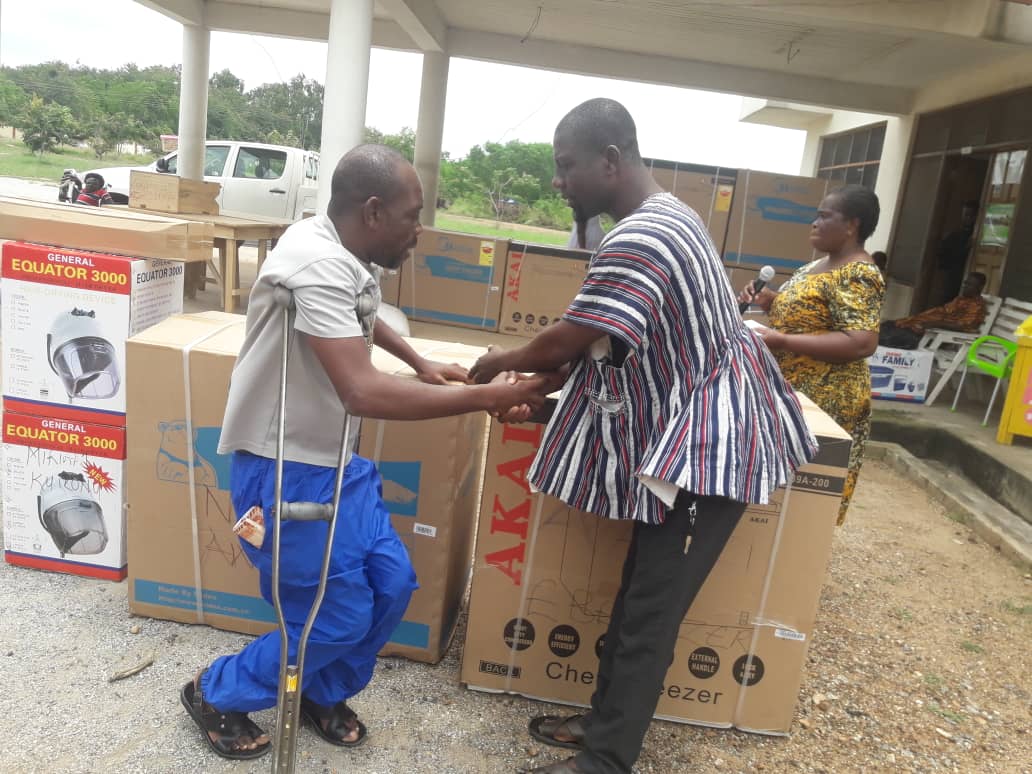
The brief presentation ceremony held at the premises of the District Assembly saw the beneficiaries supported with items including fridge, industrial sewing machine, with others having their tertiary education bills paid.
In all, six individuals had their fees paid at the university and vocational schools. One person received goats for rearing with the others provided for according to their demands.
A total amount of about Gh₵33,597.50 was spent in supporting the beneficiaries. In an interview with some beneficiaries, they expressed gratitude for the support.
A beneficiary, Alfred Fiador was filled with appreciation for the Assembly for its support for PWDs and prayed for God’s blessing for them.
“It’s mind blowing what has been done for us here today, other assemblies are in the news for embezzling funds meant for PWDs but here we are through the thoughtfulness of our leaders in the Assembly and receiving support no one would have given us. It was through this same Assembly that I was able to complete my senior high school (SHS) education and currently at University of Winneba. God richly bless all those who made this possible.”
Meanwhile, Chairman of the Social Welfare Committee at the Assembly, Godwin Kaletsi expressed dissatisfaction at how the first batch of beneficiaries left the items unused, thus, defeating the purpose for which they were provided.
He said their searches revealed the items have been left idle which was not the best for the Assembly nor the PWDs.
“We have gone round to see how best these items are been put to use and its sad some people are still keeping their fridges new without use. This is really sad to say the least.”
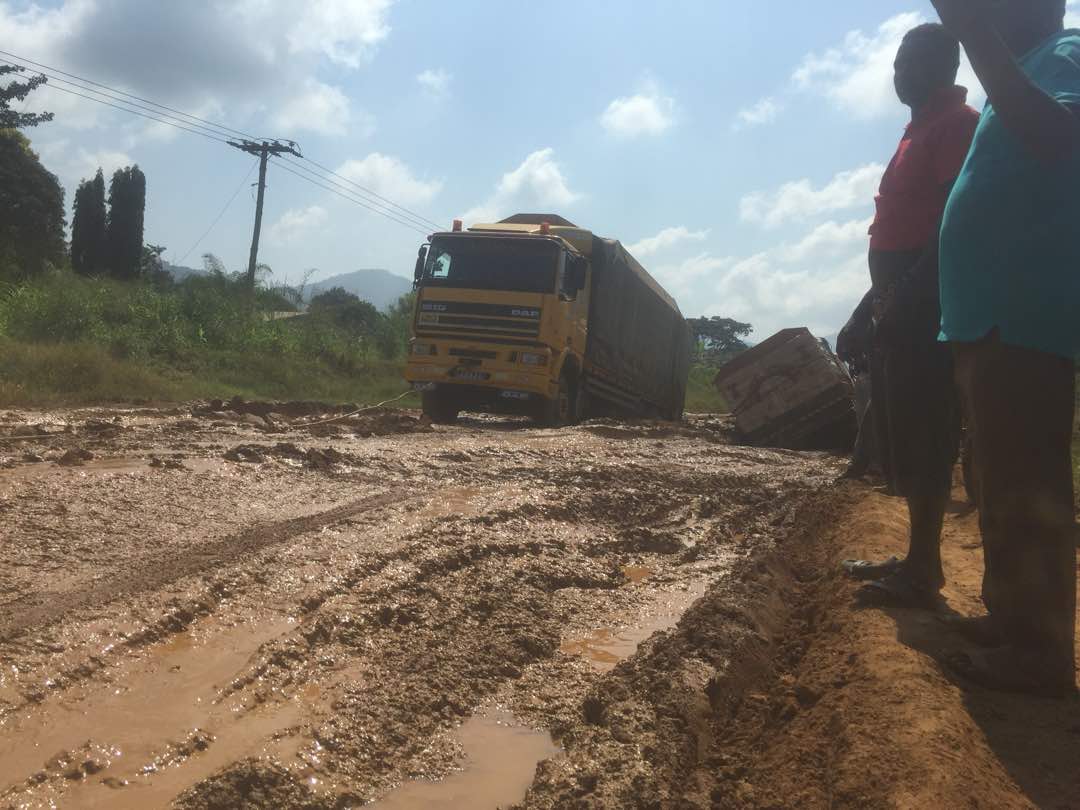
Portions of the deteriorated Eastern Corridor road
Your Excellency, it is with due respect and honour to your high office, and heart full of pains and grievance that I write to you today. I want to start by commending you for your efforts so far by touring the Volta Region.
Mr. President, I wish to state that only greedy people are interested in robbing money from innocent people without providing quality service. Moreover, a government is responsible for providing basic necessities of life to its citizens. Some of these basic needs are water, transportation, which includes adequate and well-maintained roads, security, where citizens feel safe, ensuring that the rule of law is being enforced, and healthcare.
Your Excellency, did you know that good roads and highways play major role in nation building and contribute hugely to the country’s economic activities being mediums through which goods are transported between cities as well as people, speeding healthcare delivery, among others across the country?
A section of Eastern Corridor road- Volta Region
Your Excellency, I am writing to draw your attention to the poor state of the roads in the Volta Region, especially the deplorable, dilapidated, unmotorable state of the Eastern Corridor road and to appeal to you to declare the construction and completion of the road as a state of emergency.
Mr. President, this road has become a nightmare to the entire people of Volta and Northern regions. It is no longer motorable and we are crying out loud. The road is of great importance to us since it links to 5 regions namely, Greater Accra, Eastern, Ashanti, Volta and the Upper East.
The condition of this road has brought about many changes. Negative changes. Change in transportation fee, delay on the road due to potholes and swamps, constant accidents, breakdown of vehicles, delay in healthcare delivery, etc.
Meanwhile, the people of Volta Region had cried severally to previous governments over this road and continue to cry for the current government but to no avail. No action, no show.
Your Excellency, during 2012 to 2016, we saw efforts of the then government in power award the road to some 6 different contractors. Overtime, the citizens feel neglected, rejected, cheated and asked so many questions but who can answer us? All we know is every government plays game of politics with us.
Mr. President, we were happy to see the roads being awarded in the heat of the 2016 electioneering year and all that came into our mind was finally, our plight was to be over only to realise that construction works had come to a halt with no explanation given.
But, whom do we ask? And I ask, is this Ghana? Are we not citizens enough than spectators? Dead Goat or live Dog?
Your Excellency, I want to categorically state that your government has not done much for us for the 19 months in office to win our trust. And I ask again is this Ghana? Is this the change we voted for? Though I applaud you for the introduction of free education, should we allow accidents, delays in accessing healthcare delivery due to bad roads finish our generation?
And I ask, who is going to enjoy the free education in the future? What happens to the over 90 per cent of citizens along the Eastern Corridor road who suffer permanent disabilities, broken down vehicles, post-harvest losses as a result of the road?
Mr. President, please fix our road. That is all we are asking for. We have not benefitted much from your government. We feel abandoned. We need a Volta-loving-government, not as the previous governments.
Do our own Members of Parliaments, chiefs, and government appointees care about the plight of the people they represent? I do not want to believe they are dining with governments for their selfish interest. My people, be up and doing, we want to feel your care.
Mr. President, allow me to admit that the former government did its part (not enough though) and awarded the road to constructors, had a portion fixed from Asikuma to Peki, Nyangbo to Logba. I can also say that about 10-20 per cent of portions of the road had been fixed and then, the contractors stopped work after the elections till date.
I thought governance is a continuous process. I was heartbroken when the Road Minister, Mr. Kwesi Amoako Atta addressed the chiefs of Volta at Hohoe during the President’s 3-day tour of the region that COCOBOD which was funding the portion of the road from Have through Hohoe to Jasikan had suspended payment and that Dodi Papase-Nkwanta stretch being funded by EU loan of over 320 million euros, suffered delayed payments, thus, causing construction works to stall.
He however, assured the chiefs that government was working hard to make it motorable adding, that the contractors would return to site within two weeks but over a month now, nothing has been seen, heard or felt.
Fix our road. Eastern corridor road is all we have.
Mr. President, we have been silent for long, I am appealing to you to declare the road as a state of emergency to be fixed. When nothing is done, we shall embark on a peaceful protest to have our road fixed.
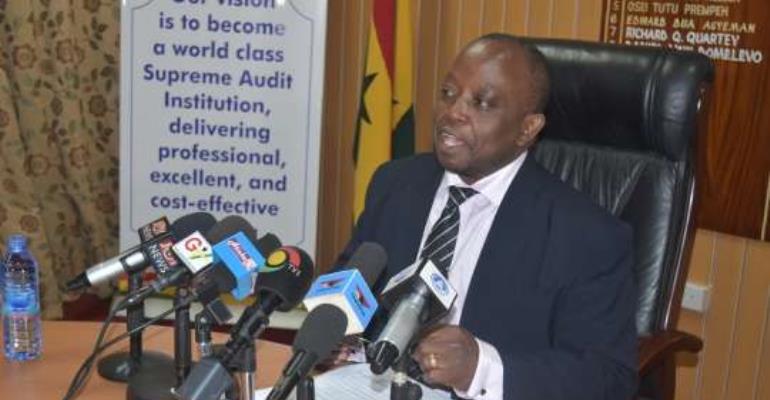
Ghana’s Auditor General, Daniel Domelevo has called for a comprehensive legal and institutional framework for operations in the extractive sector.
He said although there are some laws governing the sector, their application and implementation continues to be a stumbling block hence, the need for a stronger legal framework in the country.
Mr. Domelevo also bemoaned the lack of knowledge on the extractive sector in the country and attributed the situation to ineffective public engagements on the operations of the industry, hence calling on industry players to do more.
He said revenue accrued from the sector remains a mystery to him and faulted industry players for distancing themselves from his outfit.
“When I am asked about the revenue from the extractive industry I always try to dodge the question because when I look at my institution we don’t have the capacity to understand what goes on over there and they have also done very well to keep as far away from themselves.”
He quizzed, “as an Auditor General, the question which always comes to me is, are we getting our fair share of the national cake?”
The Auditor General speaking at the opening session of this year’s Anglophone Africa Regional Extractive Industries Knowledge Hub course in Accra last Monday said it was important that revenue accrued from the sector is not seen as a mystery.
The course dubbed the “Annual Summer School” is an initiative by the Natural Resource Government Institute, in collaboration with German International Development Cooperation.
The two-week residential course on oil, gas and mining governance seeks to deepen knowledge and equip participants with the necessary skills to undertake independent analysis of fiscal and revenue management policies, extractive industries transparency initiative reports, contracts and key legislation in their respective countries.
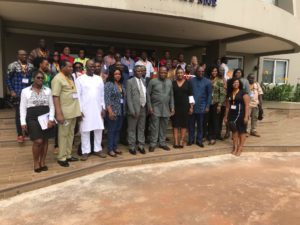
Participants a group photograph with the Auditor General
Capacity Development Officer with the Natural Resources Governance Institute, Mr. Adams Fuseni indicated that a lack of clear cut implementation guidelines in the absence of a shared development framework, would not augur well for the holistic development of the country.
Mr. Fuseni therefore, called for an extractive sector-specific strategy tailored towards the development of the country based on needs assessment in order to benefit from the sector.
Ghana’s favourable enabling environment had provided a good foundation for resource governance, hence ranked 1st in Sub-Saharan Africa. However, its revenue management has been identified as the weakest link in resource governance in the country.
Ghana performed poorly and ranked 23rd among 33 country assessments of sub-national revenue sharing mechanisms. Rules for sharing mineral revenues via the Mineral Development Fund are clear, but disclosures of revenues shared are not timely or audited.
The 2017 Project Inspections Report by Public Interest and Accountability Committee (PIAC) revealed that of all oil-funded projects in the Upper East, Upper West and Northern regions, 50 per cent are nonexistent.
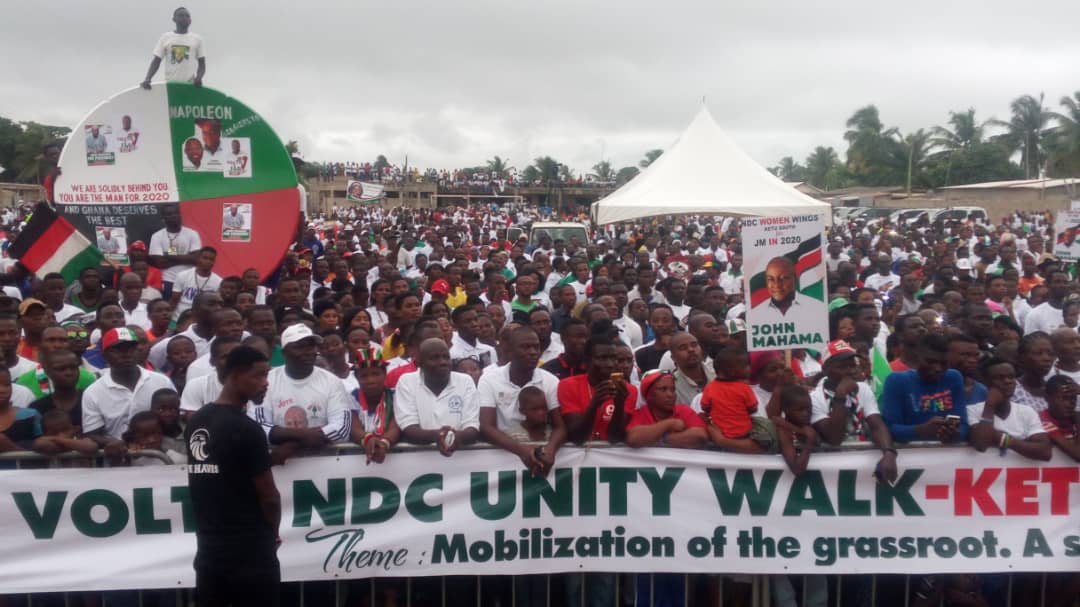
The Association of former Members of parliament (MPs) of the opposition National Democratic Congress (NDC) from the Volta Region has cautioned delegates not to vote for incompetent contestants in the upcoming party congress and regional executive elections.
The former MPs reminded the various delegates about the 2020 general elections stating that the upcoming party elections are highly critical in the forward match of the party to recapture power and deliver Ghanaians from the current suffering and hardship being experienced under the current New Patriotic Party (NPP) administration.
This was contained in a statement from the Association issued on Friday, August 24 ahead of regional elections on September 1, 2018.
The statement signed by the interim chairman, Hon. Joseph Amenorwode, former MP for Afadzato South Constituency and a former Volta Regional Minister under the erstwhile John Mahama administration urged delegates to vote wisely after critically assessing all contestants on their knowledge of the Party’s social democratic principles and core values of probity, accountability and transparency as well as on their own vision, mission, strategies and achievable action plans for the Party in the Region.
The former MPs also cautioned the various delegates not to be influenced by factional pressures, self-interest, money among others to vote for particular contestants but must vote for competent executives capable of discharging their responsibilities when elected.
“We advise delegates to vote for executives who are hardworking, strong willed, experienced and possess the ability to unify and lead the regional party into a massive and successful 2020 elections in tandem with other regions in the country.”
The Association expressed enthusiasm about the large number of people contesting for the various regional party leadership positions even in opposition saying it is a good sign of rejuvenation of interest and support for the NDC in Ghana and particularly in the Volta Region, its “World Bank”
The former MPs therefore, wished the party a successful regional congress to be held across the country on September 1, 2018
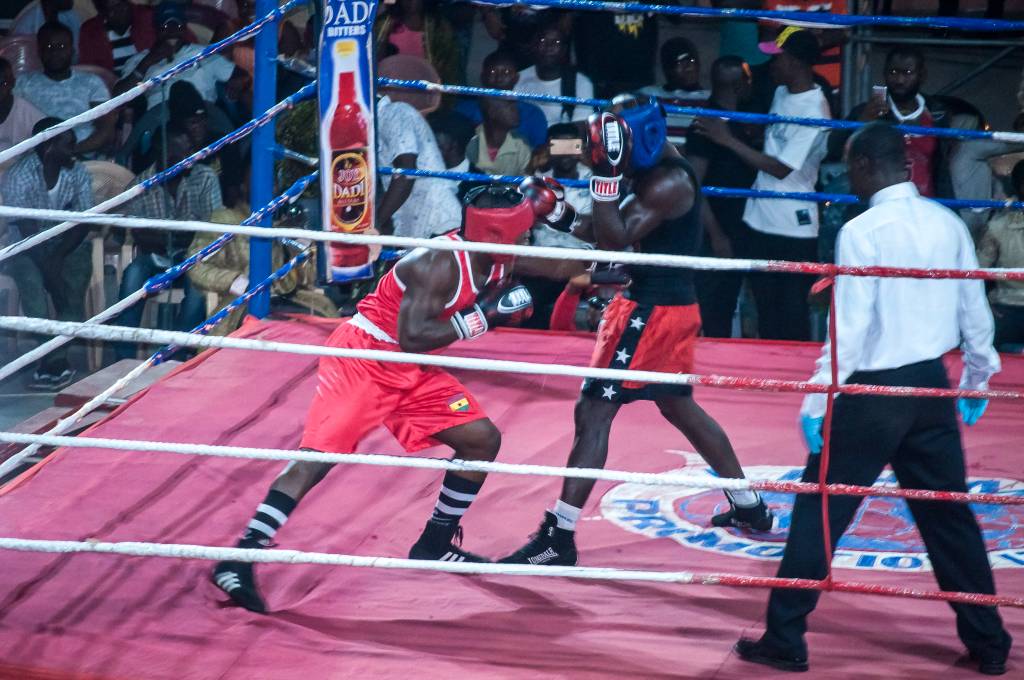
The Volta Regional Boxing Federation (VRBF) in collaboration with Ziope Traditional Area has set Sunday, September 2 to outdoor the Ring received from Ghana Boxing Authority (GBA), a little over a week ago.
The Amateur bout will see both Nigerian and Ghanaian boxers battle for supremacy at the Grabin Guest House in Ziope.
The event recognised as one of the activities to mark this years Ziope Agbleza celebrations has the likes of Habeeb Zubair, Syvester Nzuka, Llyas Ozofehe, and Adaramati James, all from Nigeria.
The rest who are Ghanaians include Desmond Agbozo, Kujo Dzakpata, Kofi Kumah Mensah and Walter Amenyo.
Chairman of the Federation, Enam Foster Dagadu confirmed this to TalksenseSports in an interview.
It is very necessary to outdoor or launch the ring we received. We have actually worked so hard in acquiring this ring and so, the need to do this. We have spoken to the Ziope Council and they have agreed for us to hold the bout there as they are celebrating their festival.
Looking at the boxers we have, it is going to be a Ghana vs Nigeria affair. All must come and watch the outdooring, he added.
The bout is scheduled to begin at 3pm and at a fee of GH₵7.00.
The bout is one of the many bouts the Federation intends to hold in many parts of the region in promoting the game.
The Federation is poised to groom boxers who will become World Champions in the future as it begins from the Amateur level.
The VRBF after making several appeals to their national bodies, GBA and Ghana Boxing Federation (GBF), finally received a Ring with accompanying equipment on Friday, August 17, a major boost to their objective.
Though women are making gentle and gradual strides in bridging the gender divide, those living with disabilities may have no other choice than to dream of the progress their able-bodied counterparts are making.
A U.N. report on the situation of women and girls with disabilities has stated that 19 per cent of women have a disability, 7 per cent higher than that of males. In addition, the report also indicated that girls are less likely to finish primary school than boys, if both are living with disabilities.
Patience Atikpoka Atuah, a journalist living with disability said for a female with disability, dropping out of school meant forced relationships and marriages that only seek to demean and worsen the plight of such women, advocating for education in order to bring such cycles to an end.
“Women generally have always been at the receiving end and for you to be disabled, it looks like a double punishment for you… First of all, you are a woman so it looks like you do not have rights and your family members will have to make decisions for you.”
Mr. Francis Ansong of disability focused organisation, Voice Ghana, who corroborated the presence of the phenomenon in the country mentioned that women continue to be at the bottom of the totem pole in the community.
He traced the issue back to the family setting where he pointed out that boys living with disabilities are prioritised over their female counterparts in accessing education.
Women are also less empowered in livelihood acquisition activities than their male counterparts as the report suggested that between 60-70 per cent of persons with disabilities (PWDs) have no literacy skills, with females forming between 55-60 per cent.
Voice Ghana, believes there is the need to promote activities of livelihood empowerment targeted towards women with disabilities through inclusion of women living with disabilities in leadership positions starting with the representation on the National Council for Persons with disabilities (NCPD) which currently has only 2 women out of a total of 14 members.
Supportive Housing
The absence of an effective housing system in the country for PWDs makes women on the streets fall prey to drug dealers, homeless men, pimps under the disguise of offering them protection, thus heightening the risk of sexual assault, human trafficking and violence in many forms.
Meanwhile, leader of the Paralegal group and Ho Municipal President of the Ghana Federation of the Disabled, Alex Akpo suggested a vigorous livelihood empowerment and skills training for the women and men alike in order to get them off the street.
Policy
There currently exists a limitation with the disability Act of 2006, ACT 715 which fails to address issues on housing for PWDS.
Elsewhere in the USA for instance, the Federal Fair Housing Act, a national law, prohibits housing-discrimination everywhere in the country on the basis of disability. The Fair Housing Act – as well as another national law, the Americans with Disabilities Act, outlaw disability-based discrimination in places of public accommodation, which includes, for example, emergency overnight shelters and social service facilities.
Though Ghana has signed on to heaps of international treaties on human rights, including the United Nations Convention on Rights of Persons with Disability (UNCRPD), the expectations of holistic implementations may be nothing short of a mirage.
The 2nd women’s manifesto for instance is demanding that government establishes community-based housing facilities to serve as temporary accommodation/shelters for needy and neglected women and girls with disabilities for eventual integration with their families or assisted to settle independently.
Lawyer Andrew Adugu
A Legal Practitioner, Andrews Dodzi Adugu said, “shelter is one of the basic needs of a human being. In formulating policies on housing, persons living with disability should be put into consideration. In affordable housing policy for instance there should be the need for a quota dedicated to persons with disability especially women.”
There may however be light at the end of the tunnel as Minister designate for Gender, Children and Social Protection, Cynthia Morrison is advocating for physical protection of the aged.
She indicated that her outfit will ensure the registration of vulnerable women (women living with disability and the aged) who will be sheltered, explaining that there is the need to create a safe haven for them.
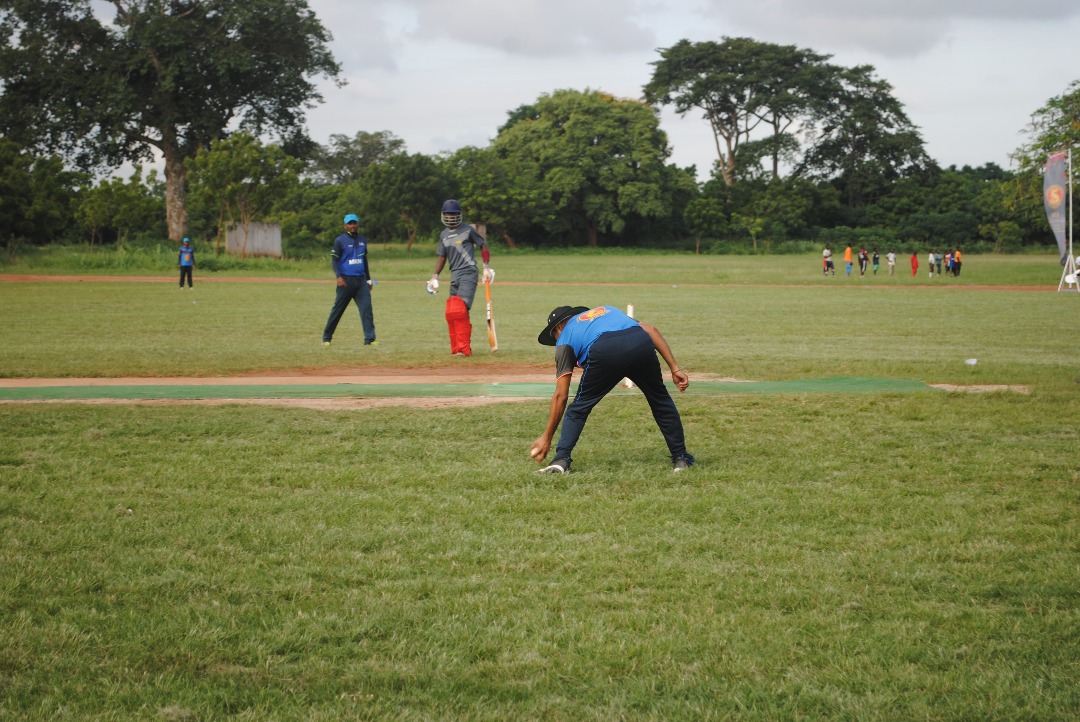
Everest Cricket Club (CC) gets an upper hand against Supreme Warriors Cricket Club in a 3 Match Series organized by the latter at the Achimota Cricket Oval to honor the late RVVK Prasad, who was a Cricket player and enthusiast in India.
The week two clash between the 2 clubs which was played on Saturday, August 25 had Supreme Warriors winning the toss and electing to field. Everest CC stepped up in the first innings and scored 180 runs for 8 wickets in 30 overs, with Bharani Kumars 51-54, Simon Ateaks 43-34 and Shriyans 42-24.
Godfred Bakiweyem took 2-21 in 5 overs, James Vifah took 2-30 in 6 overs, and Thomas Bakiweyem took 2-32 in 6 overs.
In the second innings, Captain of the senior national team Isaac Aboagye scored 40-41 in Supreme Warriors total of 165 runs, for 9 wickets in 30 overs. Frank Baaleri, Sukh and Samson Awe Awiah scored 24-19, 21-20, and 21-47 respectively.
However, Joseph Aboagye took 3-18 in 66 overs, as Everest won the game by 15 runs. Nani Narenda dismissed Julius Horlali Mensah for a Golden Duck, with figures 2-17 in 3 overs. Bharani Kumar also dismissed Godfred Bakiweyem for a Golden Duck with figures 1-35 in 5 overs.
Everest, who won the first match by 6 wickets, are now sure of lifting the trophy, but after the last encounter on September 1, 2018 at the Achimota Oval.
Meanwhile, the Organiser of the 3 Match Series, Girish Varadarajan revealed that the Cash prize for the winner will be shared to both clubs. This motive he said is to help in developing the sport.
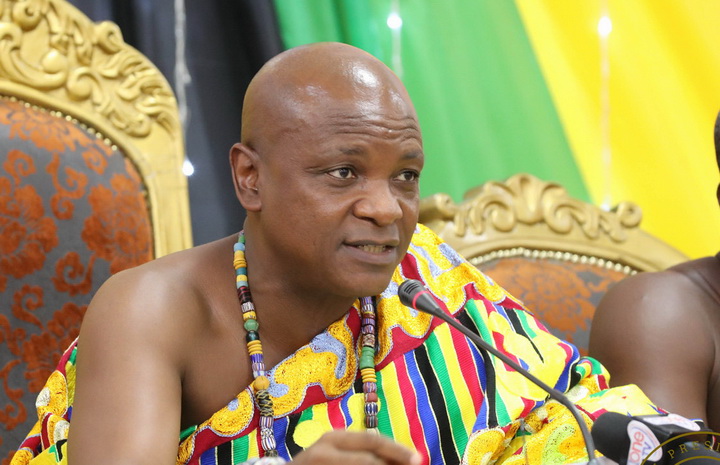
The Agbogbomefia of Asogli State and President of National House of Chiefs, Togbe Afede XIV has called on chiefs and people of Ghana to show concern in matters of national interest and speak against wrongs in society without fear.
Togbe Afede described the state of poverty in Ghana and the African continent as unacceptable and attributed it to greed and corruption on the part of leaders.
He said it does not make sense that with all the resources that abound in Africa, its people still wallow in poverty and in the case of Ghana, school children having to sit on floors to study under trees when the country continues to export timber.
He therefore charged the citizenry not to allow the fear of being tagged a member of political party A or B prevent them from speaking against evil in society as “poverty that will become our lot will not discriminate against members of political parties.
Togbe Nakakpo Dugbaza VIII, President of Tongu Council of chiefs (with Mic) speaking at the meeting
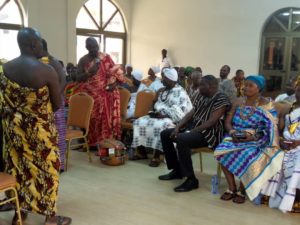
Togbe Afede XIV was speaking to a delegation of Tongu Council of Chiefs from 13 traditional areas from the three Tongu districts in the Volta Region who paid a courtesy call on him on Sunday, August 26 at the Asogli palace in Ho.
The Tongu Council of Chiefs led by the President, Togbe Nakakpo Dugbaza VIII’s visit was to forge a relationship with the Asogli State as a step to strengthening the existing relationship with the other traditional leaders in the region. The Council believed the surest way to develop the region is to have all traditional rulers coming together as one unified force to advance the developmental needs of the subjects.
Togbe Nakakpo Dugbaza VIII said the visit was also to solidarize with the people of Asogli regarding the unsavoury comments made by the governing New Patriotic Party Chairman, Freddie Blay against the Agbogbomefia.
He said comments like that against any traditional leader from any part of the region is considered insult to all chiefs in the region and must be condemned.
He therefore assured Togbe Afede of his Council’s support and congratulated him for living up to his duty as the Agbogbomefia of the Asogli people and President of the National House of Chiefs.
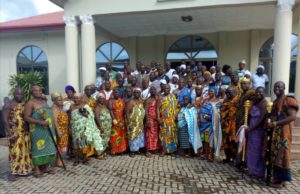
Togbe Afede and his divisional chiefs in a pose with the Tongu council of chiefs.
Togbe Afede expressed gratitude to the Tongu Chiefs for the gesture and hoped that the gesture will set the precedent for others to follow for stronger ties among all chiefs in the region, saying problems of the region are mainly due to disunity and envy.
He disclosed that there were plans for the unification of chiefs of Ewe heritage from the republics of Togo and Benin and from the region for the singular purpose of the good of the citizenry.
President Nana Addo Dankwa Akufo-Addo has underscored the relevance of Technical and Vocational Education and Training (TVET) in the country and assured of his government’s commitment to its development.
Nana Akufo-Addo mentioned that countries that gained independence same time as Ghana have outstripped Ghana in development, attributing that to a transformation from agrarian economy to an industrialised one made possible by technical and vocational education, technology and skill training.
He said the problem of unemployment in the country could have been solved if emphasis were laid on TVET to provide students with the right skills and disclosed that steps had already been taken by his government to enhance and give TVET the needed attention.
He said this in an address as the Guest of Honour at the grand durbar of the 50th anniversary celebration of Ho Technical University (HTU) in the Volta Region on Saturday, August 25, 2018 at the G.M. Afeti Auditorium of the University.
He described the theme for the jubilee celebration, “Consolidating the Gains of Technical and Vocational Education and Training (TVET) in Ghana: HTU @ 50” as apt and disclosed it was time the country reflected on that and made resolutions to develop and enhance TVET for transformation.
Nana Akufo-Addo admitted that government was aware of the infrastructural challenges of technical Universities including the HTU and assured of positive results before the end of his mandate in 2020.
He also disclosed that processes were underway to rename HTU after the great musicologist from Peki, Volta Region, Ephraim Amu for his contribution to his motherland in line with the University Council’s decision which he had given his blessings.
Various speakers at the durbar including Prof. Emmanuel James Flolu, Chairman of HTU Council, Prof. Emmanuel Kojo Sakyi, Interim Vice-Chancellor of HTU enumerated the evolution and transition of the University from an Institute/Polytechnic era to its current phase and commended the efforts of all those who played important roles in its development.
The speakers called on all to partner with the University which is 50 years in existence and 25 years as a tertiary institution for its transformation into a reputable technical university in Africa and beyond.
There were various goodwill messages congratulating the premier tertiary institution in the Volta Region on its celebration including that of the Volta Regional Minister Dr. Archibald Yao Letsa which assured the leadership and the University Community of Nana Akufo-Addo led government’s support to develop and make the Institution the pride and envy of all.
The Ho Technical University was established in 1968 as a Technical Institute with the objective of providing Pre-technical education. It became a Polytechnic in 1986 and got upgraded to a fully-fledged tertiary institution in 1993 by the enactment of PNDC Law 321 and was finally converted to a Technical University by Technical Universities Act 2016.
It was all fun at the durbar to climax 50 years anniversary celebration of Ho Technical University (HTU) on Saturday, August 25 at the G.M. Afeti Auditorium of the University when President of the Republic, Nana Addo Dankwa Akufo-Addo seemed not to have had enough of the anniversary cake.
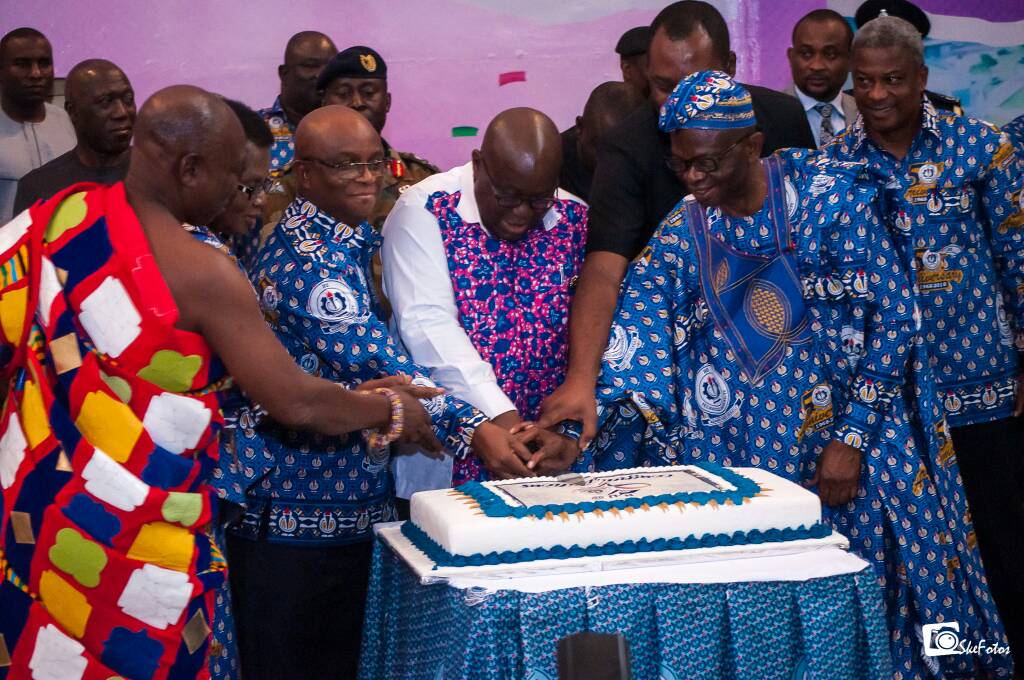
The cake which had HTU @ 50 inscribed on it and donated by the Hospitality Department of the University was cut by Nana Addo in the company of some dignitaries at the event.
A gesture which says a lot about the taste of the cake which was made by lectures and students of the hospitality department.
Nana Addo unexpectedly threw a piece of the cake into his mouth just after cutting it amidst laughter and clapping from the gathering.
The anniversary cake again attracted the President and he had to make a stop and have a bite of it before finally leaving the auditorium with his entourage after the programme had ended.
The durbar was given colour by musical interludes from HTU Staff Choir and cultural performances and recitals from the Wogbejeke Creator, Chief Moomen and his Banboo Cultural Group.
Saturday’s durbar attracted current and former ministers of state, members of parliament, municipal and district chief executives, the academia, traditional leaders, alumni among others with President Nana Akufo Addo as the Guest of Honour.
The week-long celebration was themed, “Consolidating the Gains of Technical and Vocational Education and Training (TVET) in Ghana: HTU @ 50.”
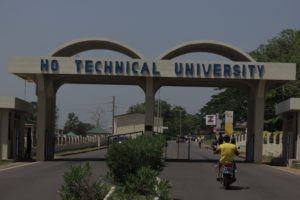
Entrance of HTU
The Ho Technical University was established in 1968 as a Technical Institute with the objective of providing Pre-technical education. It became a Polytechnic in 1986 and got upgraded to a fully-fledged tertiary institution in 1993 by the enactment of PNDC Law 321 to train students in technical and vocational skills to the Higher National Diploma (HND) level. It was finally converted to a Technical University by Technical Universities Act 2016.
The University is organised into faculties, schools, departments, centres, and units and currently runs Bachelor of Technology programmes, HND, Technician Certificates and runs a joint Master of Technology programmes.